


Google AI Makes Travel and Product Search More Intelligent

Google Releases March 2023 Core Algorithm Update

Listen to the Podcast:

Google’s new search experience, which uses AI and came out in May, may have been met with mixed reactions. But the search giant isn’t slowing down its feature plan because of this.

Google revealed today that it is adding new travel and shopping features to Search Generative Experience (SGE), the name for its experimental search experience. Some of these features were shown off at Google’s I/O conference.

Now, when a Google Search user asks a question about a place or destination (like, “Is this restaurant good for big groups? “), they will see a picture that includes information from all over the web as well as reviews, photos, and business profile information sent in by the business owners themselves. And when they are shopping for a product, like Bluetooth speakers, SGE will show them things to think about along with product descriptions, reviews, ratings, prices, images, and suggestions.
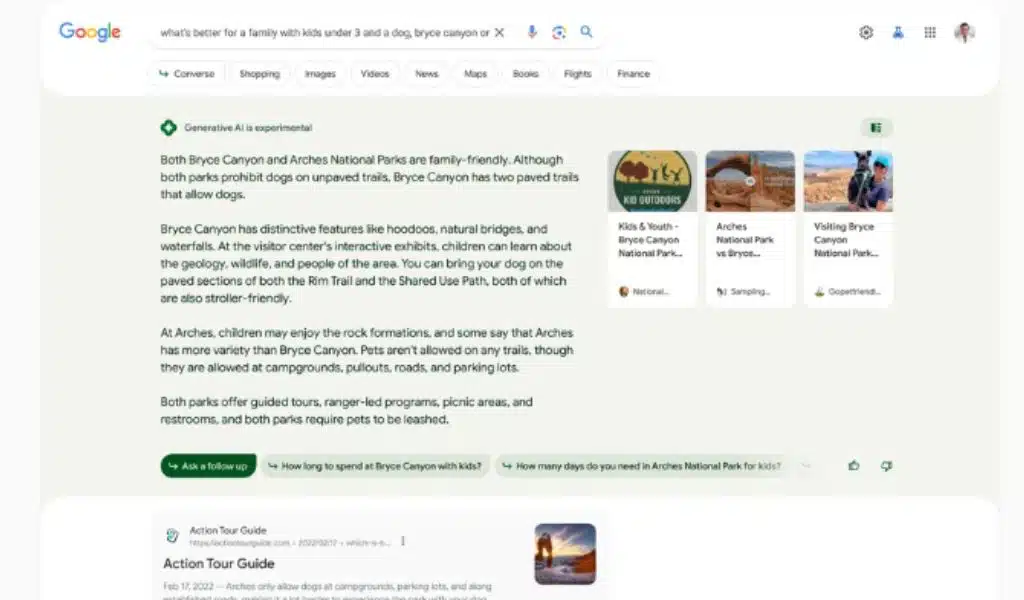
Travel and Product Search

The experiences remind me of search engines that use AI to compete, like You.com and Perplexity AI. But Rany Ng, Google’s Vice President of Search, says that they gain more than anyone else from Google’s private data, such as information about more than 200 million places and 35 billion product listings.
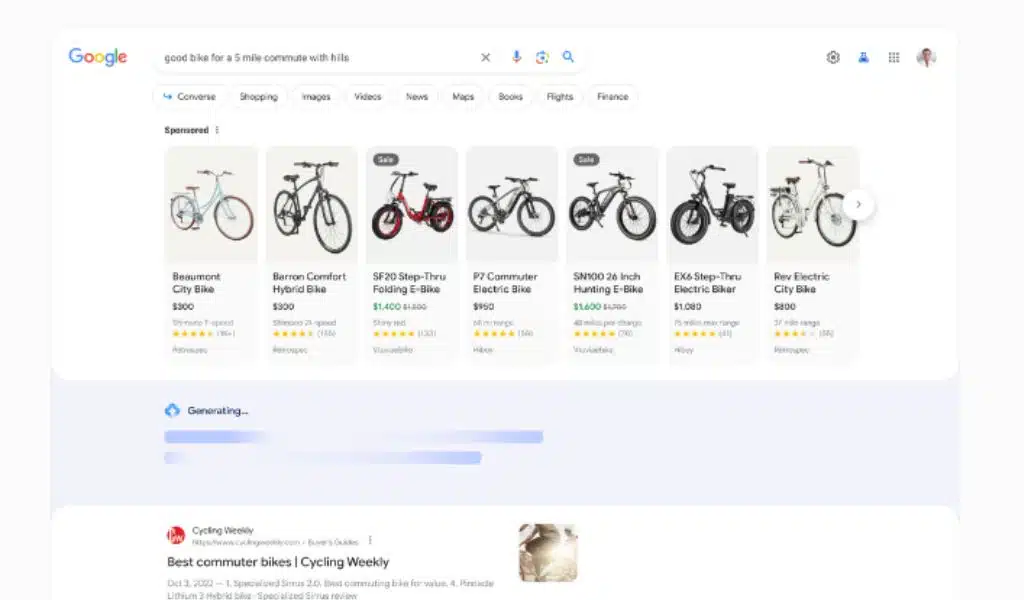
AI-powered travel and product search

Ng wrote in a blog post this morning, “With this improved SGE experience, you’ll get useful insights to help you along the way, so you can spend less time planning and more time enjoying the plans you’ve made.” “Generative AI in Search can be especially helpful if you need to buy something that requires a lot of research before your summer trips.”

In a related statement, Google will soon start a new experiment called “Add to Sheets.” This will let users put search results right into spreadsheets and share them with friends, family, or anyone else they might be working with.

To use any of the new features, you will need to sign up for Google’s Search Labs, which is where new search tools are tested. It is only available in English in the United States right now.



Subscribe to Our Newsletter

Related Articles

Top Trending

Powerful Signs a Keyword Is Worthy of a Full Article
7 Signs a Keyword is Worth an Entire Article
ImagineLab Art Infographic Lab vs Napkin AI
ImagineLab Art Infographic Lab vs Napkin AI: Turning the Same Text Brief into a Visual
Open-Source Alternatives to Popular SaaS Tools
Open-Source Alternatives to Popular SaaS Tools: What I Use Daily (and Why)
A 15-Minute Home Routine for Alphabet, Phonics, vand Read-Aloud
Social Media Agency vs In-House Team
Social Media Agency vs In-House Team: Cost, Speed, Context, and Control

Technology & AI

ImagineLab Art Infographic Lab vs Napkin AI
ImagineLab Art Infographic Lab vs Napkin AI: Turning the Same Text Brief into a Visual
Open-Source Alternatives to Popular SaaS Tools
Open-Source Alternatives to Popular SaaS Tools: What I Use Daily (and Why)
Social Media Agency vs In-House Team
Social Media Agency vs In-House Team: Cost, Speed, Context, and Control
SEO Agency vs In-House SEO vs Freelancer
SEO Agency vs In-House SEO vs Freelancer: A Decision Framework for Small Teams
ImagineLab Voice Lab vs Murf AI
ImagineLab Voice Lab vs Murf AI: I Tried Multilingual Narration from the Same Script

GAMING

Intentional Screen Time
How to Spend Your Screen Time More Intentionally
Complete Guide on Game Programgeeks
Game Programgeeks: A Complete Guide on PC, Game Dev, and Tech
Online Color Game Philippines
Online Color Game Philippines: What Every Beginner Should Know Before Playing
Ways to Reduce Game Development Costs
12 Ways Studios Cut Game Development Costs
NFT game development cost
How Much Does NFT Game Development Cost? A Realistic Budget Breakdown

Business & Marketing

Email Marketing Agency vs DIY Platform
Email Marketing Agency vs DIY Platform: When Outside Help Adds Value
Critical Path Method
The Critical Path Method Explained in Plain English
Time to Value: How SaaS Teams Can Reach Results Faster
How to Onboard New Team Members With a Self-Serve Wiki
How to Document Team Processes for Better Teamwork

EdTech & E-Learning

A 15-Minute Home Routine for Alphabet, Phonics, vand Read-Aloud
How to Teach Letters to Kids
8 Ways to Teach Letters to Kids Who Hate Sitting Still
Alphabet Magic vs 123 Magic Number Fun
Alphabet Magic vs 123 Magic Number Fun: Which Skill Does Each App Actually Target?
Alphabet Magic vs ABC Kids: Which Offers Clearer Letter Practice
Alphabet Magic vs ABC Kids: Which Gives Clearer Uppercase and Lowercase Practice?
Alphabet Magic vs LetterSchool comparison review
Alphabet Magic vs LetterSchool: Letter-Tracing Accuracy on the Same Letters [A Hands-on Review]

Software & Apps

Open-Source Alternatives to Popular SaaS Tools
Open-Source Alternatives to Popular SaaS Tools: What I Use Daily (and Why)
Best Document Collaboration Tools
10 Best Online Document Collaboration Tools for Teams
Important Signs When Should Raise Prices on Your SaaS
10 Signs It's Time to Raise Prices on Your SaaS
Best CRM Tools for Small Marketing Teams
10 CRM Tools for Small Marketing Teams Worth Using
SaaS partnership tools
10 Best Tools for Managing SaaS Partnerships and Integrations





















