
Online casinos offer a range of digital games and betting options, including classic table games, Slots, and live dealer formats. With access available across desktop and mobile platforms, you can play legally through licensed operators such as Live Score Bet Ireland, which adhere to regulatory requirements for fairness and player protection.
If you’re planning to bet casino games online, it’s essential to understand how these platforms operate, the types of games available, and the responsible gaming tools provided. This article outlines the basics you need to know before registering or placing a wager.
1. Licensing and regulation
In the United Kingdom and Ireland, legal online casinos must be licensed and regulated. The key purpose of regulation is to ensure that casino operators meet standards for fairness, transparency, and player safeguarding. A licensed site will have terms and conditions clearly displayed, along with links to support organisations and responsible gaming resources.
Before creating an account, check for licensing information at the bottom of the casino’s homepage. You should also review the privacy policy and responsible gaming section to understand what tools are available, such as deposit limits, time-outs, and self-exclusion.
2. Types of online casino games
Online casinos typically provide a selection of game categories:
- Slots: These are digital versions of traditional slot machines and can range from three-reel games to feature-rich video Slots. Most use a Random Number Generator (RNG) to ensure fairness.
- Table games: This includes online versions of Blackjack, Roulette, and Poker. These games are often available in standard digital formats or with live dealers.
- Live casino: A live casino option streams real-time video of dealers managing tables. While you cannot physically interact, you can make decisions through an on-screen interface.
- Game shows and instant wins: These newer formats are based on randomised outcomes and are sometimes inspired by popular television games.
Game availability may vary depending on the operator’s licensing and the software providers they use.
3. Payments and withdrawals
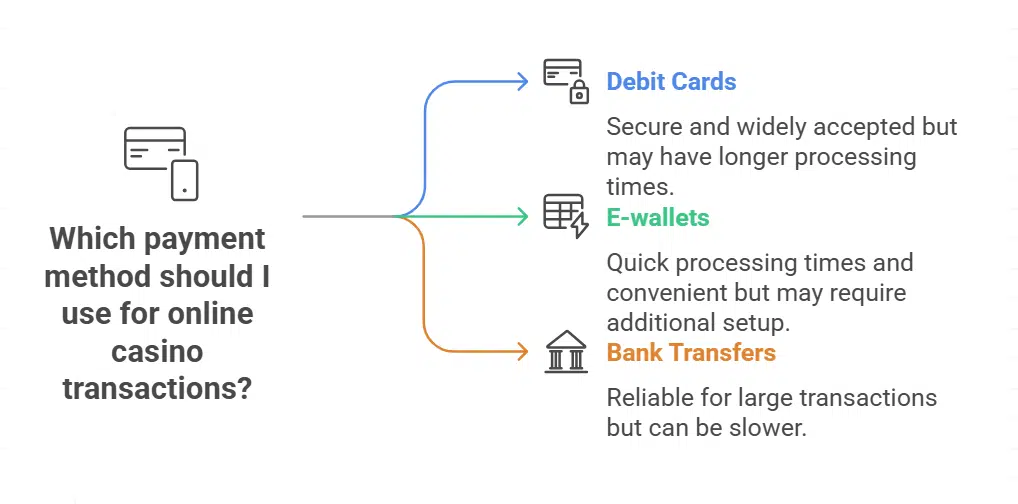
Most online casinos offer a variety of secure payment methods, including debit cards, e-wallets, and bank transfers. It’s advisable to use the same method for deposits and withdrawals to streamline account verification.
Withdrawal processing times differ between methods. While some may take up to five working days, e-wallets often offer quicker turnaround. Casinos will generally require identity verification before your first withdrawal, which is part of anti-money laundering procedures.
4. Bonuses and terms
Online casinos may advertise welcome bonuses, free spins, or cashback offers. However, these promotions always come with terms and conditions. Key points to look for include:
- Wagering requirements: These specify how many times you must play through the bonus before withdrawing funds.
- Expiry dates: Bonuses usually expire within a fixed period, such as 7 or 30 days.
- Game restrictions: Not all games contribute equally toward wagering requirements.
Always read the full promotional terms to understand what’s required and whether the bonus suits your playing style.
5. Responsible gaming tools
All licensed Irish casinos must offer tools to support responsible gaming. These features are optional but readily accessible within your account settings. They include:
- Deposit limits: Set daily, weekly, or monthly caps on how much you can deposit.
- Reality checks: Notifications that appear after set intervals to remind you how long you’ve been playing.
- Time-outs and self-exclusion: You can take a break from playing for a specified period, or exclude yourself entirely from the platform.