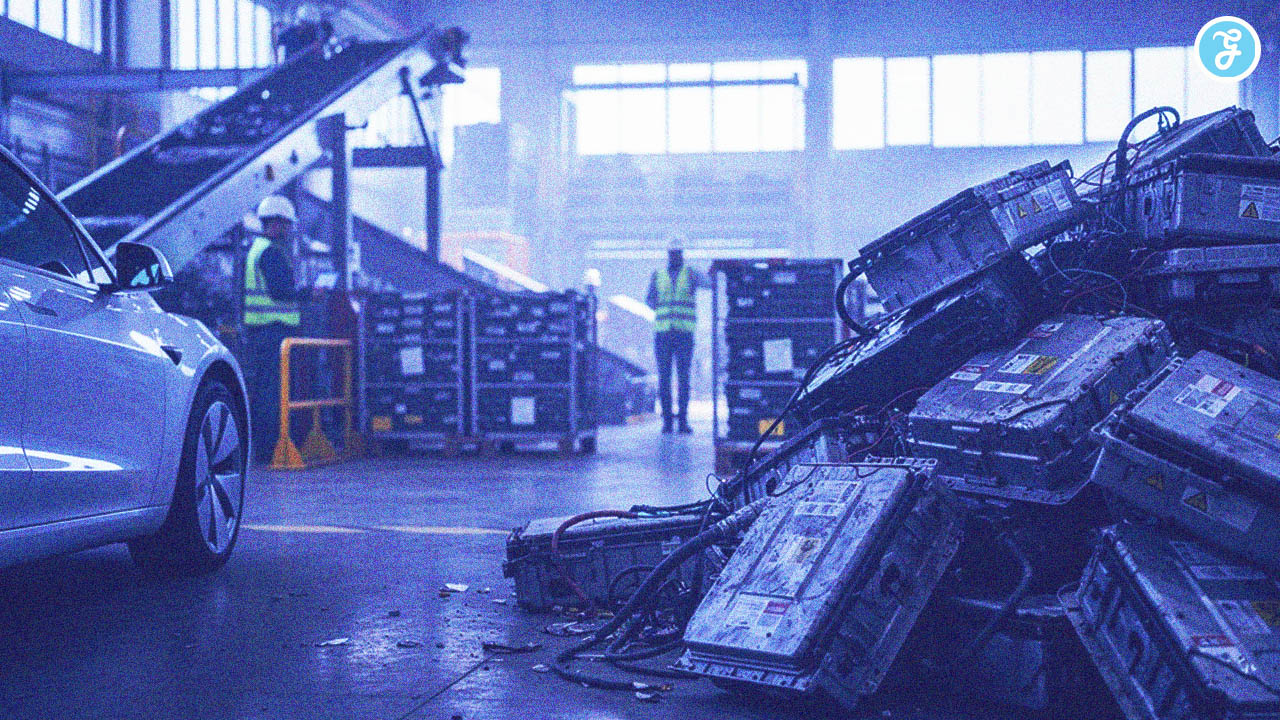
Electric vehicles offer quiet rides, lower fuel costs, and a cleaner future—but a critical issue often goes unnoticed: EV battery recycling challenges. When battery packs reach end-of-life, they can become hazardous electronic waste, putting pressure on ecosystems and resource supply chains. Without effective recycling, discarded lithium-ion batteries risk contaminating soil while demand for raw materials continues to surge.
Global demand for EV battery minerals is expected to rise sharply by 2050—lithium could increase 26 times, cobalt six times, nickel 12 times, and graphite nine times. This growing demand intensifies mining in regions like the Democratic Republic of the Congo for cobalt, and Australia and Chile for lithium, often bringing environmental and social concerns.
Addressing these EV battery recycling challenges requires scalable solutions. Advanced methods like hydrometallurgy and pyrometallurgy are improving material recovery, while second-life applications—such as energy storage systems—extend battery usefulness.
Innovators like Redwood Materials and Li-Cycle are leading the way, recovering over 95% of critical materials. These efforts help strengthen supply chains, reduce environmental impact, and move the EV industry closer to true sustainability.
Understanding the full battery lifecycle is essential to unlocking the real environmental potential of electric vehicles.
The Importance of Battery Recycling
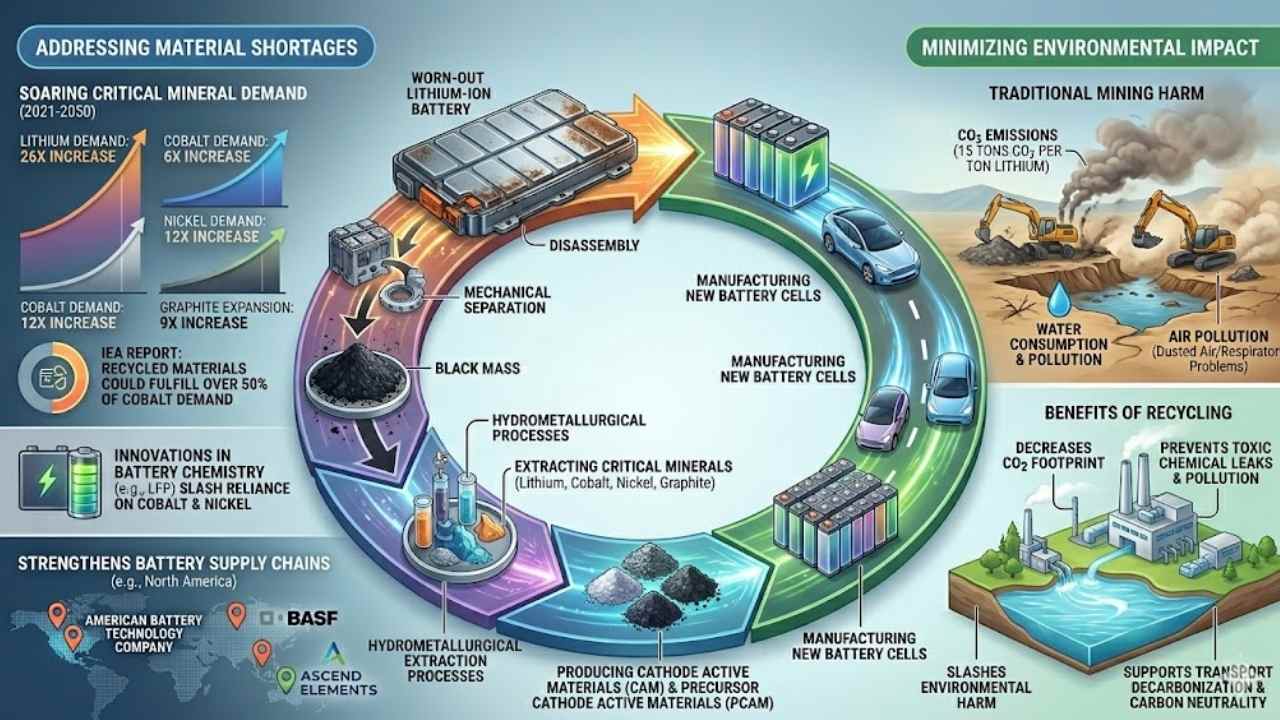
Think about electric vehicles zooming down the road, all powered by lithium-ion batteries that eventually wear out—what happens next? Recycling these packs fights shortages in vital stuff like cobalt and nickel, while slashing the harm from digging up fresh ores that mess with our planet.
Addressing Material Shortages
Electric vehicles rely on key battery materials like lithium, cobalt, nickel, and graphite. Demand for these critical minerals soars as we push for sustainable development goals. Lithium demand will jump 26 times from 2021 to 2050.
Cobalt needs will rise six times in that span. Nickel demand grows 12 times, and graphite expands nine times. These shortages hit the automotive industry hard, especially for battery electric vehicles aiming at net-zero emissions.
Picture a world where mining can’t keep up, like trying to fill a leaky bucket. Recycling steps in as a game-changer. It cuts dependence on virgin materials from places like Argentina, Indonesia, Russia, and South Africa.
Companies such as American Battery Technology Company in Reno, Nevada, lead the charge. They turn end-of-life batteries into recycled metals. This boosts the circular economy and eases pressure on the mining industry.
Recycled materials could fulfill over 50% of cobalt demand, notes a report from the International Energy Agency, highlighting the path to carbon neutrality.
Innovations in battery chemistry offer smart fixes too. Lithium iron phosphate batteries, or LFP types, slash reliance on cobalt and nickel. Tesla already uses them to lower environmental impact.
Think of it as swapping a gas-guzzler for a fuel-sipper. These changes support transport decarbonization and cut the CO2 footprint of battery production. Recycled lithium-ion batteries provide precursor cathode active materials, or PCAM, for new ones.
Firms like BASF and Ascend Elements pioneer closed-loop battery recycling. They process black mass from old cells into cathode active materials, or CAM. This loop strengthens battery supply chains across North America, from Ontario, Canada, to Battle Creek, Michigan, and Chico, California.
Such efforts align with environmental, social, and governance standards, making electric vehicle batteries more sustainable.
Minimizing Environmental Impact
Recycling lithium-ion batteries cuts down on new mining. This step eases environmental sustainability issues, and it lessens social harms too. Think about it, folks, improper disposal lets toxic chemicals leak out, which pollutes soil and water.
Mining kicks up dust that harms air quality, sparking respiratory problems in nearby communities. Lithium mining gulps down water and dirties local sources, diverting supplies folks rely on.
Each ton of mined lithium spews 15 tons of CO2, fueling climate change in a big way. Recycling fights back against these hits, making electric vehicle batteries part of a smarter value chain.
Picture the life-cycle assessment here, it’s like choosing a one-time headache over endless exhaust fumes. Mining’s environmental impact hits once, but gasoline and diesel keep pumping out emissions day after day.
Companies like American Battery Technology Company (ABTC) push lithium-ion battery recycling to shrink that carbon footprint. They focus on cathode active materials (CAM) and precursor cathode active materials (PCAM), turning old batteries into fresh resources.
This approach supports renewable energy goals, and it dodges the heavy toll of constant mining. Imagine communities breathing easier, with cleaner water flowing freely, all thanks to better recycling habits.
Challenges in EV Battery Recycling
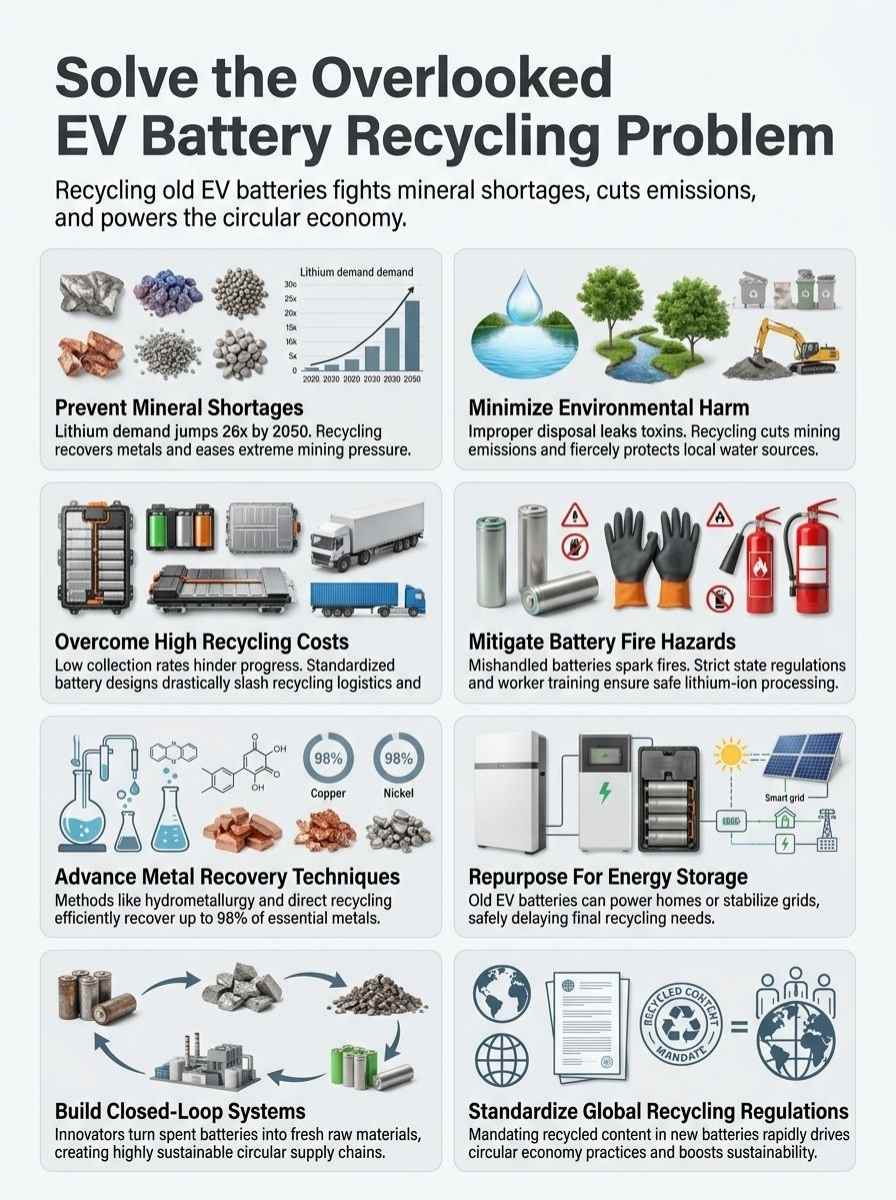
You know, recycling those lithium-ion batteries from electric cars sounds simple, but high costs and low rates turn it into a real puzzle that drains resources fast. Picture the chaos of varying designs and risky handling, plus the hassle of moving them safely—it’s like herding cats across states, pushing companies like Nanotech Energy to rethink their strategies.
Addressing Low Recycling Rates and High Costs
Let’s talk about the tough nuts to crack in EV battery recycling, like those stubbornly low rates and sky-high costs that keep things from running smooth.
| Key Issue | What It Means for You |
|---|---|
| Low Recycling Rates | Right now, few used EV batteries hit the recycling stream. Most still power vehicles on the road. This drags down the whole process, like a party where nobody shows up. |
| High Costs in the U.S. | Transportation eats up big bucks to move batteries around. Collection adds more expense, as folks gather them from all over. Disassembly takes time and money to pull parts apart safely. The actual recycling step costs a fortune too, making the whole deal pricier than grabbing fresh materials. |
| Component Value Drives Interest | Recyclers chase batteries based on part worth. They skip components that cost more to recycle than to buy new. Picture a junkyard picker ignoring rusty bits; it’s all about the profit margin for those lithium-ion packs. |
| Impact on Sustainability | These hurdles mean we miss chances to reuse metals like cobalt and nickel. You end up with more mining, which harms the planet. Imagine if we fixed this; your next EV could run on reborn batteries, cutting waste big time. |
Standardizing Battery Designs
Electric vehicle batteries vary a lot in design, and that creates big hurdles for recycling. Makers use different shapes, sizes, and materials in lithium ion batteries, which slows down the process.
Standardization fixes this mess. It boosts safety and cuts costs. Look at the U.S. lead-acid battery recycling model; it thrives because manufacturers stuck to uniform designs and components.
Experts like Michael Burdick from Toda Advanced Materials highlight this in studies. A paper in Nature Communications shows how standard parts speed up recovery of key metals. Imagine trying to fix a puzzle with mismatched pieces, that’s the current scene without standards.
We need to push for common blueprints across the industry. This change would make recycling smoother, like a well-oiled machine.
The EU steps up here with smart rules. They require new lithium ion batteries to include a set share of recycled parts in the next decade. This mandate drives makers to standardize.
It helps the environment too. Recyclers can handle batteries faster and safer. Think of it as setting ground rules for a fair game. Companies team up on this, sharing ideas to match designs.
Such efforts extend battery life and ease second uses. Readers, picture your old phone battery fitting any charger; that’s the dream for electric vehicle batteries. Progress happens when we align on basics.
Standardization is key to unlocking efficient recycling for lithium ion batteries, says Michael Burdick from Toda Advanced Materials.
Mitigating Safety Risks
Safety comes first in recycling electric vehicle batteries. Improper handling of lithium-ion batteries sparks fire hazards, and that’s no joke. Think of it like taming a wild animal, you need the right know-how to stay safe.
Proper education cuts these risks down. Accessibility to training makes a big difference too. Workers learn to spot dangers early. They use simple steps to avoid mishaps. Imagine dodging a bullet by just knowing the drill.
California leads the way with smart rules. Bill No. 2440 pushes battery producers to act. They must fund or build recycling programs by April 1, 2027. These programs tackle safety head-on.
Producers set up safe collection spots. They train folks on fire prevention. Education spreads wide, like ripples in a pond. Fire risks drop when everyone knows the ropes.
Streamlining Collection and Transportation Logistics
Electric vehicle battery recycling faces big hurdles in collection and transport. Smart streamlining can cut costs and boost green outcomes, folks.
- Costs for recycling electric vehicle batteries soar in the U.S. due to pricey collection and transportation logistics, yet this setup slashes environmental harm compared to other spots. Think of it like shipping fresh produce across states, it keeps things clean but racks up the bill. Governments team up with manufacturers and recyclers to fix this mess. They focus on better routes and shared hubs, which drop expenses over time. Imagine your old phone battery getting a quick ride to reuse instead of a long, costly haul.
- Location plays a huge role in the environmental punch of recycling electric vehicle batteries, with transport methods tipping the scales on impact. In the U.S., folks see lower harm from smart local setups, but high logistics costs bite hard. Picture a relay race where each handoff matters, that’s how collaborations among governments, manufacturers, and recyclers speed things up. They build networks that ease collection from dealerships to plants. This growth in teamwork, like friends pitching in on a road trip, makes the whole process smoother and cheaper.
- Transportation methods directly shape the cost and green side of electric vehicle battery recycling, especially in spread-out areas like the U.S. Here, expenses climb from complex collection logistics, but the payoff is less pollution than in far-off places. Hey, it’s like organizing a neighborhood cleanup, efficient but not free. The industry grows through ties between governments, manufacturers, and recyclers to streamline these flows. They use tech for tracking and group shipments, cutting waste and delays in fun ways, almost like a game of logistics Tetris.
Techniques in Battery Recycling
Imagine this, folks, we’re pulling valuable cobalt and nickel from old lithium-ion batteries with fiery smelting methods that blast away impurities, or soaking them in acids to leach out lithium through wet processes, and now folks are even dismantling cells directly to salvage cathode materials without all the fuss.
Eager to geek out on these game-changers? Stick around for the full scoop.
Exploring Pyrometallurgy
Pyrometallurgy shreds and burns batteries to extract metals. Workers start by breaking down the cells, then they heat everything in a furnace. This leaves charred plastic, metals, and glues behind for sorting.
Linda Gaines from Argonne National Laboratory calls this method treating batteries like ore, you know, like digging minerals from the ground. It pulls out valuable stuff, but boy, does it guzzle energy.
Safety issues pop up too, with all that fire and heat involved.
Recovery rates shine for some metals in this process. Copper hits 90 percent, and steel matches that mark. Cobalt, as Co2+, reaches 98 percent, while nickel, as Ni2+, does the same.
These numbers show strength, yet the burning step drains power like a thirsty engine. Folks worry about risks, like accidents from the intense heat. Still, this approach gets the job done for pulling metals back into use.
Investigating Hydrometallurgy
Hydrometallurgy breaks down EV batteries in a clever way. Workers dissolve them in acid, and that pulls out key components. This method beats pyrometallurgy in efficiency for grabbing metals, you know, like getting more bang for your buck.
But watch out, it relies on toxic chemicals, so safety comes first. Imagine dipping old batteries into a chemical bath, like brewing a potent soup, to rescue valuable bits. Recovery rates hit 90% for copper, steel, aluminum, and graphite.
For cobalt as Co2+ and nickel as Ni2+, they reach an impressive 98%. That’s a lot of material saved from the scrap heap.
Researchers push boundaries with new solvents. These keep valuable metals in solid form, skipping the messy dissolve step. Picture scientists in labs, tweaking formulas like mad alchemists, to make recycling smoother.
Such innovations cut waste and boost sustainability for EV batteries. They tackle those toxic issues head-on, paving a cleaner path. With these advances, battery recycling feels less like a chore and more like a smart cycle.
Developing Direct Recycling
Direct recycling stands out as an emerging technique that preserves cathodes, which makes them easier to reprocess. Here’s how it works: you vacuum away the electrolyte, shred the battery, remove binders with heat or solvents, and then use flotation techniques to separate materials.
This method tackles current challenges, like figuring out the exact battery composition and ensuring economic viability tied to the value of cathode materials. Folks, it’s like giving old batteries a fresh start without wasting precious parts.
Recovery rates impress with copper at 90 percent, steel at 90 percent, aluminum at 90 percent, graphite at 90 percent, and cobalt as Co2+ at 50 percent. Imagine repurposing these materials efficiently; it cuts down on waste and boosts sustainability for EVs.
You see, this approach keeps things simple yet effective, addressing those tricky safety and cost issues head-on.
Second-Life Uses for EV Batteries
Old EV batteries, you know, the ones past their prime for powering cars, find new gigs in home energy setups or grid backups, slashing waste like a smart thrift shopper. Imagine: that pack from your electric ride now stores solar power for your house, giving it extra innings before the full recycle shuffle.
Repurposing for Energy Storage
EV batteries hit end-of-life at 70 to 80 percent of their original capacity. Take a 100 kWh battery, for example. At that point, it still holds 70 to 80 kWh. That amount powers an average American home for over two days.
Folks, that’s like finding extra cash in your old jeans pocket. Companies repurpose these old lithium batteries for large-scale energy storage. They store renewable energy during production peaks.
This approach extends battery life, you know, giving them a second act before full recycling.
Nissan in Japan leads the way. They turn old batteries into backup power for train signals and solar-powered streetlights. Imagine: a battery from your old car keeps the lights on during a blackout.
In France, firms use these batteries to power data centers. Other companies test them for grid stabilization during high demand periods. This smart reuse cuts waste, folks. It supports a greener grid, one battery at a time.
Extending Battery Life Before Recycling
EV batteries often keep going strong even after they leave your car. Studies show that reusing them in energy storage or other applications delays recycling and maximizes resource use.
This approach cuts down on environmental and social impacts, like mining new materials too soon. Nissan’s Nic Thomas pointed out that almost all electric car batteries produced are still in cars, which highlights their long lifespan.
Imagine giving these power packs a second act, say, storing solar energy at home; it’s like letting an old athlete coach the next team instead of benching them early.
You can repurpose these batteries for grid support or backup power, extending their value before the final recycle. This reuse strategy feels like a smart win, turning potential waste into ongoing helpers.
Nearly all batteries stay installed in vehicles right now, proving they last for years. By focusing on second-life uses, we ease pressure on raw supplies and keep things greener.
Technological Innovations in Battery Recycling
Picture smart robots zipping through piles of old EV batteries, picking out cobalt and lithium with laser-sharp eyes, slashing waste in ways that feel like science fiction come to life.
Then, those closed-loop setups kick in, melting down materials and spitting out fresh battery packs, saving the planet one recharge at a time, doesn’t that spark your curiosity?
Introducing Advanced Technologies
Companies like Redwood Materials, Li-Cycle, and Ascend Elements lead the charge in battery recycling. They recover over 95% of key materials, you know, like lithium, cobalt, and nickel.
Think of it as mining treasure from old batteries, turning waste into gold for new ones. Innovations in recycling tech boost efficiency, they make the whole process smoother and more effective.
The industry expands capacity fast to handle those end-of-life batteries piling up.
Recycled batteries show better resilience and energy density than originals, that’s a game-changer for sustainability. Picture your old EV battery coming back stronger, like a phoenix rising from the ashes.
These advances improve battery recovery processes, they cut down waste and save resources. Firms push closed-loop systems, recycling materials right back into production, keeping things circular and eco-friendly.
Implementing Closed-loop Systems
Closed-loop systems turn old EV batteries into fresh raw materials for new ones. Factories collect spent batteries and pull out valuable parts like lithium and cobalt. This process cuts the need for new mining.
Initial EVs start to retire soon, so these systems grow vital. Picture a cycle where nothing goes to waste, like reusing your grandma’s old recipes. Recycling provides that steady source of materials.
It slashes reliance on virgin resources. Battery value ties to those key components inside.
Experts push for more closed-loop setups to boost sustainability. Teams refine methods to recover metals efficiently. You see, this approach lowers costs over time. Humor me here, it’s like giving batteries a second chance at life without the drama.
As demand for EVs rises, these systems help meet it smartly. They reduce environmental harm from mining. Folks in the industry link high component worth to successful loops.
Supportive Regulatory and Policy Framework
Governments push for strong rules that make recycling EV batteries a must, like tax breaks for companies that reuse materials. Imagine a world where policies turn old car power packs into home energy savers, cutting waste and sparking green jobs—want to learn how these laws shape our future?
Standardizing Recycling Regulations
Let’s talk about how standardizing recycling regulations can make a real difference in the EV battery world, folks.
| Key Aspect | Details and Insights |
|---|---|
| EU’s Push Forward | The European Union leads the charge with new laws on lithium-ion battery recycling. Battery makers now handle end-of-life duties. This setup holds them accountable, like a coach calling the plays. |
| Mandated Recycled Content | EU rules demand that fresh lithium-ion batteries include a set share of reused materials in the coming decade. Think of it as baking with recycled ingredients to cut waste. It boosts sustainability right from the start. |
| U.S. Lag in Standards | America lacks set rules for recycled content in lithium-ion batteries so far. We need to catch up, or we’ll miss the boat on greener practices. Think of it as trailing in a race we can win. |
| California’s Bold Step | Bill No. 2440 in California forces battery producers to back or build recycling setups by April 1, 2027. This move sparks action, much like a spark plug firing up an engine. It promotes circular economy ideas and cuts environmental harm. |
| Why Standardization Matters | Uniform rules across regions ease logistics for collection and transport. They foster closed-loop systems, where materials cycle back in. Imagine a loop that keeps resources flowing without end, saving the planet one battery at a time. |
Promoting Circular Economy Practices
Governments push for rules that reuse materials in smart ways. They team up with car makers and recycling firms to build strong systems. This collaboration grows fast in the industry.
Look at lead-acid batteries in the U.S.; folks recycle 99% of them. That success shows how a full loop works, like a well-oiled machine keeping waste low. Standardization plays a big role here.
Designers stress uniform battery setups to boost safety and speed up processes. It supports the whole cycle, making things smoother for everyone.
Investors pour money into recycling efforts. These funds spark progress in learning, easy access, fresh ideas, and better ways to work. Imagine old EV batteries finding new jobs instead of hitting the trash heap.
Policies encourage this shift, cutting down on fresh mining. Recyclers innovate with tools like sorting machines and recovery methods. Everyone wins when we close the loop, you know? It feels good to see waste turn into treasure.
Benefits of Enhanced Battery Recycling
Imagine slashing your need for fresh metals like lithium and cobalt, pulled straight from the earth, by reusing what’s already in old EV batteries—it’s like giving Mother Nature a much-needed break.
Plus, cutting down on mining means fewer emissions, so you help shrink that pesky carbon footprint, making the planet a cooler place for everyone.
Decreasing Dependence on Virgin Materials
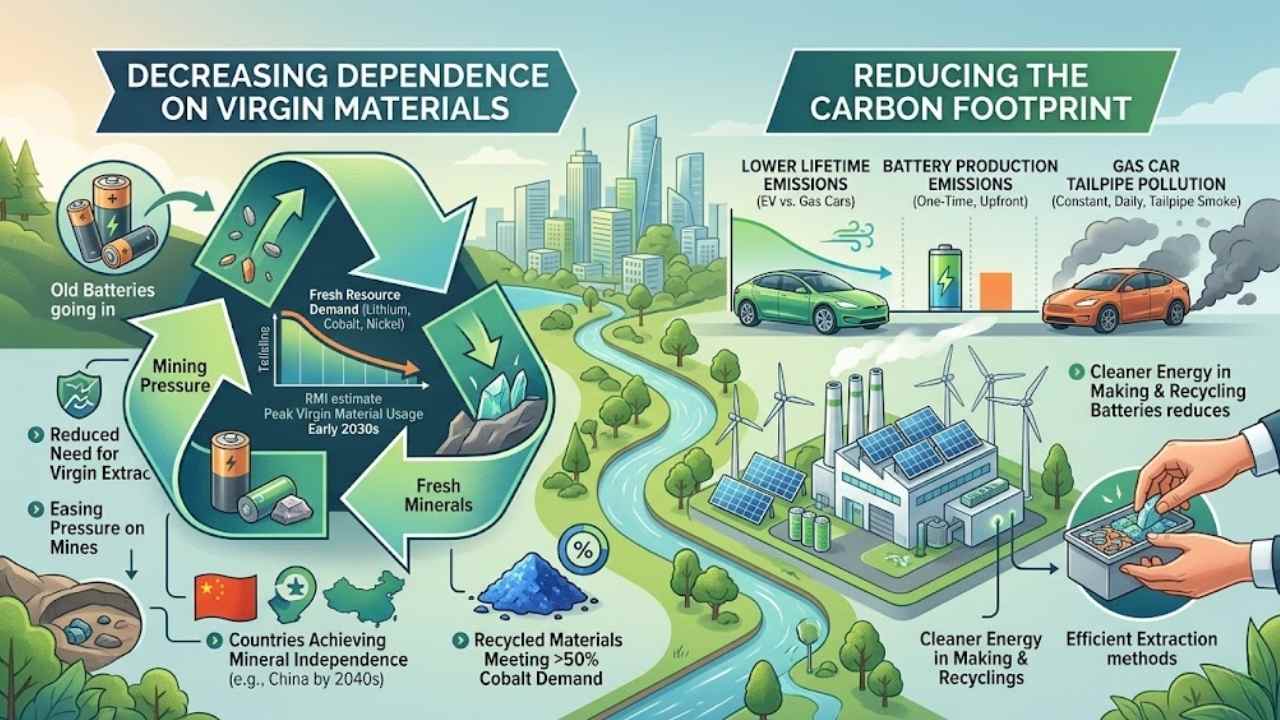
Improved recycling efforts cut our need for fresh resources. RMI estimates peak virgin material usage by the early 2030s. Think of it like this, folks, we reuse what we have instead of digging up more.
Countries like China could hit mineral independence by the 2040s through boosted recycling. That means less strain on the earth, and hey, who doesn’t love a good comeback story for old batteries? Recycled materials might meet over 50% of cobalt demand.
This drops the push for virgin extraction, easing pressure on mines.
Recycling slashes the call for new mining. It minimizes reliance on virgin materials, plain and simple. Picture a world where we loop back resources, like passing the baton in a relay race.
Cobalt gets a second shot without fresh digs. China leads the charge toward self-sufficiency by the 2040s. RMI’s outlook shows virgin peaks fading soon, by the early 2030s. We build a sustainable loop, keeping things green and efficient.
Reducing the Carbon Footprint
Electric vehicles cut down emissions over their whole life. Studies prove EVs have much lower lifetime emissions than gas cars. This holds true, even with mining for batteries. You see, battery production creates emissions just once, up front.
Gas cars spew tailpipe pollution every day, like a never-ending smoke machine. Cleaner energy in making and recycling batteries shrinks that footprint more. Think about it, it’s like giving the planet a break from constant exhaust.
U.S. recycling leads with less harm to the environment than other spots. Folks there use smart methods to pull out materials without big pollution. This approach recycles cobalt and lithium efficiently.
It turns old batteries into new ones, slashing the need for fresh mining. Imagine reusing your old phone charger instead of buying new; it saves resources and keeps air cleaner. Batteries get a second chance, and so does our world.
Final Thoughts
We’ve explored how battery recycling tackles material shortages, cuts environmental harm, and boosts EV sustainability through methods like hydrometallurgy and direct recycling. These approaches prove simple and effective, with companies such as Redwood Materials recovering over 95% of key metals like lithium and cobalt without much hassle.
What steps will you take to support better recycling in your community, maybe by pushing for standardized battery designs? Strong policies and innovations can slash our reliance on mining, easing ethical woes in places like the Democratic Republic of Congo and shrinking carbon footprints big time.
Check out resources from the USGS on critical minerals for more insights, and let’s all pitch in to make EVs truly green, turning today’s waste into tomorrow’s power.
Frequently Asked Questions (FAQs) on EV Battery Recycling Challenges
1. What’s the big deal with battery recycling for electric cars?
You know, electric vehicles promise a green future, but their lithium batteries pile up as waste, creating a hidden sustainability mess. It’s like ignoring the trash after a party; we need to clean up to keep things truly eco-friendly.
2. Why do folks overlook this EV battery problem?
People focus on driving electric vehicles to cut emissions, yet forget the end-of-life headache for those power packs.
3. How does recycling these batteries help the planet?
Recycling pulls out valuable metals like cobalt and nickel, cutting down on mining that harms the earth. Plus, it stops toxic leaks into soil and water, you see. Think of it as giving old batteries a second life, rather than letting them rot in landfills.
4. What can we do to fix this overlooked issue?
Push for better recycling laws and tech that makes it easier to reuse battery parts. Companies should step up too, designing cars with recycling in mind from the start.