Digital Marketing for Digital Services Businesses
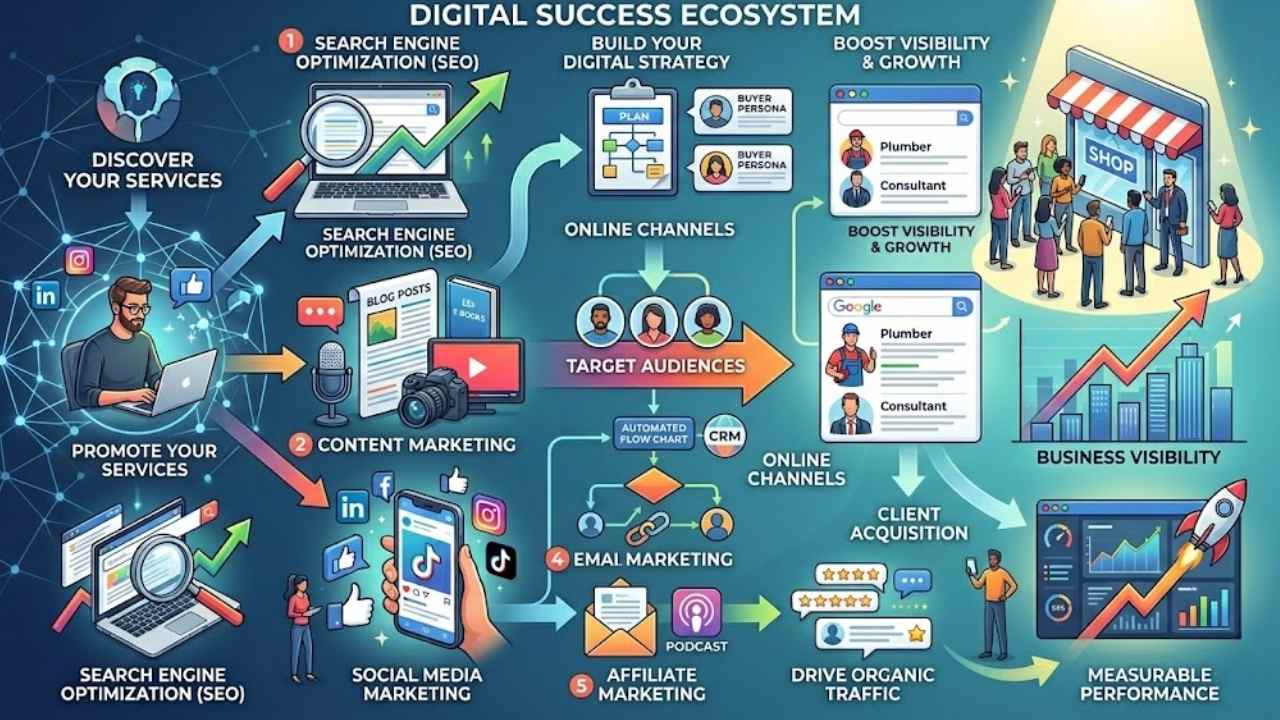
Picture your digital services business as a hidden gem in a crowded market, waiting for the right spotlight. Digital marketing shines that light, with tactics like SEO and social media marketing building brand awareness and drawing in clients eager for your skills.
What is digital marketing?
Digital marketing uses online channels to promote products and services to potential customers. Businesses target specific audiences with precision and accuracy. They measure performance metrics in real time, which lets them make quick adjustments to strategies.
You see, it’s like casting a smart fishing line right where the big fish swim, instead of hoping for luck in a vast ocean. Digital marketing falls into eight main types, such as affiliate marketing, content marketing, email marketing, and marketing analytics.
These tools help with search engine optimization, social media marketing, and digital advertising. For example, companies like Coca-Cola build brand awareness through video content on platforms like YouTube and Facebook.
Digital marketing strategies are essential for business growth in the modern online landscape. – Lee Frederiksen, Ph.D.
A digital marketing strategy acts as a structured plan. It boosts your business visibility online across channels like TikTok and Google Ads. Small businesses gain from tactics like inbound marketing and lead nurturing.
They create buyer personas to reach the right people. Imagine chatting with a friend about your favorite podcast; that’s the engaging vibe email marketing brings to subscribers. Tools like CRM systems and marketing automation support this effort.
Even entities like the Hinge Research Institute highlight how these methods drive organic traffic and customer reviews.
Importance of online presence for service-based businesses
Service-based businesses thrive with a strong online presence, you know, like a shop window that draws in crowds day and night. Think about it, folks often search for professional services on their phones, and without visibility, you miss out on those potential clients.
Small businesses gain big from specific digital marketing strategies that grow their reach effectively. These strategies form a structured plan, one that boosts business visibility through various online channels.
They let you target specific audiences with precision and accuracy, hitting the mark every time. Plus, performance metrics show up in real time, so you adjust tactics on the fly. Imagine a plumber or consultant popping up first in Google searches, thanks to search engine optimization (SEO) and a solid Google Business Profile.
Digital marketing uses online channels to promote your services to potential customers, making that connection seamless.
Build that presence across multiple social media platforms, it’s a good practice that amps up your online marketing strategy. Create a comprehensive marketing plan to persuade consumers to choose your services, and include analysis of your target audience so messages land with the right people.
Digital marketing strategies prove essential for business growth in today’s online landscape, no question. Categorize them into eight main types, like affiliate marketing, content marketing, email marketing, and marketing analytics, each one a tool in your kit.
Maximize online visibility with content creation, blog posts, and video marketing, perhaps even podcasting on Clubhouse. Team up with influencers through influencer marketing, or run targeted advertising campaigns to expand your reach.
Tools like AI marketing tools and chatbots help engage folks, while an internet connection via fiber optics keeps everything running smooth. For B2B companies, cloud computing and e-commerce platforms tie it all together, fostering brand building and earned media that feels authentic.
Crafting a Digital Marketing Strategy
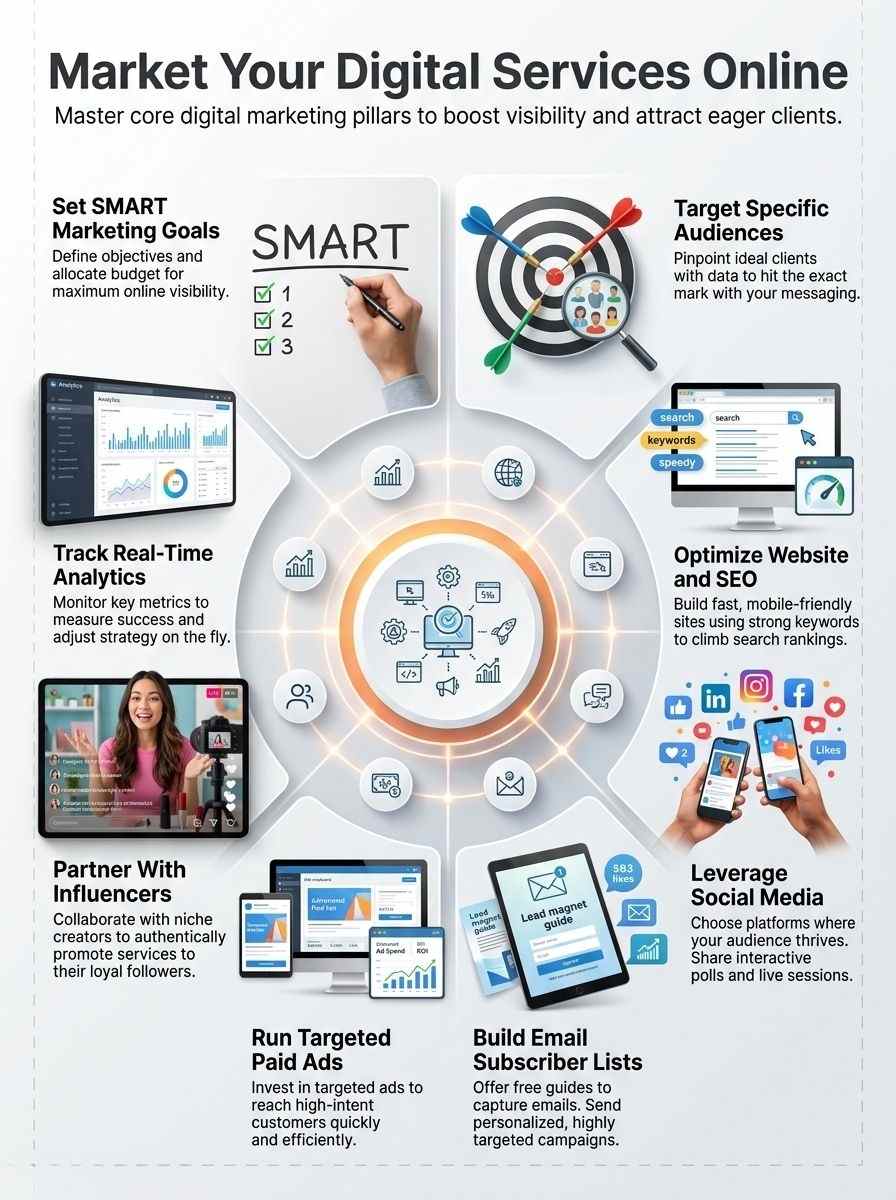
Start by picking goals that match your business dreams, like boosting leads or growing sales, using the SMART framework to keep them sharp and on track. Next, zero in on your ideal customers, say busy parents or tech-savvy pros, and set aside cash for tools like Google Ads to hit them right where they hang out online.
Setting clear goals and objectives
Clear goals form the backbone of any solid digital marketing strategy for your services business. Objectives, like those in the SMART framework, keep you on track and make sure your efforts lead to real growth.
- Start by setting business objectives that align with your overall aims, such as boosting visibility through internet marketing; for instance, aim to grow your email list by 20% in six months, drawing from the fact that digital marketing strategies are essential for business growth in the modern online landscape.
- Analyze your target audiences with precision, because digital marketing allows businesses to target specific audiences with accuracy; think of it like a laser beam, focusing on folks who need your digital services, and include tools like AI agents to segment them effectively.
- Build a structured plan, as a digital marketing strategy is a structured plan for using various online channels to increase your business visibility online; incorporate marketing tactics, such as content strategy, to persuade consumers to purchase your products or services.
- Categorize your approach, knowing digital marketing can be broadly categorized into 8 main types including Affiliate Marketing, Content Marketing, Email Marketing, and Marketing Analytics; pick ones that fit your goals, like using SEO for better search rankings.
- Measure performance in real time, since performance metrics in digital marketing can be measured in real time, enabling quick adjustments to strategies; set objectives around KPIs, perhaps tracking website optimization results with tools from the Adobe Experience Cloud team.
- Focus on small business perks, as small businesses can benefit from specific digital marketing strategies built to help grow their business effectively; for example, allocate resources to online advertising that maximizes presence across multiple social media platforms.
- Include audience analysis in your plan, because a digital marketing strategy should include analysis of your target audience to ensure messaging reaches the right people; chat with potential clients on platforms like Yelp to gather insights, making your objectives more spot-on.
- Create a comprehensive marketing plan, essential to persuade consumers to purchase your products or services; tie in digital tools and techniques, maybe collaborating with experts like Mari Smith for social media tips.
- Use channels wisely, since digital marketing uses online channels to promote products and services to potential customers; set goals around marketing campaigns, ensuring they cover areas like paid ads or even partnerships with entities such as Earthlink for broader reach.
- Adapt for growth, with strategies that involve running targeted paid media campaigns or considering general liability insurance to protect your business; oh, and include travelers in your audience if your services cater to them, blending in influencer marketing for extra punch.
Identifying your target audience
You spot your ideal customers in the crowd. Digital marketing lets businesses target specific audiences with precision and accuracy. Think of it like fishing with a laser-guided hook, you hit the right spot every time.
Analyze your target audience to make sure your messaging reaches the right people. Small businesses gain from digital techniques that grow their operations effectively. Performance metrics show up in real time, so you adjust strategies on the fly.
A digital marketing strategy is a structured plan for using various online channels to increase your business visibility online.
Picture your audience as puzzle pieces that fit your services. Build a comprehensive marketing plan to persuade consumers to buy what you offer. Digital marketing strategies prove essential for business growth in the modern online landscape.
Maximize your presence across multiple social media platforms as part of your online marketing strategy. Digital marketing uses online channels to promote products and services to potential customers.
It falls into eight main types, including affiliate marketing, content marketing, email marketing, and marketing analytics. SEO helps here too, boosting your search engine optimization to draw in those exact folks.
Allocating a digital marketing budget
Start with your goals in mind. Businesses allocate budgets to digital marketing for real growth. Think of it like planting seeds in a garden; you invest where the soil is richest. Digital marketing strategies are essential for business growth in the modern online landscape.
A digital marketing strategy is a structured plan for using various online channels to increase your business visibility online. Small businesses can benefit from specific digital marketing strategies designed to help grow their business effectively.
Spread funds across key areas, like search engine optimization (SEO) for long-term visibility.
Digital marketing can be broadly categorized into 8 main types, including Affiliate Marketing, Content Marketing, Email Marketing, and Marketing Analytics. Pick tools that fit, such as Google Analytics for tracking.
It lets you measure performance metrics in digital marketing in real time, enabling quick adjustments to strategies. Digital marketing allows businesses to target specific audiences with precision and accuracy.
A digital marketing strategy should include analysis of your target audience to ensure messaging reaches the right people. Creating a comprehensive marketing plan is essential to persuade consumers to purchase your products or services.
Hey, imagine chatting with a friend over coffee about splitting the bill wisely; that’s your budget talk.
Optimizing Your Website
Think of your site as the front door to your business, so spruce it up with clean layouts and fast loading times that keep visitors smiling and sticking around. Boost your visibility by weaving in smart keyword strategies and mobile-friendly tweaks, turning search engines into your best pals for drawing in eager clients.
Enhancing website design and user experience
Your website acts as the front door to your digital services business, so make it inviting. Focus on clean layouts that load fast and work well on phones and computers. Users hate waiting, like standing in a long line at the coffee shop.
Add easy navigation menus, and sprinkle in eye-catching images that tell your story. This boosts user experience, keeping visitors around longer. Tie in search engine optimization, or SEO, to help people find you online.
Good design supports your complete digital marketing strategy, which uses online channels to promote services and target specific audiences with precision.
Small businesses grow effectively through these tweaks, as performance metrics get measured in real time for quick fixes. Analyze your target audience to craft a site that speaks to them, much like chatting with an old friend over lunch.
Build that comprehensive marketing plan to persuade consumers, and digital marketing falls into eight main types, including content marketing and marketing analytics. These elements create a structured plan that increases visibility and drives business growth in the modern online landscape.
Implementing effective SEO techniques
SEO stands for search engine optimization, and it plays a key role in digital marketing. Businesses use it to climb search rankings and draw in more visitors.
- Focus on keywords first, because digital marketing allows businesses to target specific audiences with precision and accuracy, so pick terms your ideal customers search for, like in content marketing, one of the eight main types that ties into SEO.
- Build high-quality backlinks from trusted sites, as this boosts your authority, much like how performance metrics in digital marketing can be measured in real time, enabling quick adjustments to strategies that improve your SEO results.
- Optimize your site’s speed and mobile-friendliness, folks, since small businesses can benefit from specific digital marketing strategies designed to help grow their business effectively, and a slow page turns people away faster than a bad date.
- Create valuable content that answers questions, tying into how digital marketing uses online channels to promote products and services to potential customers, so think blog posts or guides that keep readers hooked.
- Use tools like Google Analytics to track progress, because a digital marketing strategy should include analysis of your target audience to ensure messaging reaches the right people, and this data shows what’s working in your SEO efforts.
- Update old content regularly, as digital marketing strategies are essential for business growth in the modern online landscape, refreshing pages to stay relevant, like giving your site a fresh coat of paint.
- Earn mentions on social media, since maximizing presence across multiple social media platforms is considered a good practice as part of an online marketing strategy, and shares act as signals to search engines.
- Structure your URLs clearly, with words that match searches, because creating a comprehensive marketing plan is essential to persuade consumers to purchase your products or services, making it easy for bots and people to navigate.
- Add alt text to images, a simple step in search engine optimization that helps with accessibility, and it fits into how digital marketing can be broadly categorized into eight main types, including marketing analytics for better insights.
- Craft meta descriptions that entice clicks, as a digital marketing strategy is a structured plan for using various online channels to increase your business visibility online, so write them like inviting hooks that pull in traffic.
Leveraging Social Media Platforms
Pick platforms like Instagram or LinkedIn that fit your crowd, and watch your reach grow like wildfire. Share fun polls or quick tips to chat with fans, turning followers into loyal clients who stick around.
Choosing the right platforms for your audience
You want to pick social media platforms that fit your audience like a glove, maximizing your reach without spreading too thin.
| Key Step | Details and Tips |
|---|---|
| Analyze your target audience first | Digital marketing allows businesses to target specific audiences with precision and accuracy. Look at who buys your digital services. Ask, are they young pros on LinkedIn, or creative types on Instagram? A digital marketing strategy should include analysis of your target audience to ensure messaging reaches the right people. Get this right, and you hit the bullseye. |
| Explore various online channels | Digital marketing uses online channels to promote products and services to potential customers. Think Facebook for broad chats, Twitter for quick updates, or TikTok for fun videos. Small businesses can benefit from specific digital marketing strategies built to improve their business effectively. Mix them up, like a chef blending spices. |
| Maximize presence across multiple spots | Maximizing presence across multiple social media platforms is considered a good practice as part of an online marketing strategy. Digital marketing strategies are essential for business growth in the modern online landscape. Track performance metrics in digital marketing, you can measure them in real time, enabling quick adjustments to strategies. Spread out, but focus where your crowd hangs out. |
| Build a structured plan | A digital marketing strategy is a structured plan for using various online channels to increase your business visibility online. Digital marketing can be broadly categorized into 8 main types including Affiliate Marketing, Content Marketing, Email Marketing, and Marketing Analytics. Tie this into your complete goals, like persuading consumers to purchase your products or services. Imagine it as your roadmap to success. |
| Engage and adapt | Creating a comprehensive marketing plan is essential to persuade consumers to purchase your products or services. Use tools like Google Analytics to see what works. One business owner told me, “I ditched Pinterest when my tech clients stuck to LinkedIn, and sales jumped.” Stay flexible, like a tree in the wind. |
Engaging with followers through interactive content
Social media turns into a lively party when you add interactive content. Followers love jumping in, and it boosts your digital marketing game.
- Post polls on platforms like Instagram or Facebook to ask what services your audience wants next, since digital marketing allows businesses to target specific audiences with precision and accuracy, making your content feel personal and spot-on.
- Run live Q&A sessions where you chat directly with fans, sharing tips on your digital services, and note that performance metrics in digital marketing can be measured in real time, enabling quick adjustments to strategies based on what folks say right then.
- Share quizzes about industry trends, tying in search engine optimization (SEO) facts to educate and entertain, as small businesses can benefit from specific digital marketing strategies aimed at helping grow their business effectively through fun, bite-sized challenges.
- Create stories with stickers that let users vote or react, building that email subscriber list on the side by prompting sign-ups for more goodies, because a digital marketing strategy should include analysis of your target audience to ensure messaging reaches the right people.
- Host giveaways where entrants comment their ideas, sparking chats that maximize presence across multiple social media platforms, which is considered a good practice as part of an online marketing strategy, like tossing a ball and watching everyone catch it.
- Upload user-generated content challenges, encouraging shares of how they use your services, since digital marketing uses online channels to promote products and services to potential customers, turning followers into your best promoters with real stories.
- Drop memes or funny videos that invite captions from your crowd, keeping things light and empathetic, as digital marketing strategies are essential for business growth in the modern online landscape, much like adding spice to a bland meal.
- Set up collaborative posts, like co-creating tips with influencers, to blend voices and expand reach, because creating a comprehensive marketing plan is essential to persuade consumers to purchase your products or services through shared, engaging vibes.
- Use augmented reality filters for playful interactions, tracking engagement to refine your approach, and hey, digital marketing can be broadly categorized into 8 main types including Affiliate Marketing, Content Marketing, Email Marketing, and Marketing Analytics, so mix in a few for variety.
- Launch threaded discussions on Twitter about service hacks, weaving in a digital marketing strategy as a structured plan for using various online channels to increase your business visibility online, like building a bridge straight to your audience’s interests.
Using Email Marketing Strategies
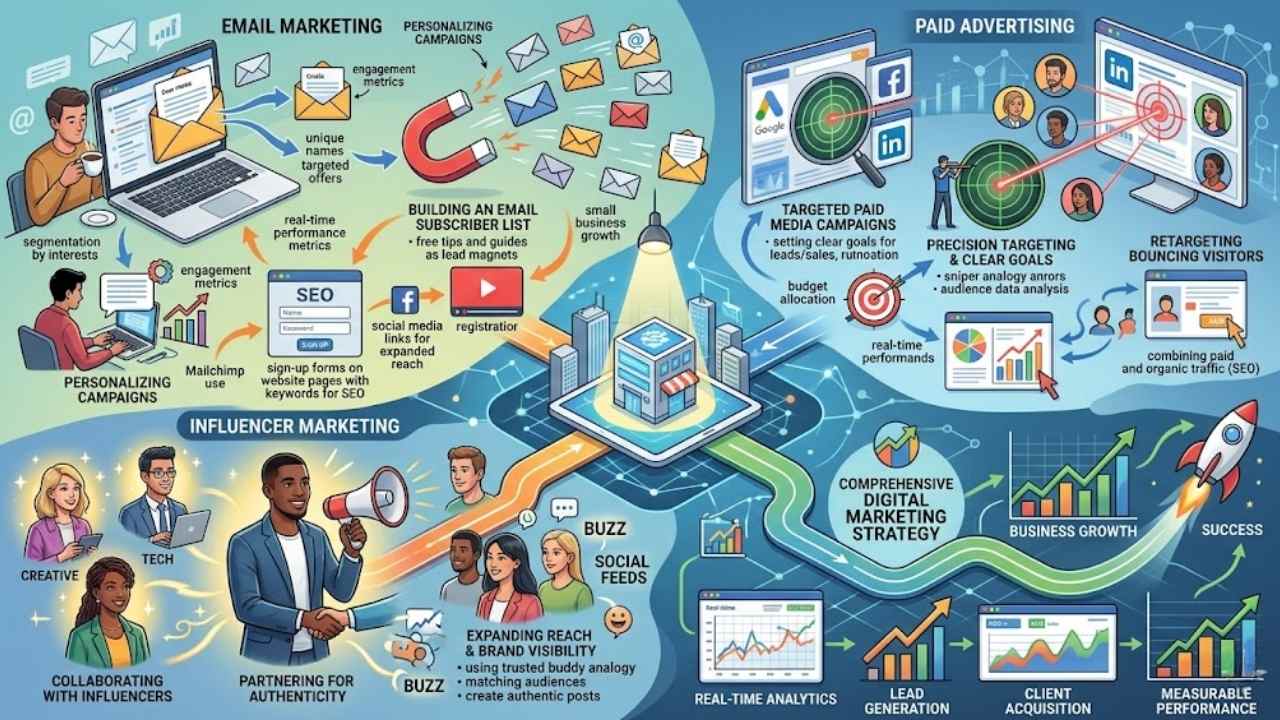
Personalize your emails, like chatting with an old friend over coffee, to boost opens and clicks from folks who feel seen. Grow your subscriber list by offering free tips or webinars, turning casual visitors into loyal fans eager for more.
Personalizing campaigns for better engagement
You know how folks love feeling special, like a friend just gets them? Email marketing thrives on that vibe. Imagine: you dig into your subscriber list, spotting patterns in what they click or buy.
Digital marketing lets you target specific audiences with precision and accuracy, right? So, break down your crowd by age, interests, or past purchases. Use tools like Mailchimp to swap in names or custom offers.
This amps up opens and clicks, no sweat. Heck, it’s like chatting over coffee instead of shouting in a crowd. And get this, performance metrics in digital marketing get measured in real time, so tweak as you go.
Small businesses reap big wins from these moves, growing smart online. Analyze your target audience to nail the right messages. Email marketing fits into those eight main types, alongside content marketing and analytics.
Build that subscriber list with sign-up forms on your site, maybe tying in SEO tricks to draw more eyes. A comprehensive marketing plan persuades folks to pick your services, boosting visibility across channels.
Digital strategies, essential for growth, use online spots to promote with flair. Keep it personal, and watch engagement soar.
Building an email subscriber list
Email marketing stands out as one of the eight main types of digital marketing, right alongside affiliate marketing, content marketing, and marketing analytics. It lets you reach potential customers through online channels, building a list that targets folks with precision and tracks performance in real time.
- Start by offering free stuff, like a handy guide or discount code, on your website to grab emails from visitors who match your target audience analysis. People love a good deal, you see, it’s like dangling a carrot that gets them hooked. This ties into your digital marketing strategy, which is a structured plan to boost visibility and persuade consumers to buy your services. Small businesses grow fast this way, especially when you measure metrics right away and tweak as needed.
- Pop up a sign-up form on every page, make it simple and eye-catching, so folks don’t click away. Imagine you’re at a party, and you want everyone’s number before they leave, that’s the vibe. Fold in search engine optimization by using keywords in your form’s call-to-action, drawing more traffic that turns into subscribers. This supports business growth in today’s online world, where precise targeting hits the right people.
- Team up with social media, share posts that lead back to your sign-up page, and watch your list expand across platforms. It’s like casting a wide net in a busy pond, pulling in followers who engage. Maximizing presence on multiple sites is smart practice, and it fits your comprehensive marketing plan to increase visibility. Track those real-time metrics to see what’s working, adjust quick, and keep the momentum for your digital services.
- Host webinars or live chats, collect emails during registration, and deliver value that keeps them coming back. Envision it, you’re the host with the most, sharing tips that solve real problems. Personalize follow-ups based on audience insights, which is key in digital marketing strategies for effective growth. This method uses online channels to promote services, ensuring your list builds with folks ready to purchase.
- Run contests or giveaways, require an email to enter, and promote them through your networks for broader reach. Folks jump at chances to win, it’s human nature, like kids in a candy store. Incorporate this into your strategy to analyze and target audiences precisely, boosting engagement. Real-time performance checks let you refine, making it a powerhouse for small businesses aiming to thrive online.
Paid Advertising and Influencer Marketing
Boost your reach with Google Ads, they let you target folks searching for services like yours right now. Partner with Instagram stars who love your vibe, it’s like getting a shout-out from a trusted buddy to their massive crowd.
Running targeted paid media campaigns
Paid media campaigns put your digital services in front of the right eyes, fast. They fit into a broader digital marketing strategy that includes types like affiliate marketing, content marketing, email marketing, and marketing analytics, all aimed at business growth in the online landscape.
- Digital marketing uses online channels to promote products and services to potential customers, so start your targeted paid media campaigns by picking platforms like Google Ads or Facebook Ads that match your audience. These tools let you aim ads with precision, hitting specific groups based on demographics, interests, or behaviors, much like a sniper picking a target in a crowded room. Small businesses gain from this setup, as it allows quick growth without huge upfront costs, and you track performance metrics in real time for fast tweaks.
- Set clear goals first, because a digital marketing strategy is a structured plan for using various online channels to increase your business visibility online. For paid campaigns, focus on objectives like lead generation or sales boosts, then allocate a budget that fits your overall digital marketing plan. This approach persuades consumers to purchase your services, and digital marketing allows businesses to target specific audiences with precision and accuracy, so use data from tools like Google Analytics to refine your ads.
- Analyze your target audience deeply, as a digital marketing strategy should include this step to ensure messaging reaches the right people. In paid media, create ads that speak directly to their needs, perhaps using retargeting to follow up with folks who visited your site but bounced. It’s like leaving breadcrumbs that lead them back, and performance metrics in digital marketing can be measured in real time, enabling quick adjustments to strategies that keep your campaigns sharp.
- Maximize presence across multiple social media platforms as part of an online marketing strategy, but tie in paid boosts on spots like Instagram or LinkedIn to amplify reach. For digital services businesses, run campaigns that highlight your expertise, say through video ads showing quick wins for clients. Digital marketing strategies are essential for business growth in the modern online landscape, and combining paid efforts with SEO (search engine optimization) creates a powerhouse duo, driving traffic from both paid clicks and organic searches.
- Build in email marketing ties, since digital marketing can be broadly categorized into 8 main types including email marketing, which pairs well with paid ads for follow-ups. After someone clicks your paid ad, send personalized emails to nurture the lead, building that subscriber list over time. Creating a comprehensive marketing plan is essential to persuade consumers to purchase your products or services, so track KPIs like click-through rates or conversions to see what’s working, and adapt based on those real-time insights.
Collaborating with influencers to expand reach
Influencers hold real power in digital marketing, folks. They act like trusted friends who chat up your digital services to their loyal fans. Imagine you team up with a social media star whose followers match your target audience perfectly.
This move taps into online channels to promote your products and services with precision. Small businesses gain big from these partnerships, as they help grow your reach without breaking the bank.
You analyze that audience first, of course, to make sure your message hits home. It’s like throwing a party where everyone already loves the vibe.
Jump into collaborations that boost visibility across platforms, and watch the magic happen. These influencers create buzz, persuading consumers to check out your offerings through authentic posts.
Build that comprehensive marketing plan around them, folks, because digital strategies like this drive business growth in today’s online world. Track those performance metrics in real time, too, so you adjust on the fly.
Imagine your brand popping up in feeds everywhere, thanks to a structured plan that maximizes social media presence. Empathy kicks in here, if you’ve felt stuck with low traffic, this approach feels like a warm hug for your business goals.
Monitoring and Measuring Success
You know that gut feeling when your marketing efforts pay off, but how do you prove it? Track metrics like conversion rates and ROI with tools such as Google Analytics to tweak your plans, and watch your digital services business soar—stick around for tips on making data your best friend.
Tracking key performance indicators (KPIs)
Tracking key performance indicators, or KPIs, keeps your digital marketing efforts sharp and effective.
| Aspect of Tracking KPIs | Key Details and Tips |
|---|---|
| Real-Time Measurement | Performance metrics in digital marketing get measured in real time. This setup lets you make quick adjustments to strategies. Imagine spotting a dip in engagement mid-campaign, like a friend waving a red flag at a bad idea. |
| Targeting Precision | Digital marketing targets specific audiences with precision and accuracy. Track KPIs to see if your messages hit the right people. It’s like aiming an arrow straight at the bullseye, no wild shots wasted. |
| Strategy Adaptation | Use tools like Google Analytics to monitor KPIs such as click-through rates and conversion figures. Small businesses benefit from these strategies to grow effectively. Picture a gardener pruning plants based on growth stats, that’s you tweaking campaigns. |
| Audience Analysis | A digital marketing strategy includes analysis of your target audience. KPIs reveal if messaging reaches the right folks. Think of it as eavesdropping on a conversation to join in at the perfect moment. |
| Business Growth Focus | Digital marketing strategies drive business growth in the modern online landscape. Monitor KPIs across channels like email marketing and social media. One business owner shared, “I doubled leads by watching bounce rates drop.” |
| Comprehensive Planning | Creating a comprehensive marketing plan persuades consumers to buy your products or services. Tie KPIs to goals, using metrics from content marketing and affiliate efforts. It’s the glue holding your online visibility together. |
| Social Media Presence | Maximizing presence across multiple social media platforms forms a good practice. Track KPIs like follower growth and interaction rates. Hey, if your posts flop like a bad joke, KPIs show you why and how to fix it. |
| General Strategy | A digital marketing strategy acts as a structured plan for using various online channels. KPIs boost visibility online. Businesses categorize digital marketing into types like email marketing and marketing analytics for better tracking. |
| Promotion Channels | Digital marketing uses online channels to promote products and services to potential customers. Follow KPIs to refine these channels. Like a chef tasting the soup, adjust flavors on the fly with data from tools such as SEMrush. |
Adapting strategies based on analytics
Digital marketing lets you measure performance metrics in real time. You spot what works and what flops, like a coach tweaking plays during a game. Quick adjustments keep your strategies sharp and effective.
Businesses target specific audiences with precision, hitting the bullseye every time. Analytics show if your messaging lands with the right people, or misses the mark. Think of it as a GPS for your online efforts, rerouting you toward better results.
Small businesses grow fast with these tweaks, adapting on the fly. A structured plan uses online channels to boost visibility, and real-time data fuels those changes. You analyze audience behavior, then pivot to persuade more consumers your way.
Performance metrics guide you, like a compass in a storm, ensuring growth in this modern landscape. Digital strategies evolve, keeping your business ahead of the curve.
Final Thoughts
You’ve covered the basics, from building a strong website with SEO tricks to sparking chats on social spots like Instagram and LinkedIn. These steps feel simple, right, like plugging in a lamp to light up your room, and they pack real punch without wasting time or cash.
Imagine your business booming, pulling in clients left and right, all because you nailed that online vibe and watched those metrics soar. Check out free tools like Google Analytics for more in-depth looks, or grab a quick course on platforms such as Coursera to keep sharpening your edge.
Go on, start today, your digital empire awaits, and that first win will hook you for good.
FAQs
1. What’s the top way to kick off marketing my digital services business online?
Start with a solid website that showcases your skills, like a shop window drawing in window shoppers. Then, dive into social media to chat directly with potential clients, building those connections that turn likes into leads.
2. How do I use SEO to boost my online presence for digital services?
SEO is like planting seeds in a garden; pick the right keywords that folks search for, and watch your business grow. Optimize your content with those terms, keep it fresh, and soon you’ll climb the search ranks, attracting more eyes without breaking the bank.
3. Can email marketing really help my digital services stand out online?
Absolutely, it’s a direct line to your audience, like sending a friendly note that says, “Hey, remember me?”
4. What’s a fun trick to engage customers when marketing digital services on the web?
Try creating short videos or posts that solve common problems, turning your expertise into bite-sized advice that hooks viewers. It’s like being the helpful neighbor everyone turns to, and before you know it, they’re knocking on your digital door for more. Plus, add a dash of humor to keep things light and memorable, making your brand the one they can’t forget.