Have you ever found yourself scrolling through your favorite streaming app, suddenly craving a slow morning in a sun-dappled cottage with fresh bread on the windowsill? You are far from the only one who feels that pull.
The Cottagecore Influence, which celebrates simplicity, nature, and a gentler pace of life, has moved well beyond Pinterest boards and TikTok feeds. This growing aesthetic trend has quietly reshaped the look and feel of movies and TV shows across the US, wrapping viewers in scenes of wildflower meadows, handmade quilts, and cozy farmhouse kitchens. By emphasizing slow living, rustic beauty, and a nostalgic connection to nature, the Cottagecore Influence has become a recognizable visual and storytelling style in modern film and television.
Here is a fun detail: according to research from Sheet Materials Wholesale, cottagecore is the single most popular home design aesthetic on TikTok, with more than 2.2 million posts. That kind of reach does not stay on social media forever. It bleeds into what filmmakers choose to put on screen.
So, what is driving all of this? And which movies and TV shows capture it best? Let’s walk through it together, from the roots of the aesthetic all the way to its future in entertainment.
What is Cottagecore?
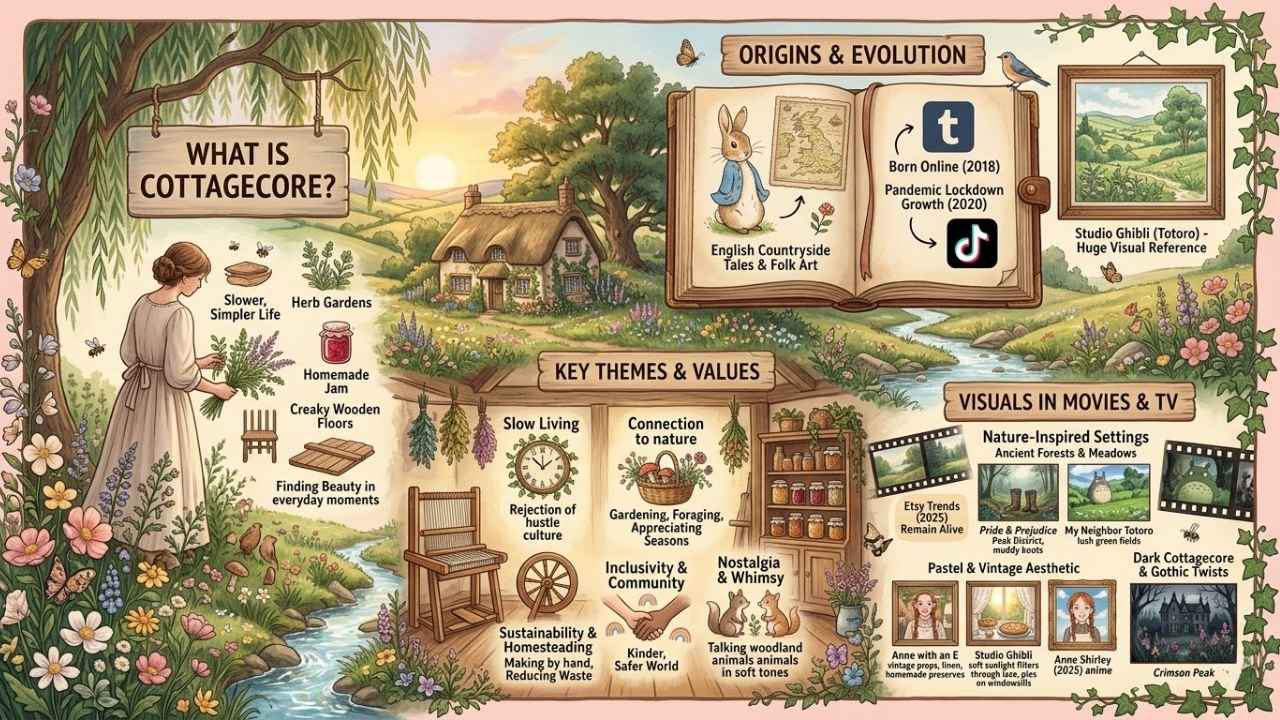
If you have never heard the term before, cottagecore is an internet aesthetic built around the idea of a slower, simpler life. Think soft linen dresses, herb gardens, homemade jam, and creaky wooden floors. It is all about finding beauty in small, everyday moments, especially ones connected to nature and community.
Origins and Evolution of the Aesthetic
The roots of cottagecore stretch back to English countryside tales, folk art, and beloved children’s books like those by Beatrix Potter. But its modern form was born online. According to Wikipedia, the aesthetic was first named on Tumblr in 2018, and Tumblr saw a 150% increase in cottagecore posts during just the three months from March to May 2020, right when pandemic lockdowns pushed people indoors.
From there, it migrated to TikTok, where it found a massive, loyal audience. Young people who felt overwhelmed by city life and digital noise flocked to its gentle, nostalgic imagery. Studio Ghibli films, with their lush countryside settings and quiet routines, served as a huge visual reference point for the whole movement.
The aesthetic has also evolved in fascinating ways. Some creators added gothic or “dark cottagecore” twists, inspired by films like “Crimson Peak” (2015), blending spooky manor houses with wildflower imagery. That flexibility is a big reason why the trend has lasted so long.
Key Themes and Values of Cottagecore
At its heart, cottagecore is a celebration of a few core ideas that a lot of people are genuinely hungry for right now.
- Slow living: A deliberate rejection of hustle culture and the pressure to always be productive. The New York Times described cottagecore as “a reaction to hustle culture and the advent of personal branding.”
- Connection to nature: Spending time outdoors, tending gardens, foraging, and appreciating the seasons.
- Sustainability and homesteading: Making things by hand, from bread to clothing, and reducing waste.
- Inclusivity and community: Especially among LGBTQ+ communities, cottagecore has become a space to imagine a kinder, safer world. According to the Aesthetics Wiki, cottagecore is “particularly embraced within LGBTQ+ communities, especially woman-loving-woman and nonbinary-loving-woman” groups.
- Nostalgia and whimsy: A soft, dreamy look backward at an idealized past, filled with pastel colors and talking animals.
In 2025, according to Etsy’s trend reports, handmade and vintage cottagecore styles remain top-selling items on the platform, which tells you the values behind the aesthetic are still very much alive and translating into real purchasing decisions.
Visuals and Motifs of Cottagecore
One of the reasons cottagecore translates so well to film and TV is that it is an intensely visual aesthetic. You recognize it the moment you see it. The cinematography, the color palette, and even the costumes all work together to deliver a feeling before a single word of dialogue is spoken.
Nature-Inspired Imagery and Settings
Meadows, wildflowers, and ancient forests are the backdrops of choice. In “My Neighbor Totoro” (1988), Studio Ghibli’s lush green countryside became the gold standard for this kind of imagery. Open fields, gentle streams, and farmhouses nestled between rolling hills create a world that feels safe and full of wonder.
Period dramas have long used these same settings to stir a sense of nostalgia for rural life. The 2005 adaptation of “Pride & Prejudice,” directed by Joe Wright, used the Peak District’s sweeping landscapes to ground the story in a very specific, earthy beauty. Cinematographer Roman Osin captured muddy boots, misty dawns, and windswept fields, making the English countryside feel alive and tactile, not just decorative.
These nature-inspired images do not just decorate the story. They breathe simplicity into every frame and invite viewers to feel genuinely at home outdoors.
TikTok creators have made this connection explicit, regularly pairing clips from these films with trending sounds to show their followers exactly what the cottagecore aesthetic looks like in motion.
Pastel Colors and Vintage Aesthetics
Soft pastels are the visual language of cottagecore. Gentle pinks, faded blues, and butter yellows show up on teacups, linen dresses, and flower-filled rooms. These colors do not just look pretty. They are doing emotional work, creating an immediate sense of comfort and safety for the viewer.
“Anne with an E” (Netflix, 2017 to 2019) is a great case study here. The show uses vintage props, embroidered linens, and handmade pottery throughout its three seasons to pull viewers into Prince Edward Island’s late 19th-century rural life. As Screen Rant noted, the show features “idyllic countryside, plenty of homemade preserves, and endless summer days.”
Studio Ghibli’s hand-drawn textures bring a special warmth to this aesthetic. There is nothing harsh in these films. Soft sunlight filters through lace curtains over homemade pies cooling on the windowsill. The 2025 anime “Anne Shirley,” directed by Hiroshi Kawamata, continues this same visual tradition, proving the appetite for this kind of imagery is very much alive in new productions.
The Rise of Cottagecore in Media
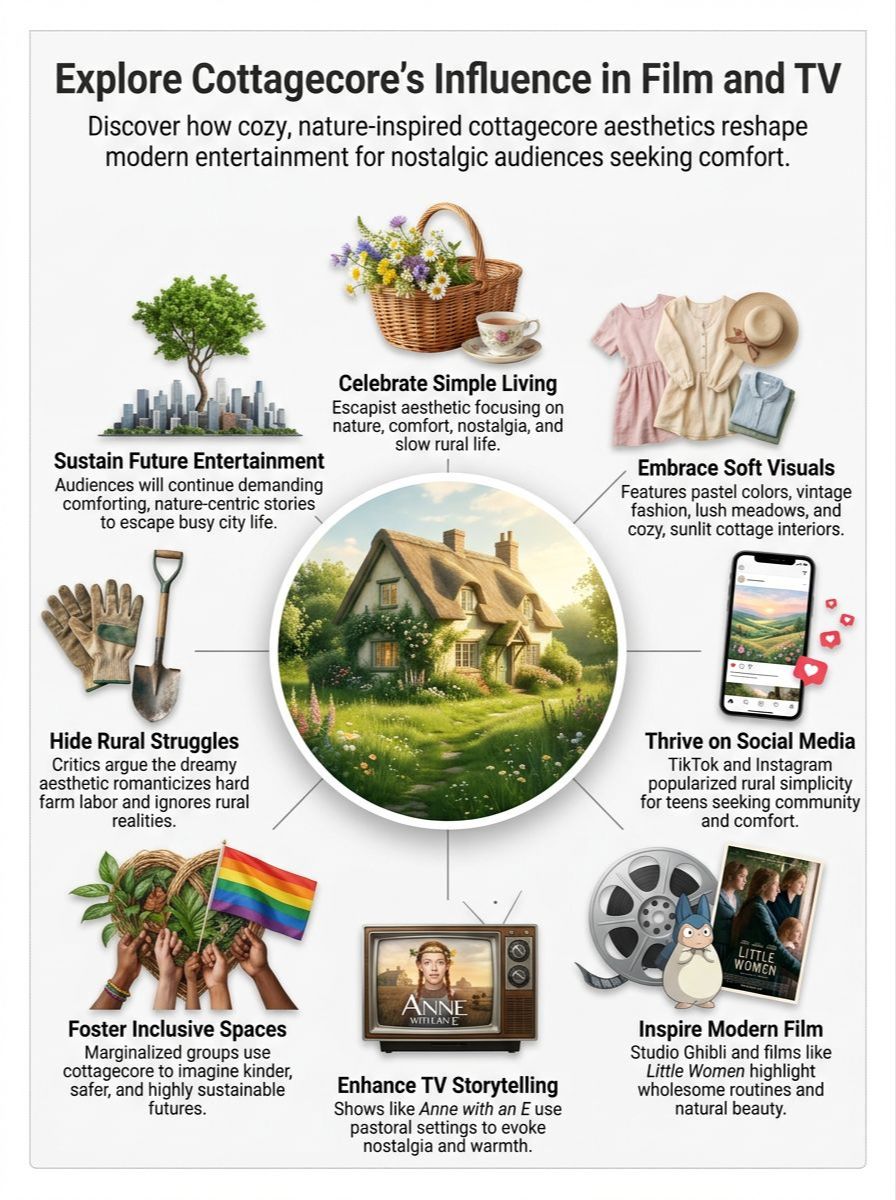
Cottagecore did not just appear on screens one day. It was pushed there by a massive wave of social media energy, and once it arrived, it connected with audiences in ways that surprised even the people making the content.
Popularization Through Social Media Platforms
TikTok was the accelerant. In the US alone, 136 million people use the platform, and among adults aged 18 to 29, 59% report using TikTok, according to 2025 data compiled by AWISEE. That is an enormous young audience discovering and sharing aesthetic content every single day.
The #cottagecore hashtag became a juggernaut. Research by GoCompare Home found that cottagecore-related content on TikTok amassed 5.3 billion hashtag views, leaving the second-most-popular home design aesthetic, mid-century modern, in the dust at 70.6 million. That gap is staggering, and it tells you something important: people are not just passively liking these images. They are actively seeking them out and sharing them.
Gen Z drove a lot of this growth. As noted by a 2025 market analysis, the cottagecore aesthetic “has surged in popularity among Gen Z, particularly on platforms like TikTok, where young women romanticize farm life through fashion choices.” Hashtags like #CottageCore and #SlowLiving gathered millions of views, and fashion brands like Hill House Home (whose “nap dress” became a viral cottagecore staple) rode the wave to mainstream recognition.
Influence on Younger Generations and Marginalized Communities
For many young Americans, cottagecore is more than a pretty aesthetic. It is a form of gentle protest against a world that feels overwhelming. As licensed therapist Caroline Given, LCSW, explained to Bustle, the cottagecore lifestyle can be genuinely therapeutic because it is rooted in “behavioral activation,” a cognitive behavioral therapy technique that uses small, pleasurable tasks like pressing flowers or baking bread to improve mood and build a sense of control.
Marginalized communities, especially LGBTQ+ groups, found a particular kind of sanctuary in cottagecore spaces. Paper Magazine described the aesthetic’s politics as asking the question: “What if we could go back to a time before the planet was ravaged by industry, except with added protections for marginalized queer communities?” That hopeful reframing made the aesthetic feel genuinely welcoming rather than exclusionary.
Dark cottagecore, with its gothic woods and old folklore, extended that welcome even further. It showed that there is room in this aesthetic for people who are drawn to mystery and shadow, not just sunshine and wildflowers.
Cottagecore in Movies
The cottagecore aesthetic has found a natural home in cinema. Many directors reach for its visual vocabulary instinctively, using soft lighting, natural textures, and rural settings to tell stories about belonging, healing, and the simple joy of being alive.
Prominent Films with Cottagecore Aesthetics
Here are some of the best examples of cottagecore in film, spanning decades and genres:
- Studio Ghibli’s “My Neighbor Totoro” (1988) shines with lush greenery, cozy homes, and a deep focus on nature-inspired living. The film set the gold standard for cottagecore in animation.
- Greta Gerwig’s “Little Women” (2019) uses pastel costumes, rustic kitchens, and the rural Massachusetts countryside to show peaceful homesteading and community. Gerwig’s version is widely praised for being “fiercely feminist, bold, and contemporary.”
- “Anne of Green Gables” (1985), based on L.M. Montgomery’s classic novel, brings viewers into a world of meadows, home-baked bread, and carefree childhood wonder on Prince Edward Island.
- “The Secret Garden” (2020), directed by Marc Munden, revolves around healing through gardening. As Passport to Eden put it, the film “delights in the aesthetic,” its gardens offering a “poetic spillage of flowers and moss, palms and vines.”
- “Call Me By Your Name” (2017) presents the Italian countryside, full of fruit trees, stone houses, and slow summer mornings. It radiates rural calm and natural warmth.
- Hayao Miyazaki’s “Kiki’s Delivery Service” (1989) blends magical realism with soft village vistas and sweet bakery scenes, sparking joy for fans of a wholesome aesthetic.
- “Pride & Prejudice” (2005) features rolling hills, cotton dresses, muddy boots, and farmhouse scenes that echo the rustic charm at the heart of cottagecore.
- Netflix’s “Enola Holmes” (2020) shows hand-sewn dresses, green fields, and a young heroine embracing self-sufficiency. As Cottage Core House noted, Enola’s world is “rich with timeless, rustic charm.”
Studio Ghibli and Its Connection to Cottagecore
If there is one studio that has done more than any other to put cottagecore values on screen, it is Studio Ghibli. Hayao Miyazaki’s films do not just use nature as a backdrop. They treat it as a character in its own right.
In “My Neighbor Totoro” and “Kiki’s Delivery Service,” lush forests, open fields, small gardens, and cozy rural homes fill every frame. The films celebrate kindness, community, and the quiet joy of everyday routines. Cooking with a grandmother. Wandering under giant trees. Delivering a pie by broomstick.
On TikTok and other platforms, fans regularly share Studio Ghibli clips as the definitive visual reference for cottagecore. It makes sense. Miyazaki’s films offer something that is increasingly rare in mainstream entertainment: a world where slowness is a virtue, not a flaw.
Other Notable Examples of Cottagecore Films
The list of films with strong cottagecore energy is long and wonderfully varied.
- “Amélie” (2001) sets a whimsical mood in Paris. The film’s cozy interiors, garden scenes, and warm pastel tones make it an iconic example of European-inspired cottagecore.
- “Miss Potter” (2006) follows Beatrix Potter among the hillsides of England’s Lake District and old cottages. As Passport to Eden noted, “sweeping scenes of England’s lovely Lake District only add to the idyllic, cottagecore atmosphere.”
- “Far from the Madding Crowd” (2015) celebrates pastoral life in 19th-century England. Open fields, farm animals, and slow living reflect the essence of this aesthetic. The story follows the independent Bathsheba Everdene, whose connection to the land speaks directly to cottagecore’s values of self-sufficiency.
- “Paddington 2” (2017) mixes whimsy and homeliness in every frame. Paddington’s simple joys, marmalade sandwiches included, showcase comfort and kindness.
- “Practical Magic” (1998), starring Sandra Bullock and Nicole Kidman, is a beloved “witchy cottagecore” film. Its cozy greenhouse, white clapboard shop, and small-town coastal setting deliver the aesthetic with a satisfying dark edge.
- “Crimson Peak” (2015) blends dark cottagecore themes, showing lush but spooky country estates wrapped in mystery, proof that gothic elements can sit comfortably within this aesthetic.
Cottagecore in TV Shows
Television has embraced cottagecore just as warmly as cinema. Series that lean into rural simplicity, vintage charm, and community give viewers something to return to week after week. There is a real comfort in that repetition.
Shows That Embrace Rural Simplicity and Natural Beauty
Here are ten TV shows that do the cottagecore aesthetic especially well:
- Anne with an E captures the green fields, cozy houses, and wildflowers of Prince Edward Island. Its visuals echo cottagecore’s love for nature and wholesome living.
- Little House on the Prairie remains iconic for its celebration of homesteading life in America. Rolling meadows, handmade clothes, and small-town community fill every episode.
- Gilmore Girls uses Stars Hollow’s quaint charm to showcase rural comfort. Town festivals, garden walks, and simple joys paint a gentle picture of community.
- Downton Abbey brings the pastoral beauty of an early 20th-century English estate to life, with lush gardens and strong themes of community running through every season.
- Green Gables Fables takes classic literature to new heights online, using soft pastels and vintage props in each frame to refresh old stories with cottagecore fashion.
- Call the Midwife blends pastoral London outskirts with themes of inclusivity and hope. Gardens and quiet cottages support characters through struggles big and small.
- The Durrells shows family bonding in sunny Corfu with chickens clucking nearby. Self-sufficiency becomes both fun and meaningful.
- Tales from the Loop brings whimsical visuals inspired by rural landscapes into science fiction settings. Nature always feels present, even when things get strange.
- Heartland mixes ranching life with beautiful shots of horses running free under wide blue skies. Sustainability is stitched into daily chores.
- Emma (2020) reimagines Jane Austen’s world using pastel tones, picnics on green lawns, and open windows letting sunbeams stream in. Nostalgia meets feminine grace.
How Cottagecore Enhances Storytelling in TV
The cottagecore aesthetic does specific emotional work in television storytelling. It slows things down. When a character is shown baking bread or tending a garden, the pace of the scene itself shifts. Viewers exhale. They feel the weight of the everyday lifted for a moment.
Period dramas like “Anne with an E” use cottagecore elements to create a sense of nostalgia that helps audiences connect with characters’ emotions on a deeper level. The cozy visuals signal safety and belonging before any plot development confirms it.
Some shows also use dark woodland settings and old folklore to blend whimsy with suspense. “Tales from the Loop,” for example, uses its quiet rural landscapes to make the strange feel somehow familiar and comforting, which is a genuinely tricky storytelling feat.
Criticism of Cottagecore in Media
Not everyone is charmed by cottagecore’s soft focus. There are real, thoughtful critiques of the aesthetic, and understanding them actually makes you appreciate the good parts more clearly.
Romanticizing an Idealized Rural Life
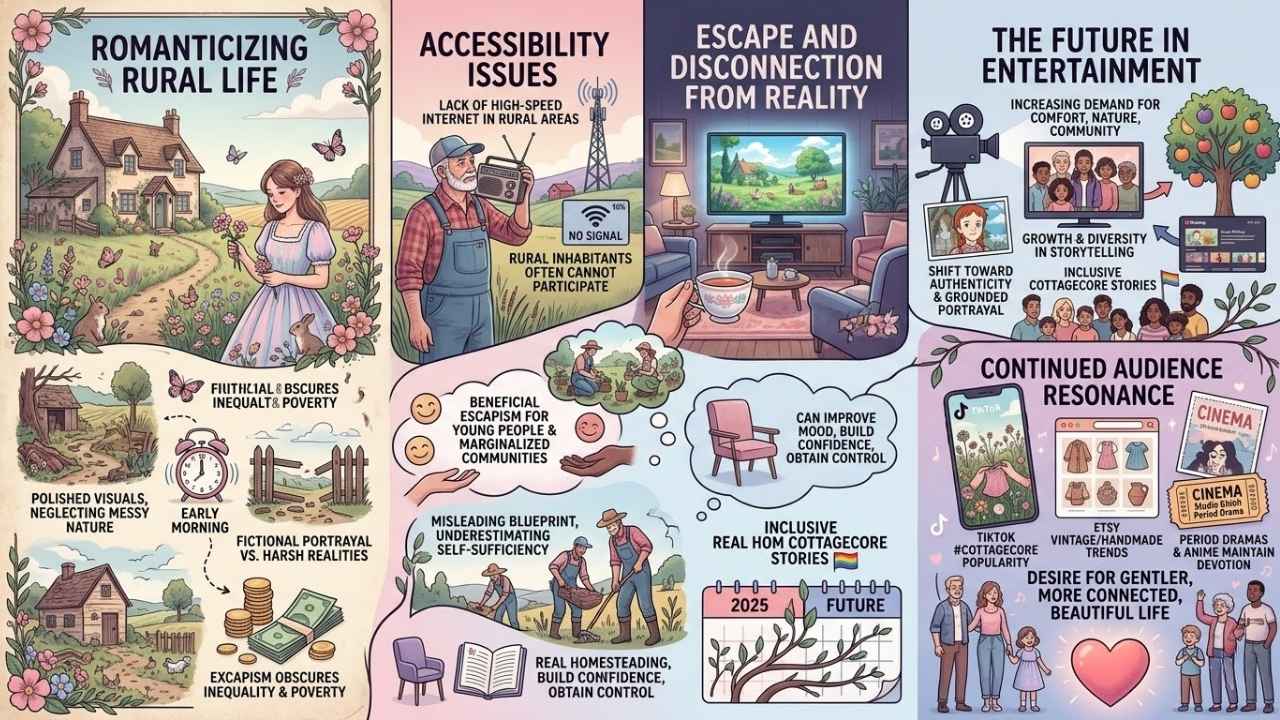
The most common criticism is that cottagecore paints rural life as pure, peaceful, and effortless, when the reality is far more complicated. As critics at the University of Michigan’s student newspaper pointed out, “visuals tend to be very polished and beautiful, failing to acknowledge how messy life in nature can truly be.”
On TikTok, cottagecore creators show life in pastel dresses with baskets of flowers. What rarely appears in those videos is the five AM alarm, the broken fence, or the financial pressure of small-scale farming. As researchers Jill Kay and Helen Wood have argued, cottagecore’s escapism often “obscures the fact that the countryside is also scarred by inequality, poverty, and exploitation.”
There is also an accessibility problem worth noting. A 2021 analysis from the Michigan Daily found that only 65% of Americans in rural areas have high-speed, consistent internet access. The very people whose lives inspire the aesthetic are often the least able to participate in the online community built around it.
Escapism and Disconnection from Reality
Movies and TV shows that use the cottagecore aesthetic can create a beautifully seductive version of rural life that simply does not exist for most people. This is by design. Soft colors, gentle nature, and sweet routines invite viewers to step out of their own stress and into an idealized world.
For many young Americans and members of marginalized communities, this kind of gentle escapism can provide genuine comfort and even hope. Licensed therapist Caroline Given, LCSW, has noted that engaging with the small, pleasurable activities associated with cottagecore can “improve mood, build confidence, and help us obtain a sense of control over our lives.”
The tension is real, though. When viewers mistake the aesthetic for a blueprint, they may underestimate what true self-sufficiency actually demands. Real homesteading is hard, physical, often financially precarious work. It is not always as dreamy as it looks on screen, and the best cottagecore content is honest enough to hint at that.
The longing at the heart of cottagecore, as one Substack essay put it, is for “a tangible connection with the natural world, for the satisfaction of creating something with one’s own hands, for a sense of community and shared purpose that modern individualism has eroded.” That longing is real, even if the version on screen is a bit cleaned up.
The Future of Cottagecore in Entertainment
Fresh stories keep growing from this aesthetic, and there is every reason to think that cottagecore’s influence on film and television will deepen rather than fade. The desire for comfort, nature, and community is not going away anytime soon.
Potential for Growth and Further Exploration in Media
According to a 2025 analysis of the cottagecore fashion market, the aesthetic is expected to “maintain its relevance and potentially grow further in the coming years” as consumers continue to seek “comfort, sustainability, and individuality.” The same values that drive fashion and home decor choices are the ones that draw viewers to certain films and shows.
One exciting development is the 2025 anime “Anne Shirley,” directed by Hiroshi Kawamata, which brings cottagecore visuals to a new generation of animation fans. Producers are also finding fresh angles on the aesthetic. The 2025 iteration of cottagecore, as one trend analysis noted, “blends authenticity with wearability,” moving away from pure fantasy and toward a more grounded, honest portrayal of slow living. That shift could make for richer, more complex storytelling in film and TV.
The door is wide open for more inclusive storytelling within this aesthetic. As interest continues to grow among LGBTQ+ communities, viewers of color, and young people who want to see themselves in these peaceful, hopeful worlds, filmmakers have a real opportunity to expand who gets to live in the cottage.
How the Aesthetic Continues to Resonate with Audiences
Soft pastels, nature scenes, and the promise of a slower life still call out to huge numbers of viewers. In 2025, cottagecore remains the most popular home design aesthetic on TikTok with over 2.2 million posts, and as of 2025, Etsy reports handmade and vintage cottagecore styles as top-selling items on the platform. That kind of sustained commercial energy reflects genuine, ongoing audience appetite.
What keeps people coming back is the emotional core of the aesthetic. It is not really about linen dresses or wildflower bouquets. It is about the feeling those things represent: that life can be gentler, more connected, and more beautiful than it currently feels.
Films from Studio Ghibli continue to be shared and discovered by new generations of fans in the US. Period dramas like “Downton Abbey” and “Anne with an E” maintain devoted audiences years after their original runs. And new productions keep arriving, each one adding something fresh to the conversation about what it means to live well and simply.
Final Thoughts
Cottagecore’s influence in movies and TV brings a genuine breath of fresh air. Audiences find simplicity, nostalgia, and nature woven into stories that actually soothe the soul.
With a little practice, you can spot the aesthetic anywhere, from a floral costume to a golden-hour shot of an open field. And now that you know the context behind it, those moments will probably hit a little differently.
Take a closer look next time you watch your favorite series. Sometimes happiness really does bloom in the countryside, one quiet scene at a time.