
Do you ever feel lost about which blog posts matter most? Maybe your website has lots of articles, but readers do not know where to begin. Or maybe search engines just skip over your site and send visitors somewhere else.
Here is a fact: Cornerstone content gives your blog a strong base. It highlights the best and most important information for your audience. In this post, you will learn how cornerstone content can fix common blogging problems like weak SEO or poor structure.
Ready to turn those random posts into something solid? Keep reading for the answers you need.
What Is Cornerstone Content?
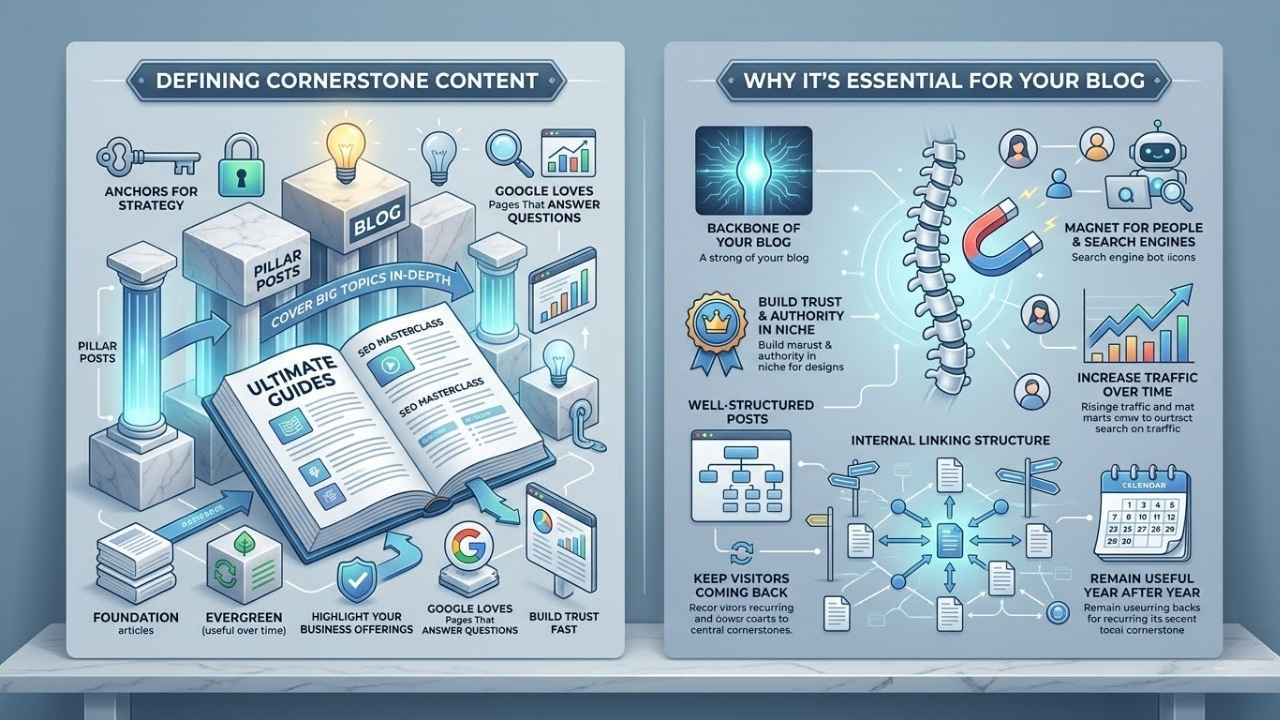
Cornerstone content is the main stuff on your blog. It covers key topics that matter most to your audience.
Definition of Cornerstone Content
Foundation content stands at the very core of a blog or site. It is made up of your best, most important articles—think pillar posts that cover big topics in depth, like “The Ultimate Guide to SEO.” These key pieces act as anchors for a company’s content strategy and help both search engines and readers understand your website.
Many also call these flagship or evergreen content because they stay useful over time.
Authority content does not just sit on your site collecting dust. It should highlight what you offer as a business and match your main mission. For example, Yoast often uses helpful guides about WordPress SEO as their foundation articles.
Google loves pages that answer lots of questions with clear info; high-ranking cornerstone guides get more views and build trust fast. No fancy extras, just simple building blocks for strong traffic and loyal readers.
Why It’s Essential for Your Blog
Cornerstone content forms the backbone of your blog. These pieces act like magnets for both people and search engines. Think of them as foundation articles, building trust and showcasing authority in your niche.
Google loves blogs with strong SEO Search Engine Optimization and well-structured posts. In-depth cornerstone guides make it easy for readers to learn about your main topics, which helps increase traffic over time.
Authority content explains what you do and why someone should care. Foundation articles connect all parts of your site through good internal linking structure, helping users find answers quickly, much like street signs in a busy city.
Flagship or evergreen content keeps bringing visitors back because it stays useful year after year. If you want high-ranking pages that explain key topics clearly, cornerstone content is non-negotiable for any solid blogging strategy or smart content marketing plan.
Benefits of Cornerstone Content
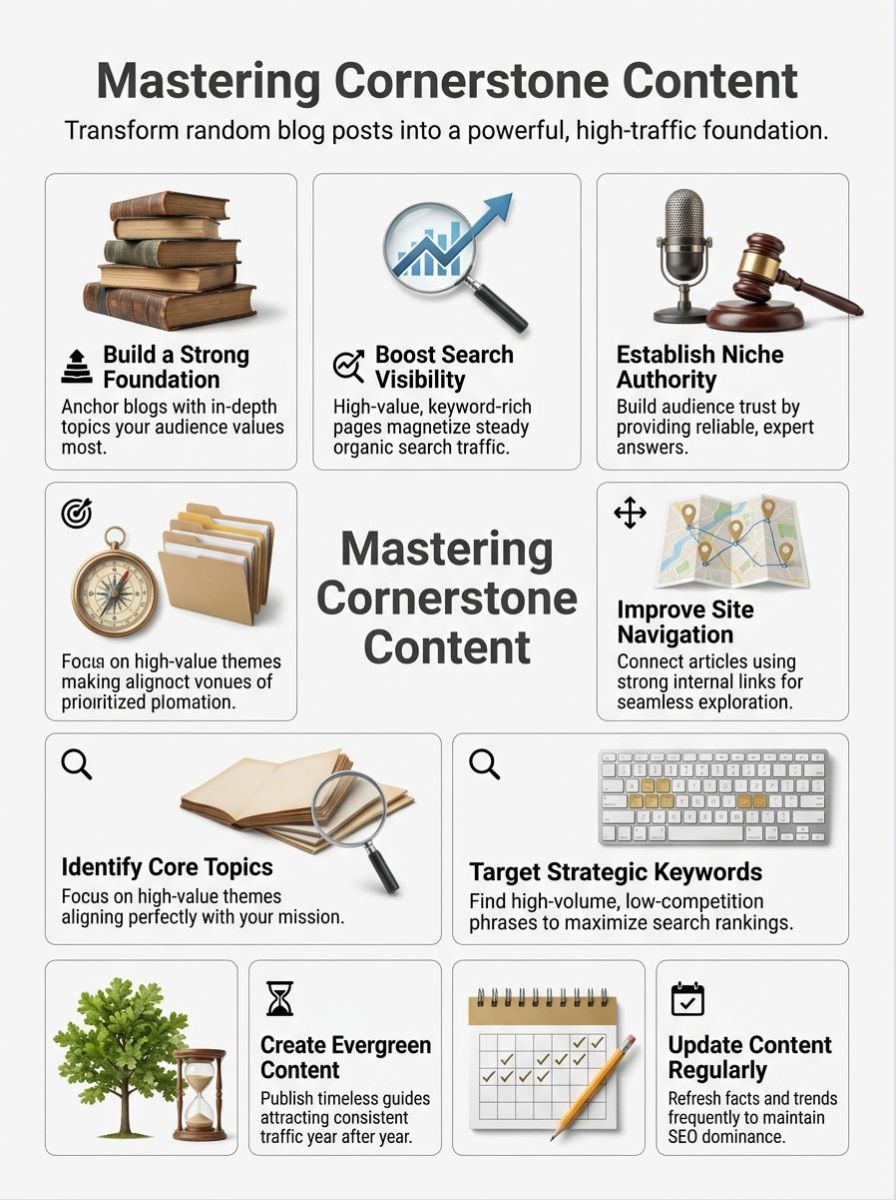
Cornerstone content brings many advantages. It boosts your blog’s visibility on search engines, helping more readers find you. It also builds your authority in the niche, making you a trusted source.
Plus, it offers a better experience for visitors by organizing information clearly and effectively.
Increases Search Engine Visibility
Google loves pages packed with value and answers. Foundation articles, also known as authority content or flagship posts, act like magnets for search engines. These high-value pieces cover broad topics in depth, using important keywords that your target audience types into Google.
In-depth cornerstone pages are often evergreen. They rank higher because they match what people want to read and solve real problems. Search Engine Optimization works best when key topics link back to these main pages.
The result is more eyes on your blog from organic searches, pushing your site up the list for big keywords tied to your business mission. This strong SEO foundation draws steady traffic month after month—no tricks needed!
Builds Authority in Your Niche
Cornerstone content builds your authority in your niche. It shows that you know your topic well. These articles are often in-depth and focus on high-value subjects. They help readers see you as a trusted source of information.
Creating strong cornerstone content helps people understand what your business offers. This clarity makes them more likely to trust and follow you. The more valuable content you produce, the more people will turn to you for answers in your field.
Improves Internal Linking Structure
Strong internal links make your blog easier to navigate. They help connect your cornerstone content with other important articles on your site. This creates a clear path for readers.
They can find what they need without getting lost.
Good internal linking boosts SEO, too. It shows search engines which pages are most important. Higher visibility brings more visitors to your blog. Using cornerstone content strengthens this structure, making it simple for both people and search engines to explore all that you offer.
Enhances User Experience
Cornerstone content makes your blog easy to use. It guides readers to important topics. This helps people find what they need quickly. Good cornerstone content keeps visitors on your site longer.
They enjoy reading in-depth articles that cover valuable information.
Creating structured and clear content boosts engagement. Readers feel informed about your business and offerings. This connection builds trust and loyalty, turning casual visitors into regular ones.
How to Create Effective Cornerstone Content
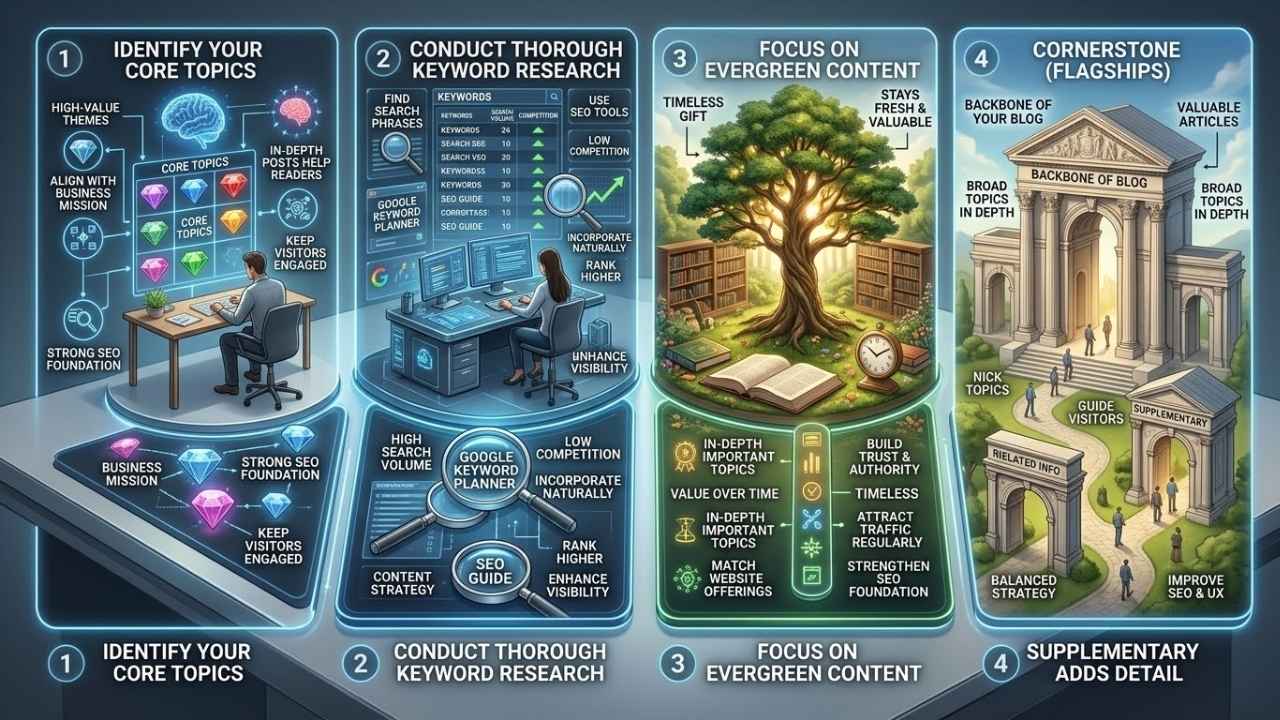
To create effective cornerstone content, start by finding your key topics that matter to your audience. This will help you write posts that stand tall and meaningful on your blog. Want insights on making it shine? Keep reading!
Identify Your Core Topics
To identify your core topics, think about what matters most to your audience. These should be the main subjects of your blog. Focus on high-value themes that relate closely to what you do.
Your cornerstone content will come from these key topics.
Make sure each topic aligns with your business mission and offerings. In-depth posts about these topics will help readers understand your business better. This strategy builds a strong SEO foundation for your blog and keeps visitors engaged.
Conduct Thorough Keyword Research
Keyword research is key to creating cornerstone content. It helps you find the words and phrases that your audience searches for online. Start by brainstorming topics related to your blog’s focus.
Then, use tools like Google Keyword Planner or other SEO tools to dig deeper into these topics.
Look for keywords with high search volume but low competition. These are golden opportunities for you. Incorporate these keywords naturally into your content. This will boost your chances of ranking higher on search engines, making it easier for people to find your blog posts.
Strong keyword research sets a solid base for effective content strategy and enhances visibility in the crowded world of blogging.
Focus on Evergreen Content
Evergreen content is like a timeless gift for your blog. It stays fresh and useful no matter when readers find it. This type of content covers important topics in-depth, making it valuable over time.
People will always want to know more about these key subjects.
Creating evergreen pieces builds trust and boosts your authority in the niche. They match well with what your website offers, so visitors stay engaged longer. Strong evergreen content can attract traffic regularly, helping strengthen your SEO foundation too.
It’s what keeps readers coming back for more good information!
Differentiate Cornerstone vs. Supplementary Content
Cornerstone content is the backbone of your blog. It consists of your most important and valuable articles. These pieces cover broad topics in depth, making them essential for understanding your business and its offers.
Think of cornerstone content as flagships; they guide visitors to what matters most.
Supplementary content adds more detail but isn’t the main focus. It supports cornerstone articles with related info or niche topics. While it’s helpful, it doesn’t replace the key role of cornerstone pieces.
This balance boosts your SEO strategy and improves user experience on your site.
Optimizing Cornerstone Content for SEO

Strengthen your internal links to help readers find related content easily. Regularly update your posts to keep them fresh and useful, so visitors want to come back for more.
Strengthen Internal Links
Internal links help guide visitors through your blog. These links connect one article to another. They make it easier for readers to find related content. This boosts the user experience.
Effective internal linking builds a strong blog structure. It shows search engines which pages are important, improving SEO. By using cornerstone content as anchors, you can create pathways for your audience.
This way, they explore more of what you offer and stay longer on your site. Strong internal links also enhance the authority of your niche by connecting valuable information together.
Update Content Regularly
Updating content regularly keeps your cornerstone content fresh. This is key for attracting more visitors. Search engines favor updated articles, boosting your SEO ranking. Regular updates also show you care about delivering value to your readers.
In-depth posts should reflect current information and trends in your niche. Check facts often, so users can trust what they read each time they visit. Keeping evergreen content relevant helps maintain its authority over time too.
Make sure every update aligns with your business mission and core offerings to strengthen that crucial foundation in content marketing.
Use Clear and Engaging Headlines
Clear and engaging headlines grab attention. They make people want to read more. Good headlines show what the content is about in a simple way. Use strong, active words. This makes your posts stand out.
Headlines help with SEO too. Search engines look for clear titles when ranking pages. Your cornerstone content should have catchy headlines to attract readers and improve visibility online.
These effective titles also guide readers through your blog structure, making it easier for them to find valuable information quickly.
Examples of Successful Cornerstone Content

Examples of successful cornerstone content include thorough guides and how-to articles that answer common questions in your niche. These pieces attract readers, build trust, and keep people coming back for more.
Want to see what makes these examples shine? Read on!
“The Ultimate Guide to
Creating cornerstone content is essential for a successful blog. This type of content serves as the foundation of your brand’s strategy and helps you stand out. It covers important topics that matter to your audience. Consider it as the primary resource for information about your business.
High-ranking pages thrive on in-depth articles that are also evergreen. These pieces remain relevant over time, attracting traffic long after they are published. Building authority in your niche is simpler when you have strong cornerstone content supporting your overall plan. Focus on creating valuable posts that serve both readers and search engines well, leading to improved SEO results for your site.
Final Thoughts
Cornerstone content isn’t just another blog post; it is the very foundation of your website’s SEO and authority. By crafting comprehensive, evergreen guides on the topics that matter most to your audience, you signal to search engines exactly what your site is about. It takes time, research, and effort to build these pillar pages, but the long-term payoff in organic traffic, internal linking structure, and brand trust is unmatched.
Don’t let your best knowledge get buried in your blog archives. Start by identifying the three to five core topics your brand wants to be known for, update your best existing posts, or start drafting that ultimate guide today. Your blog’s foundation depends on it.