Fleet managers today face difficult decisions as fuel prices continue to rise and pressure increases to reduce emissions. Many organizations are evaluating whether switching to electric vehicles (EVs) is a practical and cost-effective solution.
Balancing rising operational expenses with sustainability goals can feel challenging, as businesses work to move away from traditional fuel-dependent fleets while meeting new environmental expectations.
According to a Eurelectric–EY study, fleet electrification could deliver up to €246 billion in operating cost savings by 2030, highlighting significant potential for reducing total cost of ownership.
This Business Case for Fleet Electrification explores key financial advantages, including tax incentives, lower maintenance costs, and strategies for managing upfront investment and charging infrastructure challenges. It also highlights real-world corporate fleet case studies and decision-support tools like the DRVE platform to guide smarter transitions.
The analysis demonstrates how zero-emission vehicles can improve efficiency, reduce long-term costs, and strengthen overall business performance.
Why Fleet Electrification is a Business Imperative
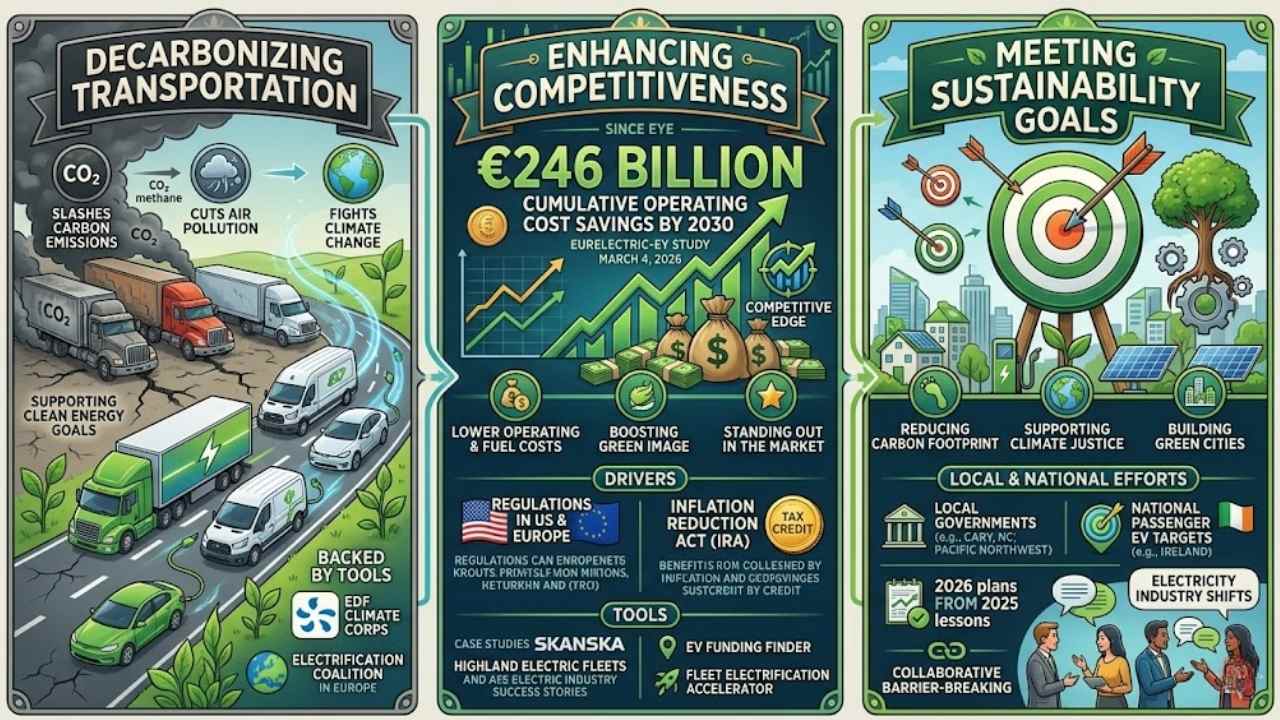
Companies face mounting pressure from climate change, and switching to electric vehicles cuts methane emissions while slashing air pollution from internal combustion engines. Imagine boosting your edge in the market, like Skanska does with clean energy projects, by tapping into the Inflation Reduction Act for real cost savings that make sustainability goals a reality—want to see how?
Decarbonizing transportation
Fleet electrification slashes carbon emissions from transportation, a major culprit in the climate crisis. Businesses switch to electric vehicles, or EVs, to cut air pollution and methane emissions.
This move supports clean energy goals and fights climate change head-on. Imagine ditching old internal combustion engines for battery electric vehicles; it’s like trading a smoky old truck for a sleek, silent ride that saves the planet.
The Environmental Defense Fund backs this through tools like the EDF Climate Corps, helping fleets decarbonize transport. Europe leads with strong pushes from groups like the Electrification Coalition.
Fleet electrification could generate up to €246 billion in cumulative operating cost savings by 2030, states a Eurelectric-EY study published on March 4, 2026.
Regulations in the United States and Europe, including the Inflation Reduction Act, drive this shift with incentives and mandates. Think of local governments in places like Cary, North Carolina, or the Pacific Northwest leading by example.
They achieve operating cost savings while meeting sustainability targets. Ireland sets national passenger EV targets, complete with cost-benefit analyses. Case studies from companies like Skanska and Highland Electric Fleets show real success in zero-emission transitions.
These stories prove lower fuel costs make EVs a smart bet for commercial electric vehicle fleets.
Enhancing competitiveness
Businesses chase a real edge in today’s market, and fleet electrification delivers it with style. Imagine: companies switch to electric vehicles (EVs), slashing costs and boosting their green image.
A Eurelectric-EY study from March 4, 2026, shows fleet electrification could rack up €246 billion in savings by 2030. Transitioning Europe’s corporate fleets to EVs opens a financial goldmine, with nearly a quarter trillion euros on the table.
Lower operating costs from electric vans make the switch a no-brainer for fleet operators. Plus, it cuts carbon footprints and aligns with sustainability goals, helping firms stand out in competitive fields.
Regulations at state and national levels push EV adoption hard, creating smart incentives for businesses. Organizations keep pushing their electrification efforts to hit regulatory marks and environmental targets.
Realistic 2026 business cases, grounded in actual data from 2025 lessons, prove the point. Ireland sets national passenger EV targets with clear cost-benefit paths. Multiple fleet case studies highlight zero-emission wins, offering lessons for others.
Tools like the EV Funding Finder and Fleet Electrification Accelerator help break barriers through private capital and project finance. Decarbonize transport this way, and watch competitiveness soar with environmental solutions in tow.
Meeting sustainability goals
Fleet electrification slashes carbon footprints like a sharp knife through butter. Companies switch to electric vans and trucks, and they hit environmental targets head-on. This move supports climate justice, as we build green cities together.
Think of it as planting seeds for a cleaner planet; your business grows while the air gets fresher. Regulations from state and national levels push this shift, offering incentives that make compliance feel like a win-win.
Organizations keep pushing forward with these efforts to meet strict rules and green goals.
Picture local governments leading the charge, turning fleets zero-emission with smart charging and energy system flexibility. They inspire others, showing how decarbonizing transport boosts energy independence.
Kristian Ruby and Constantin Gall highlight these paths in talks about electricity industry shifts. Fleet operators use data from real 2025 lessons to ground their 2026 plans in solid facts, not just dreams.
This approach breaks barriers collaboratively, proving sustainability isn’t a hurdle but a smart business play.
Financial Benefits of Fleet Electrification
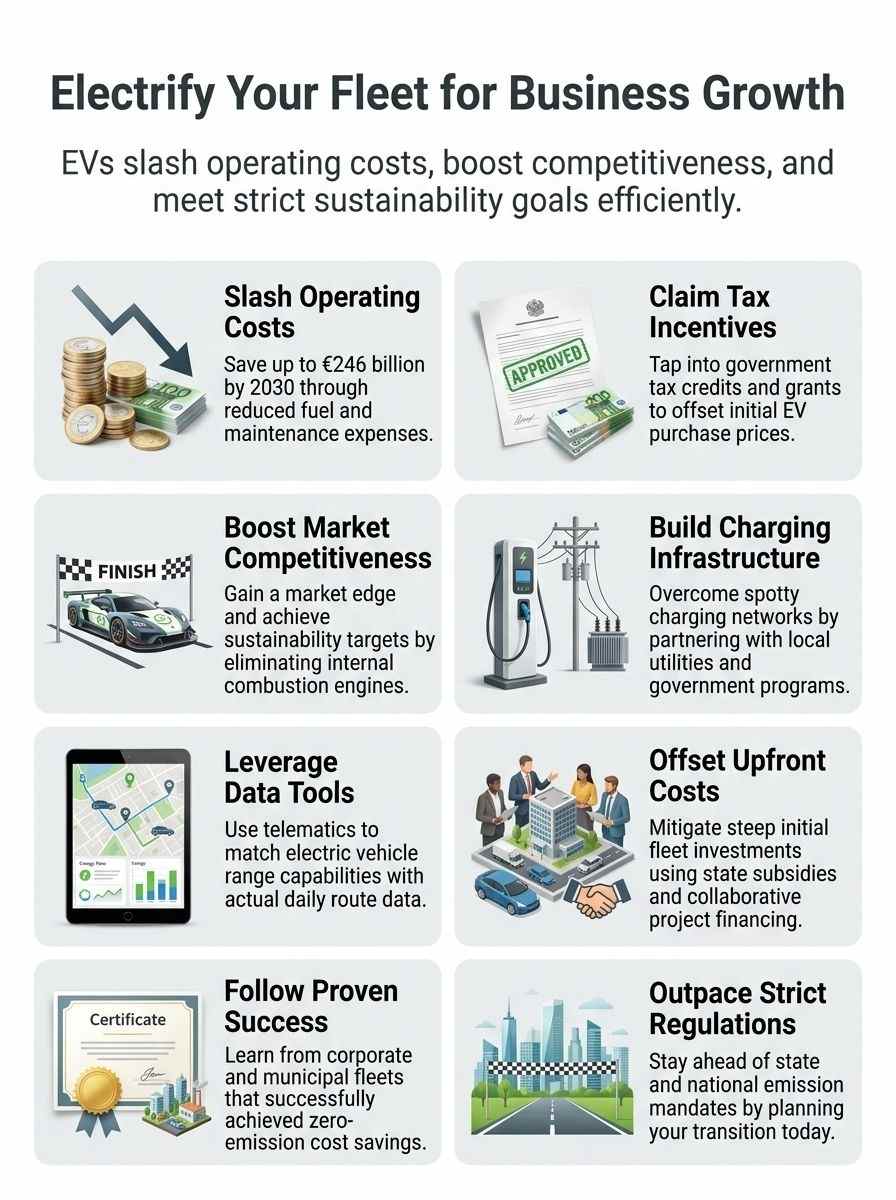
Switching to electric fleets slashes your fuel bills, and maintenance drops too, thanks to fewer moving parts in those vehicles. Pair that with tax breaks from acts like the One Big Beautiful Bill, and companies like Zenobë show how V2G services turn trucks into cash cows by selling power back to the grid.
Reduced Total Cost of Ownership (TCO)
Fleet electrification slashes your total cost of ownership, and the numbers prove it. A Eurelectric-EY study, published on March 4, 2026, reveals up to €246 billion in cumulative operating cost savings by 2030.
Think about that, folks, it’s like turning your fleet into a money-saving machine. Transitioning Europe’s corporate fleets to electric vehicles opens nearly a quarter trillion euros in potential savings.
Lower operating costs shine as the main perk for electric vans in fleet operations. Electric vehicles deliver direct cost savings, making them a smart pick for operators. Organizations push electrification to hit regulatory needs and environmental targets.
Realistic 2026 business cases rely on actual operational data, lessons from 2025 show.
Fleet electrification contributes to reducing carbon footprints, supporting environmental sustainability goals, says Ellie Probus from ImpactAlpha.
Regulations at state and national levels fuel EV adoption, offering compliance perks for fleets. Multiple case studies highlight successful zero-emission shifts, like those from Zenobē and Inspiration Mobility.
They provide real lessons for your strategies. Ireland sets national passenger electric vehicle targets with clear cost and benefit paths. Charge point operators and V2G services help break barriers collaboratively.
Decarbonize transport, and watch your costs drop.
Lower fuel and maintenance costs
Switch to electric vehicles, and you cut fuel costs right away. Gas prices fluctuate like a roller coaster, but electricity stays steady. Companies save big on that alone. Take the Eurelectric-EY study from March 4, 2026; it shows fleet electrification could rack up €246 billion in cumulative operating cost savings by 2030.
That’s no small change, especially for corporate fleets in Europe chasing nearly a quarter trillion euros in potential savings. Electric vans lead the way here, with lower operating costs as their top perk.
They make direct cost savings a reality, turning fleet ops into a smarter money move.
Maintenance drops too, thanks to simpler designs in these rides. No oil changes or complex engines mean fewer trips to the shop. Fleet operators feel the relief in their budgets. Think of it as trading a high-maintenance headache for a smooth, easy ride.
Groups like Forum Mobility push this forward, breaking barriers collaborative style in energy engineering. Even with tools from Prosper Portland, you see real wins. Lower costs help decarbonise transport, all while boosting your bottom line.
Tax incentives and government subsidies
Fleet managers often overlook the power of tax breaks and grants when eyeing electric vehicles. These perks can slash costs and make the switch feel like a smart move, not a burden.
- Governments offer tax incentives that cut the upfront price of electric vans, tying into broader goals like the One Big Beautiful Bill Act, which pumps money into clean energy shifts. Consider this: your company grabs credits for each EV purchase, turning what seems like a hefty bill into a bargain, and Li Shi, a fleet expert, notes how these breaks have fueled adoptions in Europe. Plus, with regulations pushing for lower emissions, these incentives help you meet targets without breaking the bank.
- Subsidies from state and national levels provide direct cash for charging setups, boosting your total savings as shown in the Eurelectric-EY study from March 4, 2026, which highlights up to €246 billion in cumulative operating cost reductions by 2030. Imagine chatting with a fellow operator who says, “Hey, those grants covered half our infrastructure costs,” and you realize transitioning Europe’s corporate fleets to EVs unlocks nearly a quarter trillion euros in potential savings. These funds also support hydrogen options for heavier fleets, making the math work for long-haul needs.
- Tax credits reward companies for reducing carbon footprints through electrification, aligning with sustainability aims and delivering economic wins like lower fuel bills. Fleet operators find these perks make EVs attractive, as electric vehicles yield direct cost savings that add up fast. Ireland’s national targets for passenger EVs include cost-benefit analyses that show how subsidies pave clear paths to zero-emission success.
- Government mandates create extra incentives by requiring electrification efforts to hit environmental marks, pushing organizations to act now. Think of it as a gentle nudge with cash attached; regulations drive EV adoption and offer compliance rewards that ease the financial load. Case studies from multiple fleets prove these subsidies lead to real zero-emission transitions, giving you solid examples to follow.
- Grants help overcome vehicle availability issues by funding purchases, ensuring your fleet stays competitive in an eco-focused market. Operators who tap into these see lower maintenance costs stack up with the incentives, creating a win-win. Realistic 2026 business cases, grounded in 2025 data, show how subsidies turn aspirational goals into doable plans for any size operation.
Key Challenges to Fleet Electrification
Switching to electric vehicles hits roadblocks like steep starting prices that pinch your wallet, spotty charging stations that leave you stranded, and worries over how far those trucks or vans can really go on a single charge—it’s like trying to run a marathon in flip-flops, but stick around to see how smart moves can flip the script.
Upfront investment costs
Fleet operators often face steep upfront costs when switching to electric vehicles. Think of it like buying a fancy new tool that saves money over time, but hits your wallet hard at first.
A Eurelectric-EY study from March 4, 2026, points out that transitioning Europe’s corporate fleets could unlock up to €246 billion in cumulative operating cost savings by 2030. That nearly quarter trillion euros in potential savings shows the long game pays off, yet the initial investment can feel like a mountain to climb.
Electric vans promise lower operating costs, sure, but companies must weigh those against the big buy-in price tag.
You might wince at the upfront bills, and hey, that’s fair, it’s no small change. Regulations at state and national levels push EV adoption, creating compliance incentives that help offset some costs through tax breaks.
Ireland has set national passenger electric vehicle targets, complete with costs and benefits analysis pathways, to guide fleets. Organizations need to ground their 2026 electrification business cases in actual operational data, not just dreams, as lessons from 2025 teach us.
Multiple fleet case studies highlight successful zero-emission transitions, proving that smart planning turns those hefty investments into real wins for sustainability and the bottom line.
Charging infrastructure limitations
Companies face big hurdles with charging stations for electric fleets. Limited spots make daily operations tough, especially in busy areas. Drivers often hunt for plugs, wasting time and cutting productivity.
Picture a delivery van circling blocks, like a dog chasing its tail, just to juice up. This setup hits rural spots hardest, where grids lag behind city power. A Eurelectric-EY study from March 4, 2026, shows fleet electrification could save up to €246 billion by 2030, but poor infrastructure slows that down.
Transitioning Europe’s corporate fleets to electric vehicles offers nearly a quarter trillion euros in savings, yet spotty charging networks block the path.
Grid strain adds another layer of trouble for fleet managers. Peak-hour demands overload systems, causing blackouts or slow charges. You know that feeling when your phone dies mid-call? Multiply it by a whole fleet, and chaos ensues.
Organizations push through by grounding 2026 plans in real 2025 data, not just dreams. Ireland sets national targets for passenger electric vehicles with clear cost-benefit paths, helping fleets dodge pitfalls.
Multiple case studies highlight successful shifts to zero-emission rides, proving smart planning beats these barriers. Regulations at state and national levels drive EV adoption, creating compliance perks that ease infrastructure woes.
Vehicle availability and range concerns
Fleet operators often worry about finding enough electric vehicles that fit their needs. Supply chains can lag, leaving slim pickings for certain models. Range anxiety hits hard too, especially for long-haul routes where batteries might not stretch far enough.
Imagine you’re planning a delivery run, and suddenly the EV conks out midway, like a runner hitting the wall in a marathon. Lessons from 2025 show us that realistic 2026 business cases must root in actual operational data, not pie-in-the-sky goals.
That approach helps fleets pick vehicles with proven range for their daily grind.
Case studies from various fleets prove these hurdles aren’t deal-breakers. Multiple examples highlight successful zero-emission shifts, offering real-world tips for others. Ireland’s national targets for passenger electric vehicles include solid cost-benefit paths, easing availability fears through planned rollouts.
Operators use data-driven insights to match vehicles with routes, turning range concerns into manageable bumps. It’s like fitting the right puzzle piece, making the switch feel less like a leap of faith.
Strategies to Overcome Barriers
Tackle those steep upfront costs by teaming up with grant providers and local utilities, turning a big hurdle into a smart team effort that saves money fast. Use fleet management software to track vehicle performance and plan charging spots, like mapping out a road trip where every stop powers your success.
Leveraging funding and partnerships
Businesses tap into grants and subsidies to ease the switch to electric fleets. A Eurelectric-EY study from March 4, 2026, shows fleet electrification could save up to €246 billion in operating costs by 2030.
Think of it like finding buried treasure in your budget, you just need the right map. Team up with local governments or energy firms for shared charging setups. This cuts upfront costs and builds a stronger network.
Ireland sets national targets for passenger electric vehicles, complete with cost-benefit paths that guide your moves.
Regulations at state and national levels push EV adoption through smart incentives and mandates. Corporate fleets in Europe chase nearly a quarter trillion euros in savings by going electric.
Partner with experts to grab these funds, like joining forces on data tools for better planning. Case studies from successful zero-emission shifts offer real tips, so learn from them.
Lower operating costs make electric vans a no-brainer for your operations, boosting that bottom line with every mile.
Developing charging infrastructure
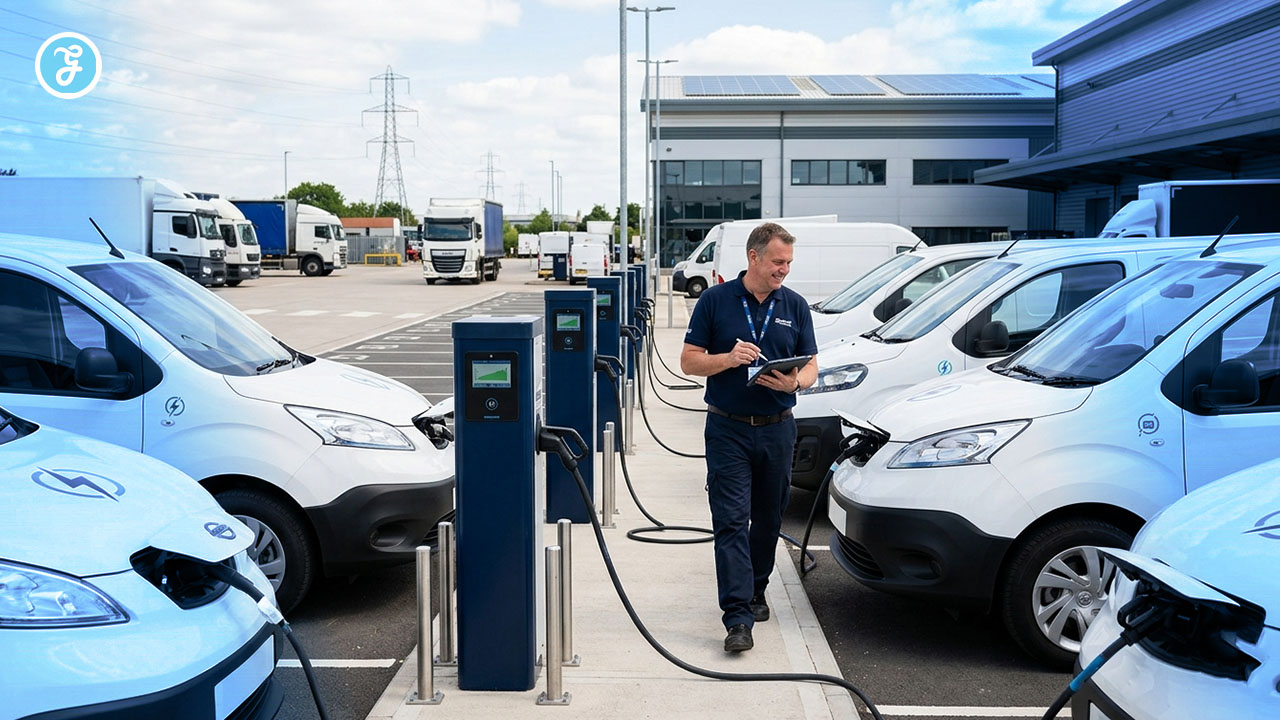
Companies face a big hurdle with charging spots for electric fleets, but smart planning turns this into a win. Picture your delivery vans, they sit idle at night, perfect time to juice up.
Start by mapping out where your vehicles park most, like depots or hubs. Partner with utilities to install fast chargers that cut downtime. A Eurelectric-EY study from March 4, 2026, shows fleet electrification could save up to €246 billion in operating costs by 2030.
Transitioning to electric vehicles slashes fuel bills, and solid infrastructure makes that happen. Think of it as building the backbone, steady and reliable, for your green shift.
Local governments lead with examples, setting up public stations that fleets tap into. Fleet operators, you can leverage grants to offset setup costs, easing the upfront hit. Case studies highlight zero-emission successes, like corporate fleets hitting cost savings through smart charging networks.
Regulations push this forward, with incentives that reward quick action. Ireland’s national targets include cost-benefit paths for passenger EVs, inspiring similar fleet moves. Data tools help pick the right spots, ensuring your setup fits real needs.
Utilizing data-driven tools for decision-making
Fleet operators, you know the drill, switching to electric vehicles demands smart choices based on real numbers. Grab those data-driven tools to crunch actual operational data from your routes and loads.
Lessons from 2025 show us that grounding your 2026 business cases in hard facts beats chasing dreamy targets every time. Think about it, tools like telematics systems track energy use and battery performance, helping you spot the best vans for your daily grind.
This approach slashes guesswork and boosts your shot at those hefty savings, like the €246 billion in cumulative operating costs outlined in the Eurelectric-EY study from March 4, 2026.
Picture your team poring over dashboards that reveal true vehicle ranges and charging needs. Fleet case studies from places like Ireland highlight how data guides national targets, with clear cost-benefit paths for passenger electric vehicles.
You build partnerships and snag incentives by letting analytics lead the way. Operators achieve direct cost savings this way, aligning with regulations that push for zero-emission transitions.
Data turns barriers into stepping stones, making electrification feel less like a leap and more like a sure bet.
Case Studies: Success Stories in Fleet Electrification
Picture a delivery company that swapped its diesel trucks for electric vans, slashing fuel bills by 40% in just one year, and suddenly, going green feels like hitting the jackpot. Or take that city bus system, they charged ahead with battery-powered models, cut emissions big time, and set a shining example for everyone else, proving you can lead the pack without breaking the bank.
Corporate fleets achieving cost savings
Corporate fleets across Europe have slashed costs by switching to electric vehicles, and the numbers tell a compelling story. Take the Eurelectric-EY study from March 4, 2026; it shows fleet electrification could rack up to €246 billion in total operating savings by 2030.
That’s like finding a gold mine in your garage, folks. Companies see lower fuel bills and maintenance fees right away with electric vans leading the charge. These direct savings make the move a no-brainer for smart operators chasing that bottom line.
Real-world examples prove the point with zero-emission transitions that pay off big. Picture big firms ditching gas guzzlers for EVs, and bam, their costs drop like a hot potato. Europe’s corporate fleets eye nearly a quarter trillion euros in potential savings through this shift.
Case studies highlight how these changes cut carbon footprints too, blending green goals with fat wallets. Fleet managers learn from these wins, turning electric dreams into daily reality.
Local government fleets leading by example
Local governments set the pace in fleet electrification, showing businesses how it’s done. Take Ireland, for instance. They rolled out national targets for passenger electric vehicles, complete with clear cost and benefit breakdowns.
This move sparks real action. Fleets switch to zero-emission rides, slashing carbon footprints along the way. Multiple case studies highlight these wins, like cities ditching gas guzzlers for battery-powered trucks.
Picture a municipal van zipping around town on cheap electricity, no fumes in sight. Regulations at state and national levels push this shift, offering sweet compliance perks. Organizations keep pushing forward to hit those environmental marks, turning rules into roadmaps for success.
These examples pack lessons for everyone eyeing electrification. One city fleet cut costs big time by going electric, proving lower operating expenses make sense. Think of it as trading an old clunker for a sleek new ride that saves you bucks at every turn.
Data from real operations, not just pie-in-the-sky goals, grounds these stories. A Eurelectric-EY study from March 4, 2026, backs it up with hard numbers, like up to €246 billion in savings by 2030 across Europe.
Transitioning to electric vans boosts competitiveness too, helping meet sustainability targets without breaking the bank. It’s like leading the charge in a relay race, passing the baton to corporate fleets ready to follow.
The Policy Context: Driving Fleet Electrification Forward
Governments roll out strict rules, like emission limits from the EPA, to push companies toward electric trucks and vans. Tax credits from acts such as the Inflation Reduction Act make the switch easier on your wallet, sparking real change in how fleets run.
Regulations supporting electrification
Regulations at state and national levels push EV adoption hard, creating strong incentives for fleets to go electric. Think of it like a nudge from the top that makes switching to zero-emission vehicles a smart move, not just a nice idea.
Organizations keep pushing their electrification plans to hit those regulatory marks and green targets, saving money along the way. Ireland sets a clear example with its national targets for passenger electric vehicles, complete with cost and benefit breakdowns that guide the path.
These rules fuel the drive toward lower carbon footprints, much like a roadmap that eases the journey for businesses. Fleet operators find real perks in compliance, from tax breaks to smoother operations.
Case studies show how local governments lead with successful shifts to electric fleets, proving that regulations turn big goals into everyday wins.
The role of incentives and mandates
Governments push fleet electrification through smart policies. State and national rules drive EV adoption, and they create strong reasons for companies to switch. Think of these as carrots and sticks that make going electric a no-brainer.
Organizations keep pushing their electrification efforts to hit those regulatory needs and green targets. Ireland sets a great example with its national goals for passenger electric vehicles, complete with clear cost and benefit paths.
These setups help fleets cut carbon footprints while grabbing direct cost savings, like the lower operating costs from electric vans.
Incentives sweeten the deal with tax breaks and subsidies that slash upfront costs. Mandates force action, ensuring businesses stay competitive and meet sustainability goals. Picture a local fleet manager dodging fines by jumping on these rules early, and saving big on fuel along the way.
Such policies support the shift, as seen in studies showing massive savings, like up to €246 billion by 2030 from a Eurelectric-EY report in March 2026. Fleets that follow lead the pack, turning regulations into real wins for the bottom line.
The Path Forward for Fleet Electrification
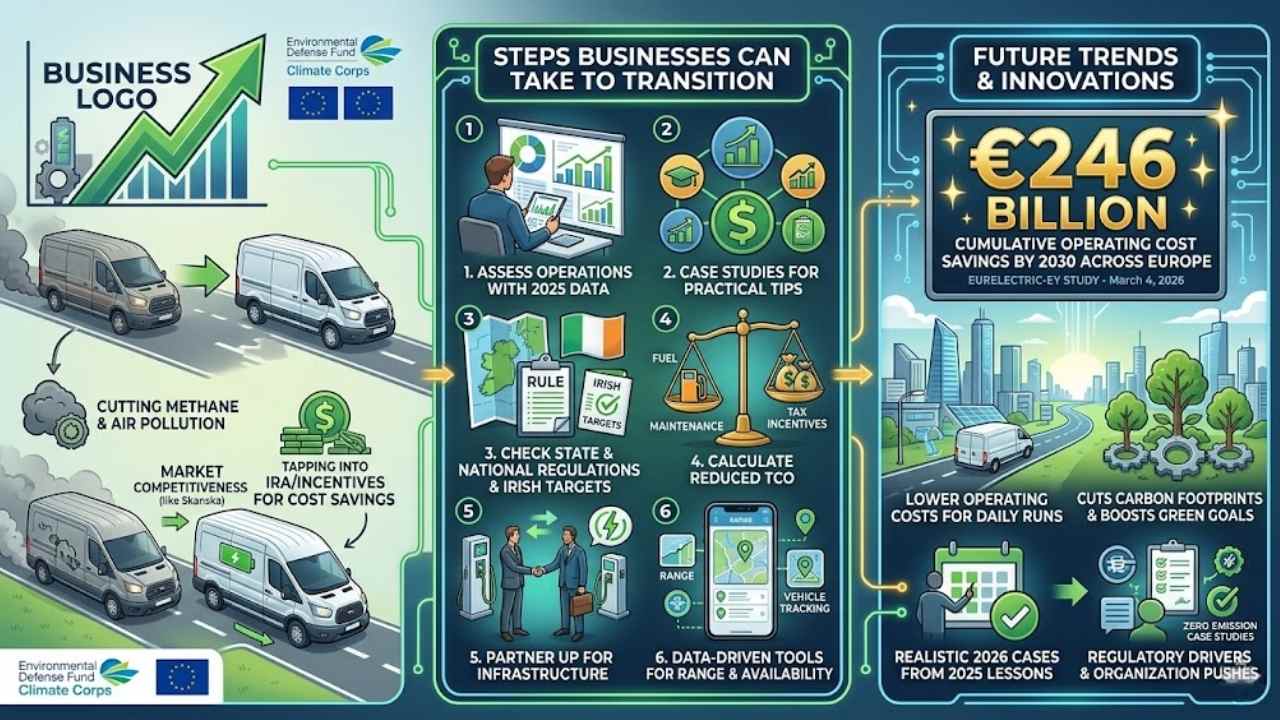
Businesses, imagine your delivery vans zipping along silently on battery power, cutting costs and emissions like a hot knife through butter. Adopt electric trucks and charging hubs now, partner with tech firms for smart software that tracks every mile, and watch your fleet zoom ahead in this green revolution.
Steps businesses can take to transition
Companies face big chances to save money and cut emissions by switching fleets to electric vehicles. A Eurelectric-EY study from March 4, 2026, shows this shift could bring up to €246 billion in cumulative operating cost savings by 2030 across Europe.
- Assess your current fleet operations with real data from 2025 lessons, just like how realistic 2026 business cases ground themselves in actual numbers instead of big dreams, to spot where electric vans can slash those lower operating costs and help meet sustainability goals.
- Look at successful case studies from corporate fleets that achieved direct cost savings, and local government ones leading by example with zero-emission transitions, to grab practical tips for your own path.
- Check out regulations at state and national levels that drive EV adoption, including Ireland’s national passenger electric vehicle targets with their costs and benefits analysis, so you can tap into compliance incentives and keep pushing your electrification efforts to hit environmental targets.
- Calculate the reduced total cost of ownership for electric vehicles, factoring in those lower fuel and maintenance costs, plus tax incentives and government subsidies, because transitioning Europe’s corporate fleets represents a huge financial opportunity with nearly a quarter trillion euros in potential savings.
- Partner up to overcome upfront investment costs and charging infrastructure limits, leveraging funding like the role of incentives and mandates in policy, which support decarbonizing transportation and enhancing your competitiveness.
- Use data-driven tools to tackle vehicle availability and range concerns, making sure your strategies align with future trends in fleet electrification, all while contributing to reducing carbon footprints for broader environmental sustainability.
Future trends and innovations in fleet electrification
Fleet electrification races ahead with fresh ideas that promise big wins. A Eurelectric-EY study from March 4, 2026, shows fleets could save up to €246 billion in operating costs by 2030.
Think of it like swapping a gas-guzzler for a sleek, money-saving machine. Transitioning Europe’s corporate fleets to electric vehicles unlocks nearly a quarter trillion euros in potential savings.
Lower operating costs shine as a top perk for electric vans in daily runs. This shift cuts carbon footprints and boosts environmental goals, much like planting trees while you drive.
Innovations build on lessons from 2025, pushing realistic 2026 business cases based on real operational data. Ireland sets national passenger electric vehicle targets, complete with clear costs and benefits paths.
Regulations at state and national levels speed up EV adoption, offering compliance perks for fleets. Organizations keep pushing electrification to hit regulatory needs and green targets.
Multiple case studies highlight successful zero-emission switches, sharing practical tips for others. Electric vehicles deliver direct cost savings, making them a smart pick for operators eyeing the future.
Final Thoughts
You’ve seen how fleet electrification slashes costs, cuts emissions, and boosts your edge in a green world, with real savings like the €246 billion from that Eurelectric-EY study by 2030.
These steps prove simple and smart, from grabbing tax breaks to building chargers that fit your daily routes. What stops you from mapping out your switch today, or chatting with partners about subsidies? Picture the impact, your business thriving while helping the planet breathe easier through lower fuel bills and zero-emission goals.
Check out those Irish targets or fleet case studies for more tips, and let’s charge ahead to a brighter, electric future.
Frequently Asked Questions (FAQs) on the Business Case for Fleet Electrification
1. What is the business case for fleet electrification?
Fleet electrification means switching your company’s vehicles, like trucks and vans, to electric models. It cuts fuel costs over time, and boosts your green image, which customers love. Picture it as trading in your old gas guzzler for a sleek, money-saving ride that also helps the planet.
2. How do electric vehicles save money for businesses?
Electric vehicles slash maintenance bills since they have fewer moving parts. Plus, government incentives can knock down upfront costs, making the switch a no-brainer for your bottom line.
3. Why electrify your fleet now?
The push for lower emissions is heating up, and businesses that jump on fleet electrification stay ahead of regulations. You’ll predict consumer trends toward eco-friendly brands, too.
4. What challenges come with fleet electrification?
Charging infrastructure might seem like a hurdle at first, but planning ahead turns it into a smooth road. Don’t forget, training your team keeps everything running without a hitch, and the long-term perks outweigh the initial bumps.