
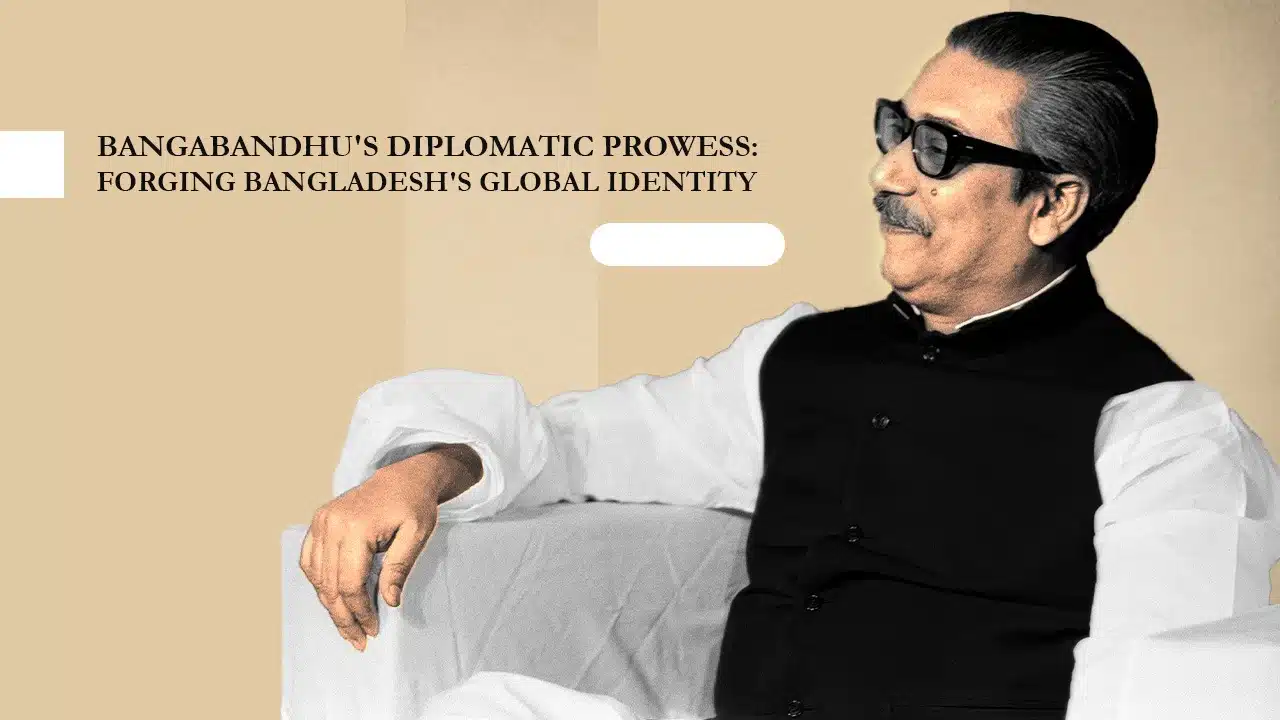
The charismatic Bangabandhu Sheikh Mujibur Rahman led a protracted struggle that culminated in the birth of Bangladesh as an independent nation in 1971. Today, March 17, 2024, is his 104th birth anniversary. As Bangladesh prepares to celebrate Sheikh Mujibur Rahman’s birthday in 2024, it is fitting to reflect on his towering contributions, particularly his diplomatic genius, that shaped the nation’s global identity. Bangabandhu’s visionary leadership and political acumen were instrumental in guiding the fledgling nation through the turbulent path to freedom and carving out its distinct identity on the world stage.
From the early days of the independence movement, Bangabandhu recognized the importance of garnering international support and rallying global opinion in favor of the Bangladeshi people’s legitimate aspirations. His unwavering commitment to asserting Bangladesh’s sovereignty and securing international recognition paved the way for the nation’s economic and social development.
Bangabandhu’s Early Diplomatic Efforts
Even before formal independence, Bangabandhu laid the groundwork for Bangladesh’s global recognition through deft diplomacy.
Seeking Global Support
Even before Bangladesh’s formal independence, Bangabandhu Sheikh Mujibur Rahman tirelessly sought international support for the cause. During the tumultuous months of 1971, he worked relentlessly to rally global leaders and organizations, drawing attention to the plight of the Bangladeshi people and their aspiration for self-determination.
Historic India Alliance
His wartime diplomatic outreach, including the historic meeting with former Indian Prime Minister Indira Gandhi in December 1971, played a pivotal role in securing crucial allies and laying the groundwork for the eventual recognition of an independent Bangladesh.
The 6-Point Program
The roots of Bangabandhu’s diplomatic prowess can be traced back to his visionary 6-point program, which he presented at a national convention in Lahore, Pakistan, in 1966. This program articulated a roadmap for greater autonomy and self-governance for the then-East Pakistan, laying the foundations for Bangladesh’s eventual independence. The resonance of the 6-point program extended beyond borders, garnering support from international human rights organizations and drawing global attention to the legitimate demands of the Bangladeshi people.
Regional Relationships
Bangabandhu’s early diplomatic efforts were not limited to seeking external support. He also played a crucial role in building relationships with key allies within the region, particularly India. His personal rapport with Indian leaders, including Prime Minister Indira Gandhi, and his ability to navigate complex geopolitical dynamics were instrumental in securing India’s unwavering support for Bangladesh’s liberation struggle.
Securing Recognition and Admission to the UN
Bangabandhu’s crowning diplomatic achievement was securing UN membership for the new nation of Bangladesh.
Overcoming Obstacles
One of Bangabandhu Sheikh Mujibur Rahman’s most significant diplomatic triumphs was securing recognition for the newly independent Bangladesh and paving the way for its admission to the United Nations. His shrewd negotiations and unwavering resolve ultimately resulted in the international community recognizing Bangladesh as a sovereign nation despite initial challenges and opposition from some quarters.
Groundbreaking UN Speech
Bangabandhu’s groundbreaking speech at the UN General Assembly on September 25, 1973, was a defining moment in this journey. In his powerful and impassioned address, he articulated Bangladesh’s commitment to peace, cooperation, and the principles enshrined in the UN Charter. His oratory skills and ability to connect with world leaders left a lasting impression, as he stated:
“Bangladesh stands before this august world body as a reborn sovereign state, not to make a mere symbolic debut but to make its humble contribution towards the fulfillment of the aspiration of mankind for peace and progress.”
Achieving UN Membership
This pivotal speech laid the groundwork for Bangladesh’s formal admission to the UN on September 17, 1974, solidifying its status as a sovereign nation and marking a significant milestone in Bangabandhu’s diplomatic endeavors.
Significance for a New Nation
The significance of UN recognition for a newly independent nation cannot be overstated. It not only conferred legitimacy on the global stage but also opened doors for economic assistance, trade opportunities, and participation in various international forums. Bangabandhu’s skillful navigation of the complex diplomatic landscape was instrumental in securing this crucial recognition, paving the way for Bangladesh’s integration into the global community.
Did you know there’s a movie released about the life and legacy of Bangabandhu Sheikh Mujibur Rahman? The movie named as, “Mujib – The Making of a Nation”.
Shaping Bangladesh’s Foreign Policy Principles
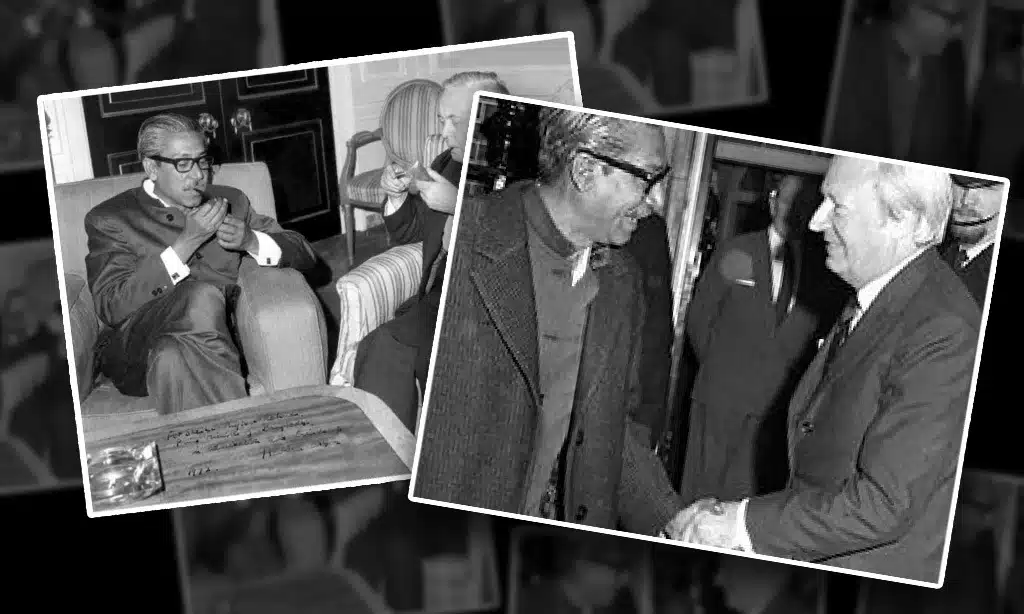
Bangabandhu laid out a visionary framework that would guide Bangladesh’s international relations for decades.
‘Friendship to All, Malice to None’
Bangabandhu Sheikh Mujibur Rahman played a pivotal role in shaping the core principles that would guide Bangladesh’s foreign policy for decades to come. His famous dictum, “Friendship to all, malice to none,” encapsulated Bangladesh’s aspiration to maintain cordial relationships with all nations while harboring ill-will towards none. This principle underscored the nation’s commitment to peaceful coexistence and cooperation on the global stage.
Non-Alignment and Peace
Bangabandhu championed a non-aligned and peace-loving stance, steering Bangladesh away from the superpower rivalries of the Cold War era. He recognized the importance of maintaining a neutral position and avoiding entanglement in power blocs, allowing Bangladesh to chart its own course based on its national interests and values.
Decolonization and Third-World Solidarity
As a vocal advocate for decolonization and third-world solidarity, Bangabandhu positioned Bangladesh as a leader among developing nations. He understood the shared struggles and aspirations of countries emerging from the clutches of colonialism and sought to foster unity and cooperation among them. This approach not only strengthened Bangladesh’s ties with like-minded nations but also gave the country a voice in shaping the global discourse on issues affecting the developing world.
Balancing Regional Powers
While promoting a non-aligned stance, Bangabandhu deftly balanced relationships with regional powers, recognizing the importance of maintaining constructive engagement with neighbors. He fostered strong ties with India, acknowledging their crucial support during the liberation struggle, while simultaneously nurturing cordial relations with other regional players such as China and the Soviet Union.
Core Principles
Bangabandhu’s vision for Bangladesh’s foreign policy was rooted in the principles of sovereignty, territorial integrity, and non-interference in the internal affairs of other nations. He believed in the peaceful resolution of conflicts and advocated for multilateral cooperation as a means to address global challenges.
Strengthening Regional and Global Alliances
Under Bangabandhu’s leadership, Bangladesh forged strategic partnerships across the world.
Muslim World Outreach
Recognizing the importance of regional and global alliances, Bangabandhu Sheikh Mujibur Rahman worked tirelessly to forge strong partnerships with like-minded nations and organizations. He cultivated close ties with Muslim nations and played a pivotal role in Bangladesh’s admission to the Organization of Islamic Cooperation (OIC) in 1974, strengthening the country’s position within the Islamic world.
Non-Aligned Movement
Bangladesh’s engagement with the Non-Aligned Movement, a coalition of nations advocating for independence and peaceful coexistence, was another testament to Bangabandhu’s diplomatic vision. He saw the movement as a platform to promote the interests of developing countries and advocate for a more equitable global order.
Western Partnerships
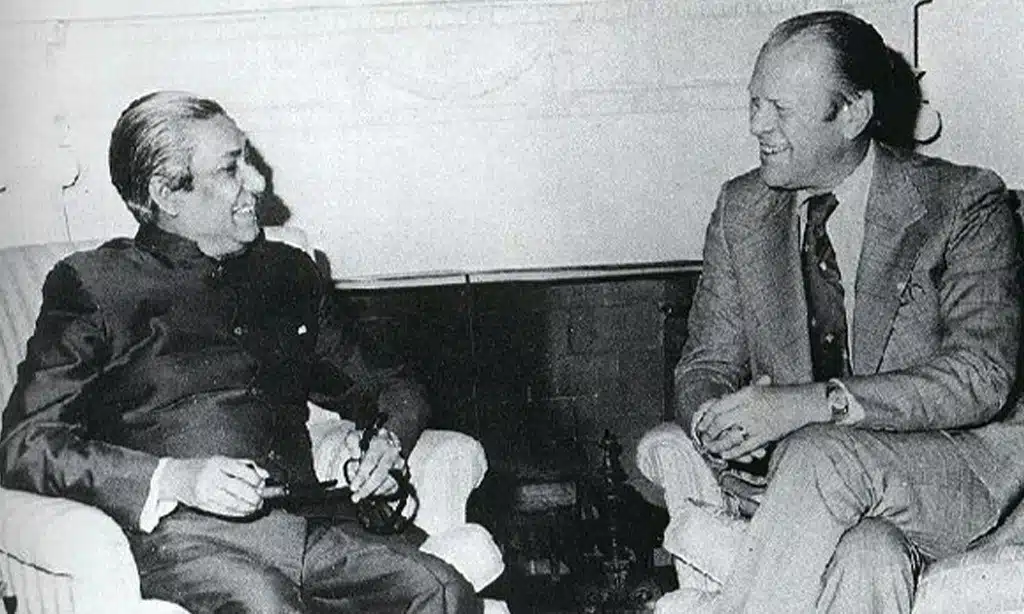
Bangabandhu also made strides in building bridges with Western powers, recognizing the importance of diverse partnerships for Bangladesh’s development. While maintaining a non-aligned stance, he sought to establish constructive relationships with countries like the United States, United Kingdom, and others, paving the way for cooperation in areas such as trade, investment, and technology transfer.
Regional Cooperation Platforms
Moreover, Bangabandhu laid the groundwork for regional cooperation, envisioning platforms like the South Asian Association for Regional Cooperation (SAARC) and the Bay of Bengal Initiative for Multi-Sectoral Technical and Economic Cooperation (BIMSTEC). These initiatives aimed to foster economic and cultural ties among neighboring nations, reflecting his foresight in promoting regional integration and collective development.
Membership Timeline
The table highlights the timeline of Bangladesh’s admission to various regional and global organizations, a testament to Bangabandhu’s efforts in strengthening the country’s international alliances.
Timeline of Bangladesh’s Admission to Regional and Global Organizations
| Organization | Year of Admission |
|---|---|
| United Nations (UN) | 1974 |
| Organization of Islamic Cooperation (OIC) | 1974 |
| Non-Aligned Movement | 1973 |
| South Asian Association for Regional Cooperation (SAARC) | 1985 |
| Bay of Bengal Initiative for Multi-Sectoral Technical and Economic Cooperation (BIMSTEC) | 1997 |
| D-8 Organization for Economic Cooperation | 1997 |
| Asia Cooperation Dialogue (ACD) | 2002 |
Source: Ministry of Foreign Affairs, Government of Bangladesh
Legacy of Bangabandhu’s Diplomacy
Bangabandhu’s diplomatic achievements have had a profound and lasting impact on Bangladesh’s global standing.
Establishing Global Standing
Bangabandhu Sheikh Mujibur Rahman’s diplomatic achievements played a pivotal role in establishing Bangladesh’s sovereignty and global standing. His unwavering commitment to asserting the nation’s independence and securing international recognition not only conferred legitimacy but also paved the way for economic and social development.
Through his skilled diplomacy, Bangabandhu successfully navigated the complex geopolitical landscape of the time, forging alliances with regional and global powers while maintaining Bangladesh’s non-aligned stance. His ability to build personal rapport with world leaders and articulate the nation’s principled positions on various issues earned him respect and admiration on the international stage.
Enduring Policy Principles
Bangabandhu’s inspirational leadership and enduring influence continue to shape Bangladesh’s foreign policy principles even today. His core tenets of friendship, peace, and cooperation remain deeply ingrained in the nation’s diplomatic approach, guiding its interactions with the global community. The principles of non-alignment, decolonization, and third-world solidarity that he championed continue to resonate, particularly in Bangladesh’s engagement with developing nations and global forums.
Global Organizational Role
As Bangladesh celebrates Sheikh Mujibur Rahman’s 105th birthday in 2024, the continued relevance of his diplomatic vision is evident in the country’s growing role in regional and international organizations. Bangladesh’s membership in bodies like SAARC, BIMSTEC, and the OIC is a testament to Bangabandhu’s foresight in promoting multilateral cooperation and regional integration.
Foundation for Development
Furthermore, Bangabandhu’s legacy extends beyond the realm of diplomacy. His unwavering commitment to asserting Bangladesh’s sovereignty and promoting its interests on the global stage laid the foundation for the nation’s economic and social development. His vision of a self-reliant and prosperous Bangladesh continues to inspire successive generations of leaders and policymakers. You can also read about the evolution of Awami League and achievements.
Conclusion
Bangabandhu Sheikh Mujibur Rahman’s unparalleled statecraft and diplomatic prowess were instrumental in forging Bangladesh’s global identity as a sovereign, peace-loving nation committed to cooperation and development. His pivotal achievements, from securing UN recognition to shaping foreign policy principles and fostering regional alliances, continue to resonate today and serve as a guiding light for the nation’s diplomatic endeavors.
As Bangladesh celebrates Sheikh Mujibur Rahman’s birthday in 2024, it is an opportune moment to reflect on his lasting impact and the need to uphold his vision in the modern era. Bangabandhu’s diplomatic legacy serves as a reminder of the importance of principled leadership, unwavering commitment to sovereignty, and the pursuit of peaceful cooperation in a complex and ever-changing global landscape.
Bangladesh’s journey from a fledgling nation to a respected member of the international community is inextricably linked to Bangabandhu’s visionary diplomacy. By honoring his principles and drawing inspiration from his achievements, Bangladesh can continue to navigate the challenges and opportunities of the 21st century, while remaining true to its core values of independence, peace, and solidarity.