Have you ever tried sharing a story with someone, only to realize they were miles away in their own head? Maybe they nodded politely, but their eyes drifted and their hands reached for their phone. It is an incredibly lonely and frustrating feeling. We all just want to feel heard, whether we are sitting around the dinner table or sitting in a boardroom. The Art of Active Listening means focusing on so much more than just the words hitting your ears.
I have found that studies are shocking on this topic, showing that most people only remember about half of what someone just said! I am going to walk you through the exact steps to fix this, and I think you will be surprised at how easy it can be. This guide will share how better listening creates stronger trust and smoother teamwork.
Discover how small changes in your style can make big waves in every relationship. So grab a cup of coffee, and let’s go through it together.
Understanding The Art Of Active Listening
Active listening means giving your full attention to the speaker, not just hearing their words. You build stronger connections by listening with care and responding with empathy.
What is Active Listening and Its Principles
Active listening means paying intense attention during a conversation. It calls for deep focus, even if the speaker talks fast or has a very soft voice.
Listeners use their ears and their eyes to catch every single detail. They notice body language, voice tone, and facial expressions to get the full picture.
People who practice this skill often nod, smile, or ask simple questions to show they truly care. The famous Gottman Institute, which studies relationship health, bases much of its work on this exact idea. They found that true listening allows for “gentle start-ups” instead of harsh criticism, which completely changes how two people interact.
Several key ideas guide this practice. First comes presence, which means you need to be there in mind and body. Do not wander off to your grocery list while a friend is talking! Next is patience, so you must let people finish without jumping in too soon.
Show empathy by trying to understand feelings as well as hard facts. Avoid judging right away, because a safe space helps both sides share more deeply. Give feedback that shows true engagement, like saying, “I hear you saying trust matters.”
Comparing Active and Passive Listening
After laying out what makes active listening tick, it is time to put it side by side with its quieter cousin, passive listening. The difference is incredibly clear once you see them next to each other.
A 2025 Clockify report showed that US employees lose about 720 hours a year to workplace distractions, and passive listening is a huge part of that wasted time. Check out this table for a quick look at how the two styles compare.
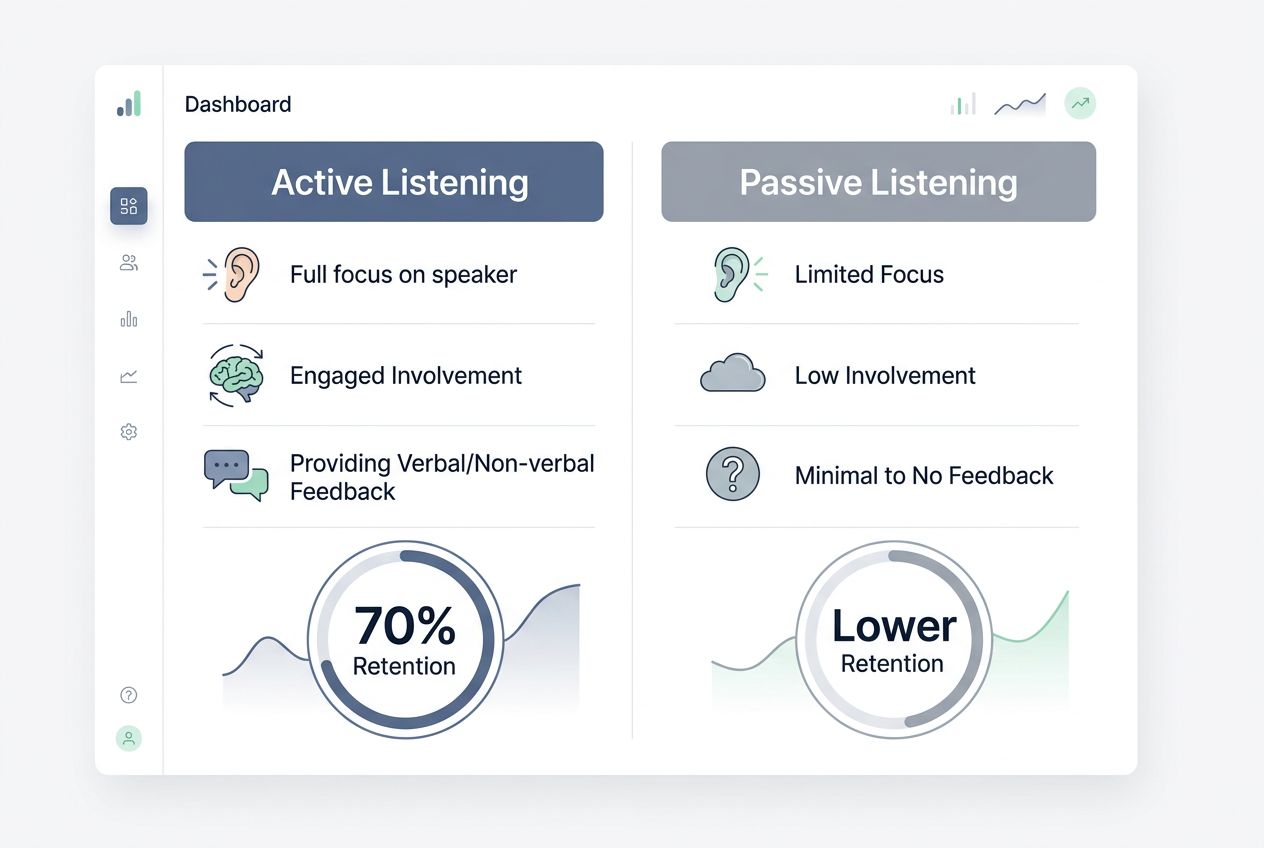
| Active Listening | Passive Listening | |
|---|---|---|
| Focus | Total focus on the speaker; distractions get tossed aside. | Attention drifts; speaker’s words float by like background music. |
| Involvement | Nods, smiles, questions, and those “tell me more” looks. | Barely a head tilt or a grunt, engagement barely exists. |
| Feedback | Reflects back; says things like, “So you feel…” or “If I heard right…” | No paraphrasing, no clarifying, just blank stares or the occasional “uh-huh.” |
| Retention | Retains up to 70% of information, studies show. | Often forgets details; info in one ear and out the other. |
| Purpose | Tries to understand, connect, and support communication. | Let words wash over, doesn’t seek deeper meaning. |
| Examples | Therapists, customer support, and a best friend invested in your story. | Someone listening to the radio while driving, a bored student doodling. |
| Result | Relationships grow, trust builds, and fewer misunderstandings. | Issues fester, connections weaken, and confusion often follows. |
Why Active Listening Matters?
Active listening completely changes how people connect, share, and respond to each other. It can turn simple talk into true understanding and deeper bonds. Sometimes, it only takes a few well-chosen words or an open ear.
Enhance Trust and Comprehension
Listening shows you genuinely care about the other person. People feel safe to share more, and their defensive walls quickly come down.
True communication starts right here in this space of safety. If someone pays attention, speaks less, and listens more, trust grows rapidly.
A 2025 report from Grammarly revealed that ineffective communication costs US businesses up to $1.2 trillion annually. Better listening is not just nice to have; it is a financial necessity.
Clarity always follows good listening habits. You catch the meaning behind each word and can clear up any confusion fast. This helps prevent massive problems later on.
Friends, coworkers, or family members all feel valued during conversations that use these skills. Good listeners become magnets for honest feedback and open interaction because they make others feel heard.
Improve Communication in Relationships
Good communication builds strong relationships, just like sturdy bricks make a strong house. People feel valued and respected when they know their thoughts matter. Eye contact or a gentle nod can show you care just as much as your words do.
Simple feedback, such as “I hear you,” helps others open up more. Using active listening during conversations grows trust and lowers misunderstandings.
In fact, the Gottman Institute found that couples who practice attentive listening are 30% more likely to maintain a happy and lasting relationship. They also discovered that happy couples have five positive interactions for every one negative interaction. Active listening helps you hit that golden ratio effortlessly.
Kids also thrive with parents who pay attention and respond kindly to their feelings or stories. Most conflicts soften when both people try to understand each other’s side before reacting too fast.
Boost Professionalism in the Workplace
Healthy relationships set the perfect stage for strong teamwork at your job. Active listening helps build true professionalism by showing respect during each conversation.
People feel heard, so they open up and share their best ideas. This specific skill directly impacts your daily success in a few key ways:
- Fewer Mistakes: Workers catch critical details the very first time. A 2024 Jobera report noted that 60% of workplace mistakes are due to communication failures.
- Reduced Misunderstandings: That same data shows active listening cuts misunderstandings by a massive 40%.
- Higher Loyalty: Managers who listen well often earn staff loyalty much faster than those who do not.
- Better Meetings: Meetings run more smoothly since everyone can share thoughts without fear of being cut off.
This steady flow of clear communication boosts trust, morale, and daily collaboration.
Techniques to Master Active Listening
Active listening is like tuning your ears to your absolute favorite song. You want to catch every beat and miss nothing at all. Lean in, sharpen your senses, and discover how these simple acts change your connections.
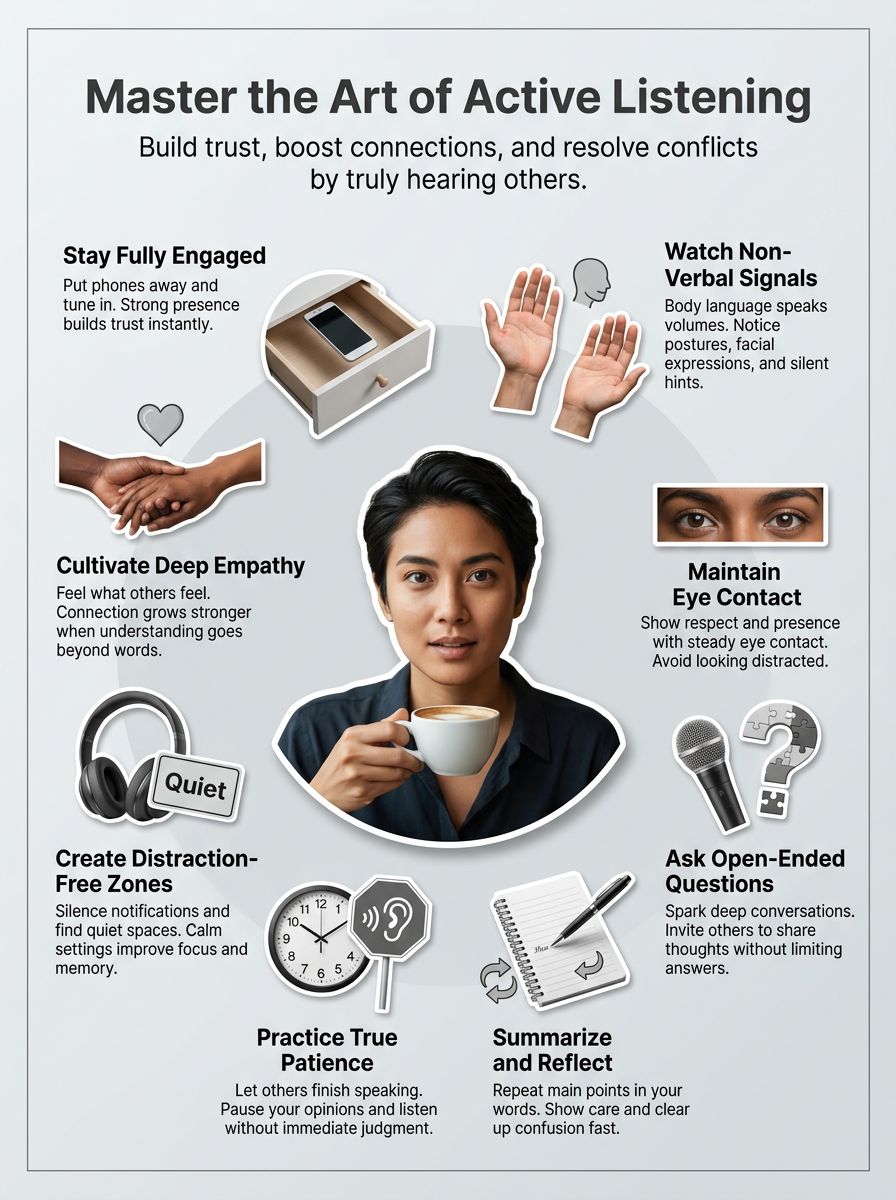
Stay Fully Engaged
Lean in, nod along, and show your genuine interest. Keep your phone completely out of sight.
Let your conversation partner see you listening with both your ears and your eyes. Pay close attention to their words, their tone, and even the silence between sentences. People feel much more valued when they sense real engagement during a chat.
Small changes make a very big difference here. Close that laptop if you can, turn away from background noise, and focus entirely on the speaker.
A 2025 study from the University of California, Irvine, found it takes an average of 23 minutes and 15 seconds to regain full focus after an interruption. Putting your phone away keeps you locked in. This strong presence helps build trust and makes conversations easier for everyone involved.
Observe Non-Verbal Signals
Non-verbal cues can speak far louder than actual words. Notice the quick tap of a foot or folded arms during a serious conversation. A furrowed brow, smiling eyes, or crossed legs often share feelings before people ever open their mouths.
You can spot worry in tight lips or calmness in an open posture. Body language and tone work perfectly together with spoken words. Keep these silent hints in mind:
- Posture: Leaning in shows high interest, while leaning back can signal a lack of engagement.
- Facial Expressions: A genuine smile reaches the eyes, while a forced one stays near the mouth.
- The 55/38 Rule: Psychologist Albert Mehrabian found that 55% of a message comes from body language, and 38% from tone of voice.
- Hand Gestures: Open palms suggest honesty, while pointing can feel aggressive.
These silent hints help you connect and respond better, building stronger relationships fast.
Maintain Eye Contact
Eyes clearly show your level of attention. Keeping eye contact signals that you are fully present in the conversation. It makes others feel seen and heard, like a friend listening at recess or a coach during practice.
Strong eye contact helps build massive trust and engagement between people. Listeners who constantly look away often seem distracted or bored, which can hurt your connection.
A 2024 psychological study on nonverbal communication found that maintaining eye contact for longer than five seconds directly increases feelings of connectedness.
Eye contact does not mean staring intensely, though. Quick, gentle glances work perfectly well. Break your gaze now and then to avoid making things feel awkward. In many workplaces, good eye contact means simple respect during meetings or feedback sessions.
Encourage Conversation with Open-Ended Questions
Open-ended questions spark real, meaningful conversation. They invite the other person to share thoughts, feelings, and ideas without any strict limits. Instead of asking, “Did you like it?”, try asking, “What did you think about that experience?”
A great rule of thumb from communication researchers is to limit open-ended questions to two or three per conversation. Too many deep questions can cause cognitive fatigue for the speaker.
These types of questions show deep empathy and boost your connection. Short answers hit a wall fast, but big questions open exciting doors. In work meetings or at dinner tables, asking for stories pulls everyone in.
Summarize and Reflect
Open-ended questions help start a real conversation, but summarizing takes it much further. Summarizing simply means you repeat the main points someone shared using your own words.
This action proves that you are actually paying attention. It also helps clear up any confusion in your communication immediately. Reflecting goes a step deeper than just repeating basic facts.
Experts often recommend the HEAR framework from Harvard, which stands for Hear, Empathize, Analyze, and Reframe. You share how you think the speaker feels. Phrases like “It sounds like you are upset,” or “You want more support at work,” let people know you truly care. Both steps grow trust and improve understanding in every relationship you have.
Practice Patience and Avoid Judgment
Conversations move at their own unique pace, much like slow traffic on a rainy day. People need time to find the right words or share vulnerable feelings. Rushing others cuts off real understanding and puts up heavy walls.
Show patience by letting the person finish their thoughts, even if there are long pauses. Holding back your judgment builds trust and makes people feel safe. Try these simple tips to stay patient:
- The Stop, Breathe, Be Method: Harvard medical experts suggest pausing and taking a deep breath before picking up your phone or interrupting.
- Count to Three: Wait three full seconds after the person stops talking before you jump in.
- Suspend Your Opinions: Focus strictly on their perspective, not your immediate reaction.
- Embrace the Silence: Let quiet moments happen naturally without rushing to fill the void.
Snap judgments block empathy and limit strong connections during any interaction. Pause your opinions and focus instead on your presence.
The Three Aspects of Active Listening
Mastering these three key parts can make your conversations much smoother. Keep reading to pick up some incredibly helpful tips.
Giving Full Attention
Giving full attention is like shining a bright flashlight right on the person talking. Your eyes, ears, and mind focus exactly on them. You shut off your phones, close your laptop, or mute the television.
People can easily sense if you are present or just pretending to listen. Small things help show your real, honest engagement. Nodding your head or leaning in lets others know you care about what they say.
Quick glances at the clock break trust incredibly fast, but steady eye contact keeps conversations strong. To help block out digital noise, many professionals in the US use focus apps like Forest or Cold Turkey. These tools block distracting websites, letting you give your full attention to a video call or project.
Maintaining a Positive Attitude
After giving full attention, keeping a positive attitude shapes every word and gesture. A warm smile or nod can light up even the toughest, most stressful conversation.
According to 2024 workplace data from Jobera, high-quality listening skills directly lead to a 16% rise in employee satisfaction. Positivity pays off.
Energy flows better between people who feel respected, heard, and understood during any interaction. Using kind words builds trust faster than snapping or rolling your eyes ever could.

Even on rough days, act like you care because you actually do! Try to put yourself in the other person’s shoes for just a moment. Showing patience and empathy helps calm tense moments and keeps communication incredibly friendly.
Making Necessary Adjustments
Sometimes, you just need to switch gears. Maybe the other person talks softly, so you lean in and listen much closer. Some people use lots of hand gestures or pause often, which might mean they want more time to think.
Adapting your approach can make a massive difference in your connection. Changing your style shows real respect for how others communicate. Keep these adjustments in mind:
- Match Their Volume: If they speak quietly, lower your voice to match their calm energy.
- Use Tech Helpers: Apps like Otter.ai can transcribe meetings, so you can adjust your focus away from frantic note-taking and back to the speaker.
- Pace Yourself: Slow down your speech if the other person seems overwhelmed or confused.
- Adjust Your Posture: Sit down if they are sitting, so you are on the same eye level.
Your small adjustments create better feedback and strengthen relationships at home and work.
Advantages of Active Listening
Active listening builds incredibly strong bonds and helps people feel truly valued. It can often turn even the rockiest conversation into a much smoother journey.
Cultivate Empathy and Emotional Intelligence
Empathy opens exciting doors in literally any conversation. Listen with your ears and your heart, and try to feel exactly what the other person feels. Nod, smile, or say, “I get it,” to show you care.
This builds trust like a bridge over a wide river, strong enough for two people to meet right in the middle. Emotional intelligence helps spot hidden meaning behind simple words or silent pauses.
Notice tone of voice, crossed arms, or even a shaky breath, as these signal deeper emotions. A recent McKinsey report noted that demand for social and emotional skills in the US is projected to grow by 14% by 2030. Connection grows much stronger when understanding goes beyond just chatting back and forth.
Resolve Conflicts Efficiently
Strong empathy leads directly to much smoother conflict resolution. Active listening keeps anger down and helps both sides feel completely heard.
By focusing on each speaker, you can spot the heart of the problem much faster. People are more open to compromise when they know their words actually matter. These steps help resolve issues fast:
- Acknowledge the Emotion: Say, “I can see why that would make you feel frustrated.”
- Ask Clarifying Questions: Make sure you understand their exact complaint before defending yourself.
- Use Harvard’s Method: The Harvard Negotiation Project found that when people feel heard, they are 80% more likely to engage in constructive dialogue.
- Focus on the Future: Pivot the conversation from what went wrong to how you can fix it together.
Small steps in your engagement make a mountain-sized difference in fixing problems fast.
Reduce Miscommunication Risks
Active listening helps people thoroughly understand words and feelings, not just what is said out loud. Picture two people at work trying to solve a puzzle. One speaks, the other nods, asks a simple question for clarity, and repeats what was heard.
Both feel completely heard, and the message gets through without any confusion. Clear feedback during conversations shrinks mistakes and missteps.
Research from Vantage Partners shows that poor communication wastes about 7.4 hours per week for the average US worker. That is nearly an entire workday lost to simple misunderstandings! Using open-ended questions makes room for honest dialogue and much less guessing.
Nonverbal cues such as smiles or eye contact build stronger connections, too. These small actions help every single conversation move forward smoothly.
Challenges in Active Listening
Sometimes, your mind wanders or your phone buzzes and steals your precious focus. Even a tiny itch can make listening feel like running a long marathon with pebbles in your shoe.
Environmental Distractions
Busy offices, buzzing phones, and loud televisions make it incredibly hard to focus. Noisy spaces pull your attention away from the speaker and weaken your understanding.
Even a flashing computer screen or chatter in the background can break your train of thought. You can cut down these annoying distractions with a few quick changes:
- Turn Off Notifications: Put your phone on “Do Not Disturb” during important talks.
- Find a Quiet Room: Move away from the noisy open-office floor to a private space.
- Manage Digital Noise: A 2024 Unily report showed 60% of employees blame digital tools like messaging apps for increased workplace stress. Close those tabs!
- Set Boundaries: Let coworkers know when you are in a “focus block” and cannot be interrupted.
A calm setting builds deep trust and lets everyone feel heard.
Psychological Hurdles
Self-doubt can sneak in and block a real, honest connection. Sometimes, it whispers that they won’t care what you say, making people stop listening altogether.
Old grudges or fears often twist words before they even reach your ears. Distractions in the mind act like loud radios drowning out important talk.
Worries about work, family, or your health compete heavily for your attention. Active listening skills need regular practice to break through these hidden mental barriers.
Physical Limitations
Hearing loss is a massive issue. A 2025 Occupational Health & Safety report states nearly 33% of US workers are at risk of hearing issues from noise exposure. Make sure you accommodate those who need it.
Sometimes, hearing loss or speech problems make active listening incredibly tough. A person with a hearing aid might miss soft sounds in group conversations, and physical pain can weaken one’s focus.
Someone recovering from surgery may struggle to sit upright for long talks, making it hard to keep their attention sharp. Even wearing masks can block facial cues and muffle voices, breaking the natural flow of your communication.
Age-related changes like slower reflexes or weaker memory can reduce comprehension, too. Solutions do exist for every single hurdle, so be patient.
Strategies to Enhance Listening Skills
Great listening skills make all of your conversations smoother. Stick around to discover some smart ways to boost yours today!
Engage in Mindfulness
Focus deeply on the present moment. Clear your head of the noise, the buzz, and your wandering thoughts.
Notice each word, tone, and gesture during your conversation. This boosts your empathy and helps you catch important nonverbal cues others might miss. Practice deep breathing before you listen.
A few slow breaths can quiet your nerves or irritation incredibly fast. To help train this muscle, many people use mindfulness apps like Headspace or Calm. These tools help develop your brain’s ability to stay present, making active listening feel much less like a chore.
Establish a Distraction-Free Zone
Phones buzzing, dogs barking, and screens flashing are distractions that hide absolutely everywhere. Set your phone to silent, close your other tabs, and find a quiet place to chat.
A peaceful area makes it much easier to give your full attention and improve your connection. Try these methods to protect your peace:
- The 2025 Time-Wasting Report: Resume Now found that 58% of employees waste up to an hour a day on distractions. Hide your phone to avoid becoming a statistic!
- Clear the Clutter: A clean desk helps create a much cleaner, more focused mind.
- Schedule Quiet Time: Set boundaries with your family or coworkers about when you cannot be disturbed.
- Use Status Updates: Change your team chat status to “In a Meeting” so pings do not pop up.
Your ears work best when they do not have to battle background noise every single second.
Develop Empathy and Patience
With distractions completely out of the way, your focus shifts to growing empathy and patience. Try putting yourself right in someone else’s shoes during a conversation.
Imagine exactly how they feel or what might be troubling them deep down. Giving people space lets their stories come alive without feeling rushed or heavily judged. Listen with your heart as well as your ears.
Smiles matter, and even gentle nods help out a lot, too. Simple acts like pausing before speaking can show incredible care. These small, patient moments build immense trust, turning any chat into a true connection.
Implementing Active Listening
Active listening fits right into your daily chats and your big work talks. Your words land better, and your connections grow much deeper with simple changes.

In Personal Interactions
Listening shapes each beautiful moment shared with your friends, your family, and even strangers. Nodding along to a story or holding eye contact can show your real attention.
Small signals like smiling, leaning in closer, or asking simple questions help people feel deeply heard. People notice these gentle actions far more than fancy words. You can practice this at home with a few simple tricks:
- The 10-Minute Check-In: Dr. John Gottman suggests couples spend just 10 minutes a day talking without any screens present.
- Pause Before Answering: Give the other person a moment to breathe before you jump in.
- Validate Their Struggle: Sometimes just saying, “That sounds really hard,” helps build trust faster than advice.
- Show Genuine Interest: Ask follow-up questions about the details they just shared.
Clear feedback creates better understanding and a deeper connection in every single relationship you nurture.
Within Professional Environments
Just like at home, active listening can make or break your team’s success at work. A good listener helps prevent major mistakes, clears up confusion, and builds massive trust with coworkers.
People feel heard and highly valued when you give them your full attention during meetings. In offices, distractions are literally everywhere. Phones buzz and emails ping nonstop.
Using a tool like Toggl Track or turning on your computer’s “Focus Mode” can help block these out. Eye contact and nods show that you genuinely care about what others say. Leaders who model strong listening skills create teams that solve tough problems faster.
During Conflict Resolutions
Active listening acts exactly like a bridge over troubled waters in conflict situations. You pause, give your full attention, and let the speaker share their thoughts without rushing to answer.
Tone of voice, body language, and steady eye contact all play massive roles here. These nonverbal cues show care and help build deep understanding on both sides. Keep these strategies in mind during an argument:
- Use “I” Statements: Say, “I feel overwhelmed when deadlines shift,” rather than, “You always change the deadlines.”
- Ask What Matters: Use open-ended questions like, “What matters most to you in this situation?”
- Summarize the Problem: Say, “So you feel frustrated because of the lack of communication.”
- Stay Calm: Keep your voice level and your posture relaxed to de-escalate the tension.
Misunderstandings simply fade away with patient listening.
Wrapping Up
Listening is not just about hearing the words coming out of someone’s mouth. The art of active listening builds real connection and deepens your understanding, no matter the setting.
Every single conversation becomes an exciting opportunity to grow engagement, practice your empathy, and offer strong feedback. Give your full attention in each interaction, because people absolutely notice when you show genuine presence. Small actions, like keeping warm eye contact or nodding at the perfect moment, can spark big changes in your relationships and your collaboration.
These skills work perfectly for families chatting around dinner tables or busy teams solving problems at work. Even a gentle request to hear more can help someone feel seen and highly valued. It helps trust bloom, step by beautiful step.