
Do you feel like high taxes crush your business dreams? Many owners face this pain every day. They work hard, yet see profits vanish to big tax bills. It drains energy and slows growth. You might wonder if there’s a smarter way out. Did you know some countries charge zero corporate tax for certain setups? This blog guides you on how to relocate business to tax-friendly country. We cover top spots, key steps, and risks to watch.
Get ready for real tips that save money. Keep reading.
What Does It Mean to Relocate Business to Tax-Friendly Country?
Relocating your business to a tax-friendly country means shifting its legal home base to an offshore jurisdiction with low taxes. You set up a new corporate structure there, like in a tax haven, to cut down on corporate taxes.
This move often involves international relocation for tax optimization. It’s like finding a sunnier spot for your garden; the business grows better with tax advantages. Entrepreneurs use this strategy to boost profits through smart jurisdiction selection.
They might register the business anew or use a professional service provider for global compliance.
Moving your company to a place with tax incentives is like giving your business a fresh start in fertile soil, says business strategist Alex Johnson.
Offshore business setups can include an employer of record for handling staff abroad. Expatriate entrepreneurs often choose this path for economic migration. Business relocation focuses on tax reduction without losing operations.
Corporate taxes drop, and international business expands. Here are the benefits of making this switch.
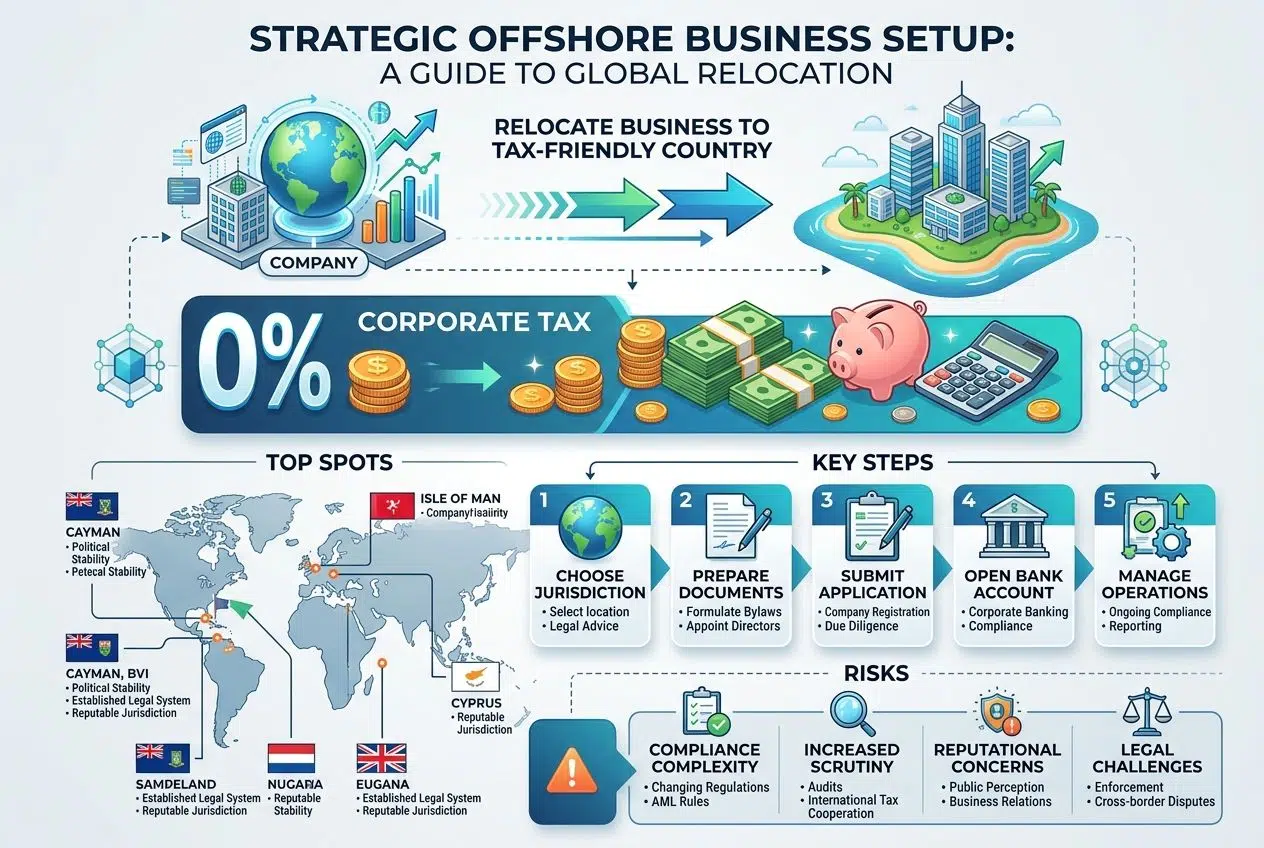
Benefits of Moving to a Tax-Friendly Country
Picture your business shedding heavy tax loads like a snake sloughs off old skin, freeing up cash for growth and fun stuff. You snag perks that boost your bottom line and spark fresh opportunities abroad, making the move feel like striking gold in a new playground.
Lower corporate tax rates
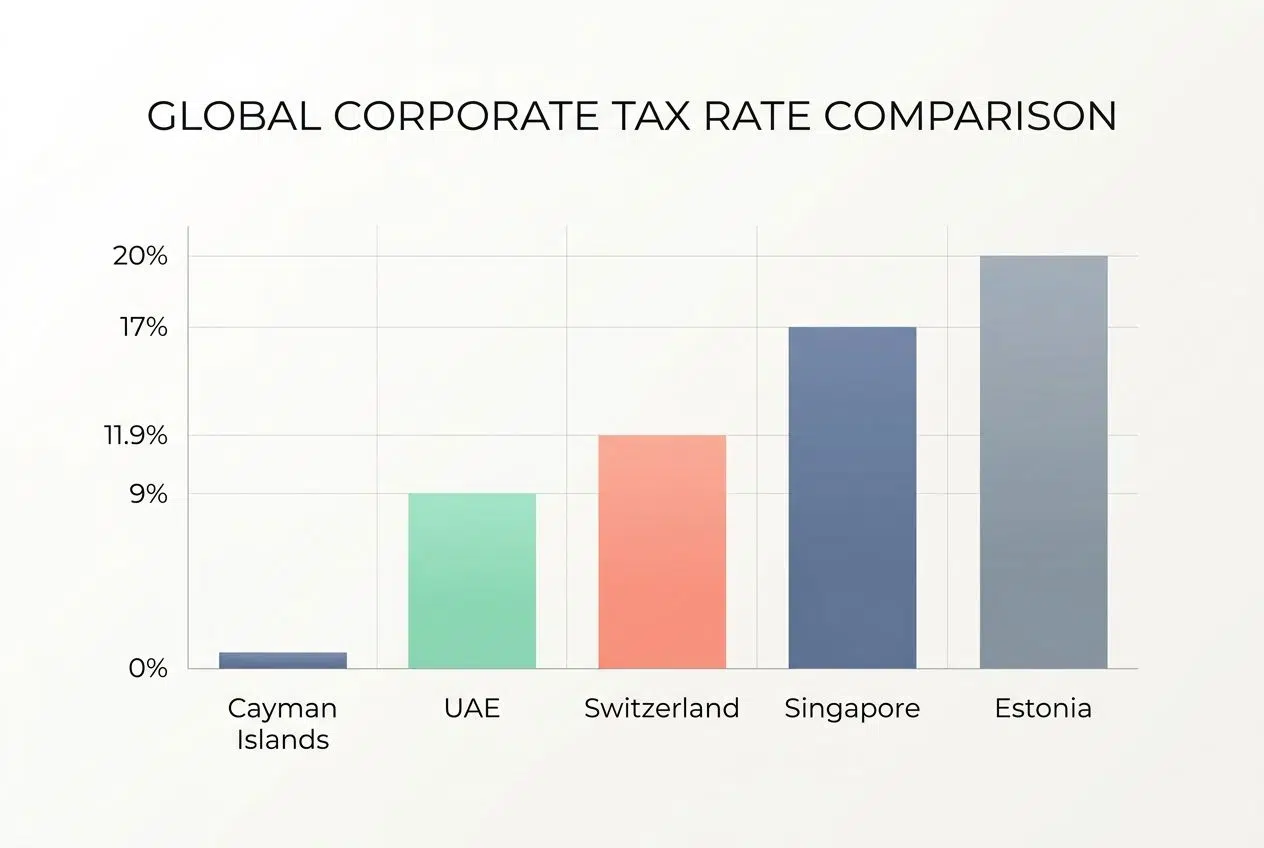
You know that feeling when your business profits get eaten up by high taxes? Moving to a tax-friendly country slashes those corporate taxes big time. Take the UAE, for instance, they offer a low 9% rate on profits over a certain threshold, a real game-changer for tax reduction.
Singapore keeps things at 17%, with exemptions that boost your bottom line. This tax optimization lets you keep more cash in your pocket, fueling growth instead of government coffers. You can reinvest those savings into new hires or tech upgrades; it’s like giving your business a turbo boost.
Cayman Islands? Zero corporate taxes, yep, you read that right, perfect for offshore company setups. Switzerland tempts with rates as low as 11.9% in some spots, blending tax advantages with solid banking.
Estonia shines for digital nomads, taxing only distributed profits at 20%, ideal for international business. The Bahamas joins the party with no corporate taxes at all, opening doors to global compliance without the heavy load. These spots turn tax residency into a smart business strategy, helping expatriate entrepreneurs thrive.
Access to territorial tax systems
Many countries offer territorial tax systems as a big tax advantage for your business. These setups tax only the income you earn inside that country. Forget about paying taxes on profits from abroad.
This leads to real tax reduction and better tax optimization. Picture your company keeping more cash, like finding money in an old coat pocket. Entrepreneurs love this for international business growth.
Switch to a territorial system, and you cut down on double taxation headaches. Places like Singapore use this to draw in offshore companies. Your corporate structure stays simple, with tax incentives that boost your bottom line.
We get it, saving on corporate taxes feels like a win in a tough game. This opens doors to global compliance without the extra burden.
No capital gains or inheritance tax in certain jurisdictions
Beyond those territorial tax systems that keep your foreign earnings safe, some spots take tax advantages even further by ditching capital gains and inheritance taxes entirely. For instance, you sell off a big investment, and poof, no tax bite on the profits in places like the Cayman Islands or the Bahamas.
These tax havens make it a breeze for expatriate entrepreneurs to grow wealth without handing over chunks to the government on asset sales or family transfers.
Business owners love this setup for offshore company structures, as it boosts tax optimization and opens doors to international business without the drag of extra levies. Say you’re passing down your empire to the kids, jurisdictions like the UAE let you do it tax-free, turning what could be a headache into smooth sailing.
This kind of tax reduction strategy fits right into smart corporate structures, helping you focus on global compliance and business relocation wins.
Increased global business opportunities
Moving your business to a tax-friendly country opens doors to fresh international business networks. You set up in a spot like the UAE, and suddenly you’re rubbing shoulders with global entrepreneurs from Asia and Europe.
These offshore jurisdictions often host trade hubs that spark new partnerships. Your corporate structure gains access to diverse markets, boosting tax optimization and growth. I get it, leaving home base feels big, but think of it as upgrading your playground to a worldwide arena.
Tax havens like Singapore draw in expatriate entrepreneurs with events and incentives that fuel business strategy. Relocation means tapping into economic migration trends that expand your reach. You might land deals in emerging sectors, all while enjoying tax incentives. This shift turns your operation into an international business powerhouse.
Business relocation here goes beyond saving on corporate taxes, as it fosters real connections. Now, consider some top tax-friendly countries for your move.
Top Tax-Friendly Countries for Business Relocation
You know, picking the right spot for your business feels like scoring a front-row seat at the best show in town, full of perks that make your wallet smile. Explore these standout destinations, and you’ll see why entrepreneurs gather there for that sweet tax relief, sparking ideas for your own move.
United Arab Emirates (UAE)
The United Arab Emirates shines as a top offshore jurisdiction for business relocation. Entrepreneurs flock here for major tax reduction perks. Consider this: you set up in a free zone like Dubai or Abu Dhabi, and enjoy zero corporate taxes on most profits.
The UAE rolled out a 9% corporate tax in 2023, but it skips income from abroad if you meet the rules. This setup boosts your corporate structure with tax optimization. Global compliance stays simple, thanks to strong banking and no capital gains tax.
Expatriate entrepreneurs love the UAE for its business strategy edge. You gain tax incentives that cut costs big time. Think of it as a sunny spot for international business growth.
Setting up an offshore company here means quick business registration through professional providers. Tax residency rules favor you with low personal taxes, too. Many use employer of record services to handle staff without headaches. This tax haven opens doors to economic migration and fresh opportunities.
Singapore
Singapore stands out as a prime offshore jurisdiction for tax reduction. This Asian powerhouse boasts a corporate tax rate of just 17 percent, with exemptions for new businesses. You gain access to a territorial tax system, meaning you pay taxes only on income earned inside the country.
Picture your corporate structure thriving in a hub of international business, surrounded by top banks and stable finances. Entrepreneurs love the tax advantages here, like no capital gains or dividend taxes on foreign income.
Business relocation to Singapore opens doors to global compliance and tax optimization. Set up an offshore company with ease, thanks to straightforward registration processes. Expatriate entrepreneurs flock here for the tax incentives and economic migration perks.
You need a local director for substance requirements, but that keeps things legitimate. Many use professional service providers to handle the details, turning relocation into a smart business strategy.
Cayman Islands
Cayman Islands stand out as a prime offshore jurisdiction for tax reduction. This spot in the Caribbean offers zero corporate taxes on profits earned outside its borders. Businesses flock here for that sweet deal, setting up offshore companies with ease.
Picture your corporate structure thriving without heavy tax loads, thanks to no capital gains or inheritance taxes either. International business owners love the stable legal setup and quick business registration process.
Many expatriate entrepreneurs choose the Cayman Islands for tax optimization and global compliance. They get access to top banking services and a business-friendly vibe. Tax incentives draw in funds and investment firms from around the world.
You can handle international relocation smoothly with help from a professional service provider. This tax haven boosts your business strategy by cutting costs and opening doors to new markets.
Switzerland
Shifting gears from the tropical vibes of the Cayman Islands, Switzerland offers a fresh take on tax advantages with its stable, landlocked charm. This European powerhouse draws expatriate entrepreneurs through low corporate taxes that vary by canton, often dipping to an effective rate of about 12% in places like Zug.
Businesses flock here for the territorial tax system, which taxes only local income and skips foreign earnings. Picture setting up an offshore company in Geneva; you gain access to top-notch banking and a rock-solid legal framework that boosts international business.
Tax optimization shines bright, with no capital gains tax on certain holdings, making it a smart pick for global compliance.
Entrepreneurs love Switzerland’s mix of innovation and tradition, where you can register a business quickly and tap into tax incentives like R&D deductions. Canton choices matter, as Nidwalden boasts rates around 12.6%, perfect for corporate structure tweaks.
Face the residency rules head-on, though; you need real substance, like local staff or offices, to avoid pitfalls. This jurisdiction selection aids tax reduction without the offshore stigma, opening doors to European markets.
Business relocation here feels like a strategic chess move, blending Alpine efficiency with worldwide opportunities.
Estonia
Estonia stands out as a top tax haven for international business owners. This Baltic nation offers zero corporate taxes on reinvested profits, a big win for tax optimization. Entrepreneurs love the e-Residency program, which lets you set up an offshore company without living there.
You get full access to the EU market, boosting global compliance and business relocation efforts. Picture running your corporate structure from anywhere, thanks to Estonia’s digital tools for quick business registration.
Many expatriate entrepreneurs choose Estonia for its tax advantages and low residency needs. The country taxes distributed profits at 20 percent, but smart planning keeps more money in your pocket.
Professional service providers can help with jurisdiction selection and employer of record setups. This spot suits tech firms and online ventures chasing tax incentives. Now, let’s check out the Bahamas for more offshore business ideas.
Bahamas
The Bahamas shines as a top tax haven for business relocation. You get zero corporate taxes on profits earned outside the country. Envision this: your offshore company thrives with no capital gains tax or inheritance tax, a real game-changer for expatriate entrepreneurs.
Many choose it for easy business registration through professional service providers. Tax incentives draw international business here, boosting your tax optimization strategy.
Business owners love the Bahamas for its simple corporate structure. Set up an offshore business quickly, with low residency requirements. Global compliance stays straightforward in this jurisdiction.
Tax reduction becomes a breeze, opening doors to new opportunities. Entrepreneurs often share stories of smooth relocations, like one who cut costs by half after moving operations.
Key Factors to Consider When Choosing a Tax-Friendly Country
Picking the right spot for your business feels like choosing a new home; you want it cozy yet practical, right? Let’s chat about what makes a country a smart pick, from taxes that don’t bite too hard to rules that keep things smooth and steady.
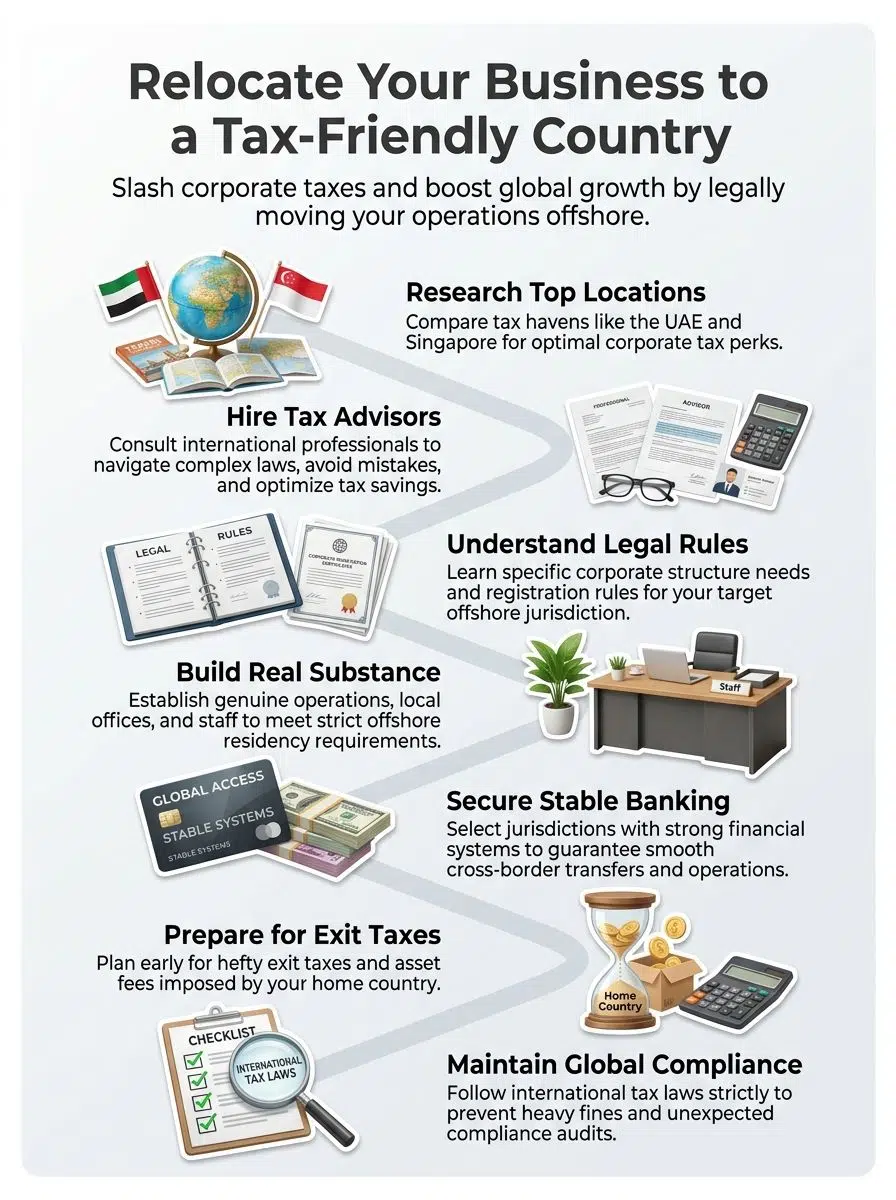
Corporate tax rates and exemptions
Corporate tax rates play a big role in tax optimization for your offshore business. Many tax-friendly countries offer low or zero rates to attract international relocation. Take the UAE, for example, they set a 9% rate on profits over a certain threshold, but free zones give full exemptions.
Singapore keeps things at 17%, yet startups get breaks down to 0% for the first few years. The Cayman Islands and Bahamas charge nothing in corporate taxes, making them top picks for tax reduction. Estonia stands out with its 0% rate on undistributed profits, so you pay only when you take money out.
These exemptions help with your corporate structure and cut costs in global compliance. Countries like Switzerland offer rates from 12% to 21% based on the area, plus deals for holding companies.
Pick a jurisdiction that fits your business strategy to boost tax advantages. You feel the relief when high taxes vanish, like shedding a heavy backpack. Now, let’s look at the legal and regulatory framework to keep things smooth.
Legal and regulatory framework
Pick a tax-friendly country with strong legal rules that fit your offshore business. Laws there must support easy business registration and tax optimization. Think of it like choosing a sturdy house; you want solid walls against surprises.
Countries like the UAE offer clear paths for international business setup. They have stable regulations that help expatriate entrepreneurs thrive. Check if the jurisdiction demands real office space or local staff for substance requirements.
Ease into the regulatory side by eyeing banking access tied to those laws. Singapore shines with its reliable framework for global compliance and tax incentives. Picture chatting with locals who know the ropes, it makes tax residency smoother.
Avoid spots with shaky rules that could snag your corporate structure. Smart picks reduce risks in international relocation for better tax advantages.
Banking access and financial stability
Banking access plays a big role in your offshore business success. You need banks that handle international transfers with ease, and some tax-friendly spots like the UAE offer stable systems for that.
Envision yourself as an expatriate entrepreneur moving funds across borders without headaches. These places often boast strong financial stability, backed by solid economies that keep your corporate taxes low.
Tax havens such as Singapore provide top-notch banking, with quick account setups for your offshore company.
Financial stability ties right into your tax optimization plans. Seek jurisdictions with low risk of economic ups and downs, like Switzerland’s reliable setup. This helps in business relocation by protecting your assets during global shifts.
Entrepreneurs find that good banking means better tax incentives and smoother operations. Now, consider residency and substance requirements.

Residency and substance requirements
Once you’ve secured solid banking access and financial stability in your chosen spot, you need to think about residency and substance requirements to make the move stick. These rules ensure your business has real ties to the tax-friendly country, not just a paper presence.
Countries like the UAE demand a physical office and local staff for substance, while Estonia pushes for digital residency through its e-Residency program. Picture your corporate structure as a sturdy house; without a strong foundation in the offshore jurisdiction, it could topple under scrutiny.
Tax authorities worldwide watch for genuine operations to avoid cracking down on tax reduction schemes. You might need to live there part-time or hire an Employer of Record to meet substance rules, boosting your international business credibility.
Singapore, for instance, requires key decisions made locally to qualify for tax incentives. Hey, it’s like planting roots in fertile soil; skip this, and your tax optimization dreams might wither. Talk to a professional service provider early to navigate global compliance without headaches.
Common Misconceptions About Tax-Friendly Countries
People often think these spots mean zero rules, like a wild west for your wallet, but that’s just a tall tale that trips up eager entrepreneurs. You might assume your personal taxes vanish too, yet that’s a mix-up that could bite you hard if you don’t dig deeper into the details.
The myth of “no regulations”
Many entrepreneurs chase tax havens, thinking these spots mean zero rules and total freedom. That idea floats around like a bad rumor. Truth is, every tax-friendly jurisdiction packs its own set of regulations to keep things legit.
Take the Cayman Islands, for example; they demand strict anti-money laundering checks and real economic substance for your offshore company. Skip those, and you face big fines or worse. So, tax optimization works best when you play by the book, not dodge it.
Consider this: you set up in Singapore for those sweet tax incentives, but boom, you hit compliance walls on reporting and audits. These places offer tax reduction through smart corporate structures, yet they enforce global compliance to avoid international heat.
Business relocation thrives on understanding these layers, not ignoring them. Expatriate entrepreneurs learn fast that “no regulations” is just a myth, one that can trip up your international business strategy if you buy into it.
Misunderstanding personal tax obligations
Beyond debunking the idea that tax-friendly spots lack rules, people often mix up how these places handle their own taxes. You might think moving your business means you escape personal taxes altogether, but that’s not the case.
Personal tax obligations depend on your tax residency, not just where your company sits. For instance, if you’re a U.S. citizen, Uncle Sam taxes your worldwide income no matter the jurisdiction.
Offshore setups help with corporate taxes, but they don’t erase your individual duties. Think of it like this: your business gets a tax break, yet you still owe based on where you live and earn. Talk to a tax advisor to sort this out and avoid nasty surprises.
People sometimes assume tax havens wipe out all personal levies, leading to big mistakes in tax optimization. Take expatriate entrepreneurs who relocate for business strategy; they must track residency rules to dodge double taxation.
Countries like the UAE offer tax incentives, but your home nation might still claim a piece. Use a professional service provider for global compliance. This keeps your international business humming without personal tax pitfalls.
Steps to Relocate Your Business to a Tax-Friendly Jurisdiction
Picture your business thriving in a sunny spot with lighter taxes, but you need a clear path to get there. Start by scouting spots that fit your vibe, then chat with experts who know the ropes, and you’ll unlock doors to smoother operations abroad.
Research potential locations
Start your business relocation by digging into offshore jurisdictions that offer tax advantages. Look at places like the United Arab Emirates, where corporate taxes sit at just 9 percent for most firms.
Singapore draws expatriate entrepreneurs with its low 17 percent rate and strong tax incentives for international business. The Cayman Islands provide zero corporate taxes, a big draw for tax optimization.
Switzerland boasts rates as low as 11.9 percent in some cantons, plus a stable legal framework. Estonia stands out with its e-residency program, making business registration simple for global compliance. The Bahamas offer no corporate taxes at all, perfect for offshore company setups.
Compare these spots based on your corporate structure needs. Check tax residency rules to avoid surprises. Talk to other business owners who made the move; their stories can reveal real tax reduction perks.
One entrepreneur I know slashed costs by 40 percent after shifting to Singapore, thanks to its territorial tax system. Keep an eye on economic migration trends too. Now, turn to an expert for custom advice; consult with an international tax advisor to map out your next steps.
Consult with an international tax advisor
Seek expert help from an international tax advisor early in your business relocation journey. These pros guide you through tax optimization strategies, like choosing the right offshore jurisdiction for your corporate structure.
They spot tax advantages in places with low corporate taxes, helping you avoid costly mistakes. Picture chatting with someone who knows international business inside out, they turn complex rules into simple steps for your tax reduction goals.
Advisors also handle global compliance, from residency rules to business registration needs. They connect you with professional service providers for a smooth setup in tax-friendly spots.
Use their know-how to boost your international relocation, making sure your offshore company thrives without surprises.
Understand legal requirements for incorporation
You need to grasp the legal rules for setting up your business in a new spot. Start by checking the corporate structure options in places like the UAE or Singapore. These offshore jurisdictions often demand specific paperwork, like articles of incorporation and proof of address.
See it as laying the foundation for a house; get it wrong, and things crumble. Chat with locals or experts to learn about residency needs, because some spots require a real office or staff on the ground.
Business registration varies by country, so dig into details for tax advantages. In the Cayman Islands, for example, you form an offshore company with minimal hassle, but follow anti-money laundering laws.
Entrepreneurs often use a professional service provider to handle filings and ensure global compliance. View it like hiring a guide for a tricky hike; they spot the pitfalls you might miss.
Plan for substance and operational presence
Plan your business’s real presence in the new tax-friendly country. Tax authorities now demand substance, like actual offices and staff, to avoid treating your setup as a shell. Hire local employees or use an Employer of Record service for compliance.
Set up operations that show genuine activity, such as holding board meetings there. This step boosts tax advantages and supports global compliance in your offshore company.
Think about daily tasks running from that jurisdiction. Relocate key staff or build a team to meet residency requirements. Tax optimization thrives with this solid base, turning your international business into a strong player.
Risks and Challenges of Relocating to a Tax-Friendly Country
Moving your business overseas might seem like a slam dunk for tax savings, but watch out for sticky international rules that could trip you up, tricky bank setups that feel like wrestling an octopus, and hefty exit fees from your home turf that hit like a surprise bill. Curious how to sidestep these hurdles? Stick around for the full scoop.
Compliance with international tax laws
You face big rules when you shift your business to a tax haven. International tax laws demand real work in the new spot, not just a paper setup. Think of it like planting roots in fresh soil; you must show true operations there.
Groups like the OECD push for this with their BEPS rules. They fight fake tax dodges. Skip this, and you risk audits or fines from your home country. Stay sharp on global compliance to keep your tax reduction safe.
Pick advisors who know jurisdiction selection inside out. They help with corporate structure and tax optimization. Picture chatting with a pro over coffee, mapping your international business path.
Laws change fast, so track updates from bodies like the IRS or EU. This keeps your offshore company legit. Face challenges head-on for smooth business relocation.
Banking and financial complexities
Banks in offshore jurisdictions often demand strict checks for new business accounts. They follow global rules to fight money laundering. This means you provide loads of documents, like proof of your corporate structure and tax residency.
Delays happen if your setup lacks real substance. Picture an entrepreneur from the US trying to open an account in the Cayman Islands, only to hit walls over compliance. Smart moves include using a professional service provider for a smooth setup. These steps help with tax optimization and international business flow.
Local currencies and exchange rates add twists to daily operations. Wire transfers might rack up high fees in places like the Bahamas. Access to credit lines can feel limited without strong ties.
Expatriate entrepreneurs learn fast that building bank relationships takes time and trust. Pick a spot with solid financial stability, like Singapore, to ease these hurdles. Global compliance keeps things legal and steady for your offshore company.
Exit taxes from your current country
Exit taxes hit hard if you pull your business out of its home country. Governments like the US charge these fees on assets, treating the move as a sale that triggers capital gains.
Think of it as a farewell bill, where you pay up to 23.8% on unrealized profits for high-value holdings. Business owners often face this in corporate structure shifts to a tax haven, cutting into their tax optimization plans. Smart expatriate entrepreneurs consult pros early to map out the hit.
You might dodge some pain with careful timing, but ignore it and watch compliance costs soar during international relocation. Countries enforce these to stop quick tax reduction schemes, so factor them into your business strategy.
One slip, and you’re dealing with audits that derail global compliance efforts. Stay sharp; it’s like packing for a trip but forgetting the customs fees.
The Bottom Line
Relocating your business to a tax-friendly country offers real tax advantages for savvy entrepreneurs. You cut corporate taxes and tap into global business opportunities. Offshore jurisdictions like the UAE or Singapore provide low rates and strong banking access.
Tax optimization becomes your smart business strategy. Expatriate entrepreneurs often thrive with better corporate structures.
Consider this your ticket to economic migration with tax incentives. International relocation demands careful jurisdiction selection. Use professional service providers for global compliance.
Offshore companies boost tax reduction without the hassle. Business registration in these spots opens doors to international business. Stay sharp on residency rules to make it work.
Frequently Asked Questions (FAQs) on Business Relocation to a Tax-Friendly Country
1. What makes a country tax-friendly for my business?
A tax-friendly spot offers low corporate rates, no capital gains hits, and sweet incentives for folks like you relocating. Think places like Estonia or Singapore, they roll out the red carpet for businesses hunting savings.
2. How do I pick the best spot to move my company?
Start by checking your industry’s needs, pal. Match that with countries boasting easy visa rules and strong banking. Don’t forget to chat with locals or experts; it’s like picking a new home, you want good vibes and low costs.
3. What steps do I take to relocate my business abroad?
First, research legal hoops and get your paperwork in order. Then, set up a local entity and transfer assets smoothly. Finally, keep an eye on compliance to avoid any “oops” moments that could bite you later.
4. Are there risks when shifting my firm to a low-tax nation?
Sure, currency swings can play tricks on your profits. Political changes might flip the script overnight. But hey, with smart planning, it’s like turning lemons into lemonade, you come out ahead.