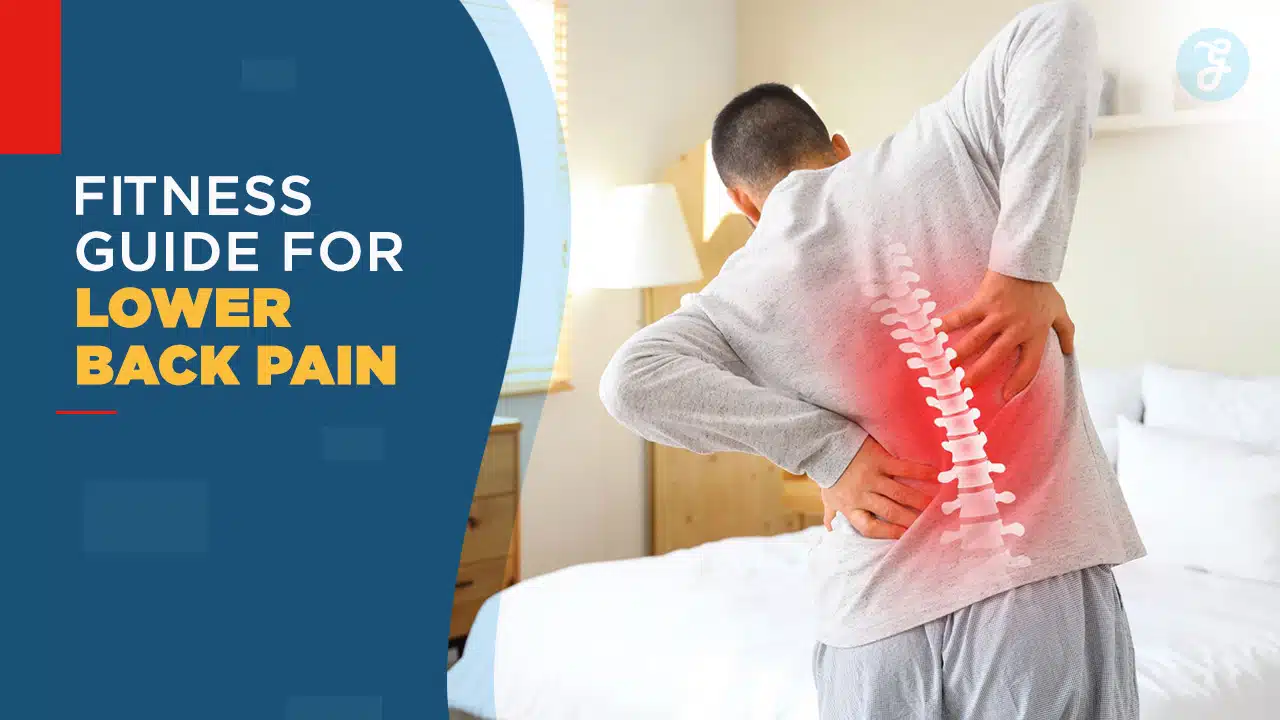
Lower back pain has quietly become one of the most common health complaints of modern life. It cuts across age, profession, gender, and fitness levels. Office professionals often blame long hours hunched at desks, while younger adults point to screens and poor posture. Older adults frequently cite stiffness, age-related degeneration, or old injuries that never quite healed. Yet, despite how widespread it is, lower back pain remains misunderstood and is often poorly managed. A fitness guide for lower back pain can help bridge that gap with safe, practical movement habits that support the spine and reduce flare-ups.
Many people respond to back pain with extremes. Some stop moving altogether, fearing further damage to their spine. Others push through the pain with intense workouts or random exercises found online, hoping to simply “strengthen” their way out of discomfort. Both approaches can backfire. The lower back is not a region that responds well to neglect, nor does it respond well to aggression. It requires thoughtful movement, progressive strength, and daily habits that respect how the spine is designed to function.
This guide is built on that principle. It is not about quick fixes, miracle stretches, or punishing routines. It is about understanding your spine, restoring confidence in movement, and building a sustainable relationship with your body. Whether your pain is occasional stiffness, recurring discomfort, or a long-term issue that flares up during stress or long workdays, the goal remains the same: support the spine, do not fight it.
Understanding Why the Lower Back Hurts
The lower back, or lumbar spine, is a structural crossroads for the human body. It bears the substantial weight of the upper body, transfers force between the upper and lower halves, and allows for essential movements like bending, twisting, and rotation. Because of this central, load-bearing role, even small imbalances can create significant discomfort.
Common contributors to this pain include weak deep core muscles, tight hip flexors, limited spinal mobility, prolonged sitting, poor lifting mechanics, and stress-related muscle tension. In many cases, pain does not come from a single acute injury but from years of accumulated habits. Sitting for hours reduces blood flow and deconditions muscles. Avoiding movement out of fear leads to stiffness. Over time, the spine loses its natural rhythm.
One important shift in thinking is this: Pain does not always mean damage. Often, it is simply a signal that certain muscles are under-supported or overworked. The solution is not rest alone, but intelligent, targeted movement.
A Journey of Rebirth: The Survivor’s Testimony
For Sudarshan Jagotik (name changed on request), the road to recovery began not in a hospital, but in the small, daily endurance of a backache he carried for six long years. What he initially mistook for a common strain was, in reality, a severe disc prolapse that would eventually demand three complex surgeries and a gruelling battle against Diabetic Lumbar Radiculoplexus Neuropathy (DLRPN). His story is one of profound rebirth, a new lease on life crafted through expert surgical care and the steady, disciplined rhythm of recovery exercises: “In my heart, Dr. Neeraj Gupta holds a place next to God. When I arrived at the Indian Spinal Injuries Centre, New Delhi, India, I was fighting a severe infection from a previous botched surgery, facing a 50/50 chance of survival. Dr. Gupta didn’t just operate; he led a courageous battle to save my life. On April 29, 2025, he gave me a second chance. For complex revision surgeries, he is simply the best in India.
Surgery fixed my spine, but Dr. Mukul Varma, one of the distinguished neurologists in Delhi, gave me back my legs. When I came to him, I was paralyzed by Diabetic Lumbar Radiculoplexus Neuropathy, unable to sit or stand without agony. His calm wisdom and precise treatment plan bridged the gap between ‘bedridden’ and ‘independent.’ Today, I am walking again because he and Dr. Seema Grover, Physiotherapist, Indraprastha Apollo Hospital, New Delhi, India knew exactly how to heal my damaged nerves.”
Why Exercise is Essential But Must Be Precise
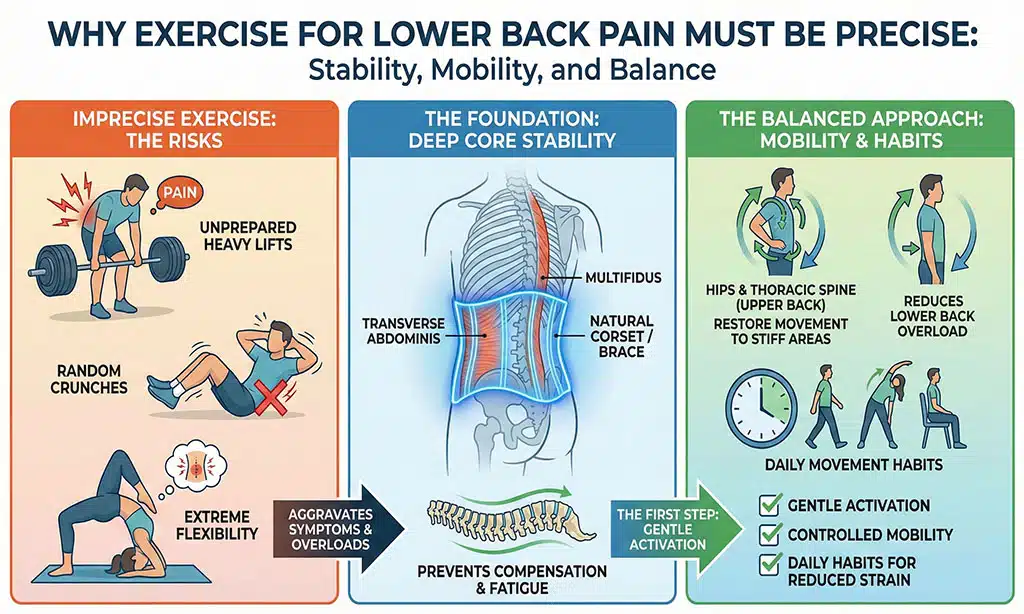
Exercise is one of the most powerful tools for managing lower back pain, but only when done correctly. Random crunches, heavy deadlifts without preparation, or extreme flexibility routines can easily aggravate symptoms. What the lower back needs first is stability, gentle mobility, and coordinated movement.
The foundation lies in activating deep core muscles such as the transverse abdominis and multifidus. These muscles act like a natural corset or brace for the spine. When they are weak or inactive, the larger lower back muscles are forced to compensate and fatigue quickly. Pain often follows this fatigue.
Equally important is restoring movement to areas that tend to stiffen, particularly the hips and thoracic spine (upper back). When these regions do not move well, the lower back is forced to move more than it should to compensate. Over time, this overload leads to discomfort. A good fitness approach therefore balances three elements: gentle activation, controlled mobility, and daily movement habits that reduce strain.
The Role of Consistency Over Intensity
One of the biggest mistakes people make when consulting a fitness guide for lower back pain is inconsistency. They perform exercises only when pain flares up and stops as soon as they feel better. This cycle keeps the back vulnerable to future issues.
The spine responds best to regular, low-intensity input. Short, daily sessions are far more effective than occasional long, intense workouts. Five to ten minutes of targeted movement every day can produce significantly better results than an intense hour once a week.
Consistency builds trust between the nervous system and the muscles. As confidence in movement returns, pain signals often reduce naturally.
Expert Guidance for Safe Lower Back Care
Below is the expert-guided section that forms the clinical foundation of this Fitness Guide for Lower Back Pain. It is presented exactly as advised, without modification.
Fitness Guide for Lower Back Pain: By Dr. Ananya Bhowmik, Clinical Nutritionist and Wellness Consultant, Founder and Director, Code Wellness Pvt Ltd
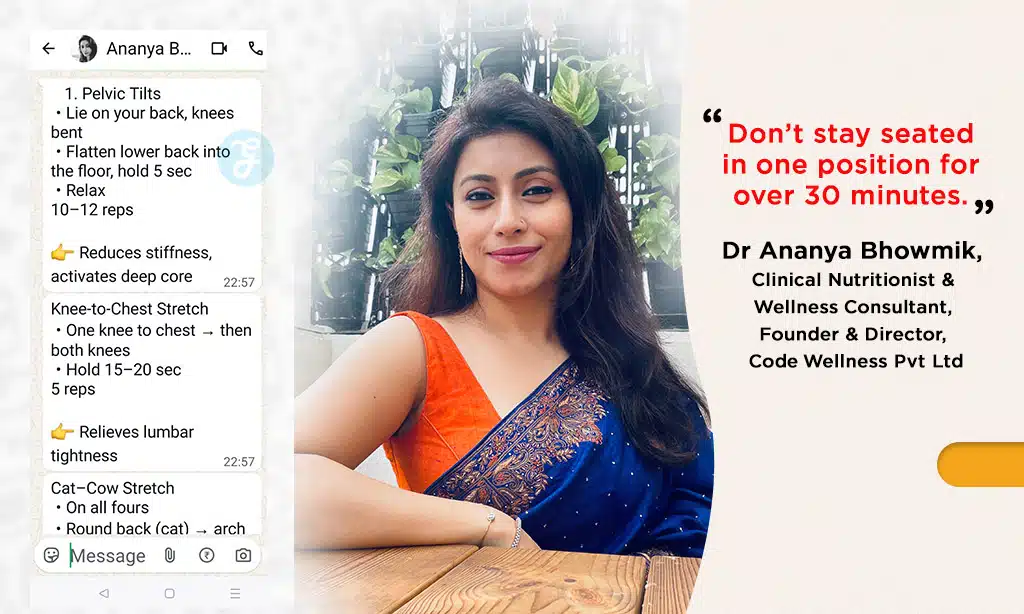
Foundational Exercises for Lower Back Health
- Pelvic Tilts
- Lie on your back with knees bent and feet flat on the floor.
- Gently flatten your lower back into the floor and hold for 5 seconds, then relax.
- Repeat 10 to 12 times.
- Benefit: Reduces stiffness and activates deep core muscles that support the spine.
- Knee to Chest Stretch
- Bring one knee toward your chest, then progress to both knees together.
- Hold each stretch for 15 to 20 seconds.
- Repeat 5 times.
- Benefit: Relieves lumbar tightness and eases lower back discomfort.
- Cat Cow Stretch
- Begin on all fours with hands under shoulders and knees under hips.
- Slowly round your back like a cat, then gently arch it into the cow position.
- Perform 10 slow repetitions.
- Benefit: Improves spinal mobility and flexibility.
Essential Daily Movement Advice
- Avoid sitting in the same position for more than 30 minutes at a stretch.
- Take short breaks to stand, walk, or go for a brief stroll before resuming work.
- Regular movement throughout the day is as important as exercise for preventing lower back pain.
How These Foundational Exercises Work
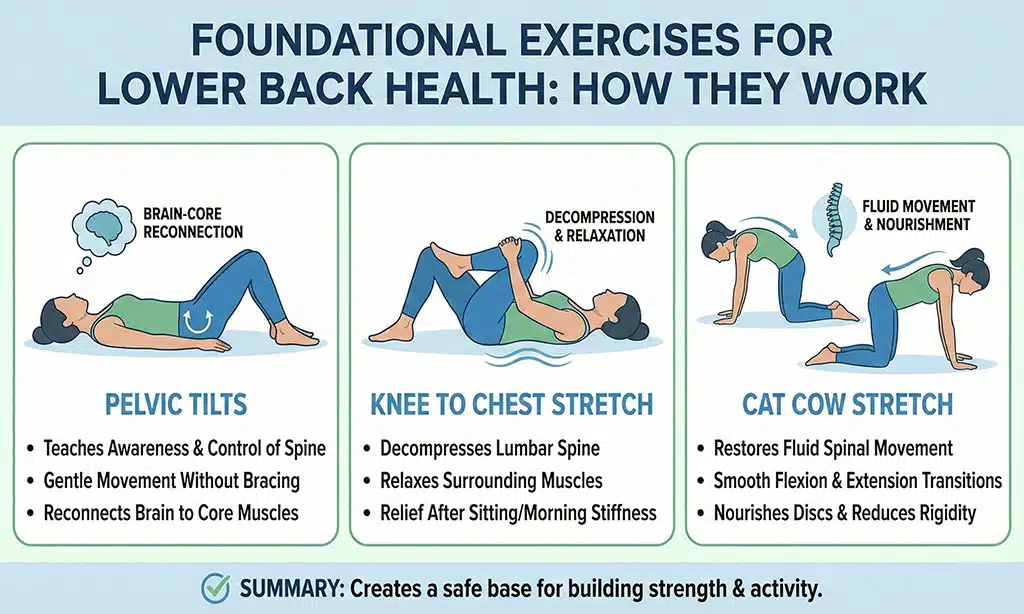
Each of the exercises listed in the expert section above addresses a critical need of the lower back. Pelvic tilts teach awareness and control of spinal position. Many people with back pain have lost the ability to gently move the pelvis without bracing hard or holding their breath. This simple movement reconnects the brain to the core muscles that stabilize the spine.
The knee to chest stretch offers relief by decompressing the lumbar spine and relaxing surrounding muscles. It is especially helpful after long periods of sitting or first thing in the morning when stiffness is most common.
The cat cow stretch restores fluid movement through the spine. Instead of forcing flexibility, it encourages smooth transitions between flexion and extension. This rhythmic motion nourishes spinal discs and reduces rigidity. Together, these movements create a safe base from which more strength and activity can be built.
Building Strength Without Fear
Once the foundational exercises feel comfortable, the next step is gradual strengthening. Strength does not mean lifting heavy weights immediately. It means improving the ability of your muscles to support your posture and movement throughout the day.
Exercises such as glute bridges, bird dogs, and side-lying leg lifts can be introduced slowly. These movements strengthen the hips and core, reducing the load on the lower back. The focus should always be on control, breathing, and alignment rather than high repetitions or speed.
Pain during exercise is a signal to stop or modify. Mild muscle effort is expected and healthy, but sharp or worsening pain is not. Progress should feel steady and reassuring, not painful.
The Importance of Daily Movement Habits
No exercise routine can fully compensate for harmful daily habits. Sitting for hours, slouching, or constantly bending forward places continuous stress on the lumbar spine. This is why daily movement advice is a core part of any effective fitness guide for lower back pain.
Changing positions frequently keeps muscles engaged and improves circulation. Standing up, stretching lightly, or walking for a few minutes resets spinal alignment. Even small changes, such as adjusting chair height or placing feet flat on the floor, can reduce strain significantly.
Mindful movement matters too. Bending at the hips (hinging) instead of rounding the back, engaging the core when lifting objects, and avoiding sudden twisting motions all protect the spine during daily tasks.
Stress, Breathing, and Back Pain
Lower back pain is not only mechanical; it is often psychosomatic. Stress plays a significant role. When stressed, the body tightens, breathing becomes shallow, and muscles remain in a constant state of tension. The lower back is often one of the first areas to reflect this emotional load.
Deep breathing practices can support recovery. Slow diaphragmatic breathing helps relax the nervous system and reduces muscle guarding. Practicing gentle breathing while performing the foundational exercises enhances their effectiveness. Even a few minutes of conscious breathing at the end of the day can ease accumulated tension in the back.
Nutrition and Recovery Support
While this guide focuses on fitness, recovery is heavily influenced by nutrition and hydration. Muscles and connective tissues need adequate protein, minerals, and fluids to repair and function well. Dehydration can actually increase muscle stiffness and discomfort.
incorporating anti-inflammatory foods, getting sufficient sleep, and maintaining proper hydration complement your exercise efforts. Recovery is not a passive activity; it is an active process supported by your daily choices.
When to Seek Professional Help
Exercise is powerful, but it is not a substitute for medical evaluation when needed. Persistent pain, pain accompanied by numbness, weakness, or radiating symptoms down the legs (sciatica) requires professional assessment. A physiotherapist, orthopedic specialist, or qualified healthcare provider can identify specific issues and tailor interventions.
This Fitness Guide for Lower Back Pain is designed for general support and prevention. It works best when integrated with professional care when necessary.
A Sustainable Path Forward
Lower back pain does not have to define your life. With the right approach, many people experience reduced pain, improved mobility, and renewed confidence in their bodies. The key is patience, consistency, and respect for how the spine works.
This guide is not about pushing harder. It is about moving smarter. By focusing on foundational exercises, daily movement habits, and mindful strength, you create an environment where the lower back can heal and thrive. Your spine supports you every day. With informed movement and care, you can support it in return.