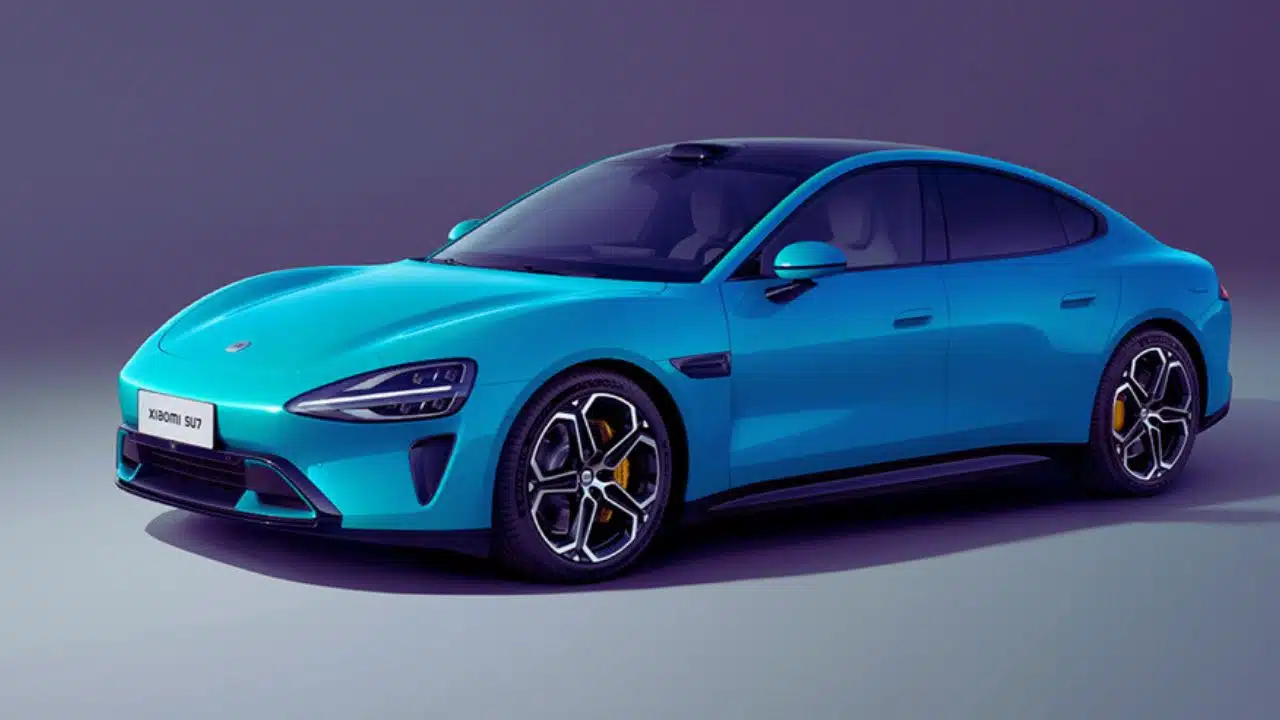
Chinese smartphone giant Xiaomi has made a strong and confident entrance into the country’s fiercely competitive electric vehicle (EV) market with the launch of its highly anticipated SU7 sedan. In a mere one month since the model’s official unveiling, the SU7 has already garnered an impressive 70,000 pre-orders, signaling robust demand for Xiaomi’s freshman entry into the EV space. This initial success was announced by Xiaomi’s founder and CEO, Lei Jun, who expressed optimism about the company’s foray into the world of electric vehicles.
Xiaomi Exceeds Sales Expectations and Targets
During a recent statement, Lei Jun expressed his satisfaction with the SU7’s performance, stating that the current demand for the electric sedan is an astonishing 3 to 5 times higher than initially projected. This overwhelming response from consumers has put Xiaomi on track to achieve its ambitious sales target of 100,000 units sold within the 2023 calendar year. The company debuted its first EV in a high-profile event in Beijing last month, introducing three distinct variants of the SU7 to cater to different consumer preferences and budgets:
- The Standard SU7 is priced at 215,900 yuan (approximately $29,867)
- The SU7 Pro, which retails for 245,900 yuan
- The top-of-the-line SU7 Max, offered at 299,900 yuan
Despite the strong demand and promising sales figures, Lei Jun candidly admitted that, based on the current pricing structure, Xiaomi is actually selling the SU7 models at a loss. This strategic move is part of the company’s aggressive push to gain market share and establish itself as a serious contender in China’s EV market, directly competing with established players like Tesla and Geely’s Zeekr brand.
Triggering an Intense EV Price War in China
Xiaomi’s entry into the EV space with its competitively priced SU7 models has further intensified the already fierce price war raging in China’s electric vehicle market. In a swift response to the SU7’s launch and Xiaomi’s aggressive pricing strategy, industry heavyweights have taken decisive action to protect their market share.
- Tesla, the leading EV manufacturer, quickly announced a 5% price reduction for its Shanghai-made Model 3 and Model Y vehicles.
- Not to be outdone, Li Auto, one of Tesla’s main rivals in the premium EV segment, followed suit by reducing prices across its entire lineup by up to 5.7%.
These rapid price adjustments by major players in the wake of Xiaomi’s EV debut underscore the intense competition and price sensitivity in China’s EV market. Industry analysts predict that Xiaomi’s pricing strategy with the SU7 will further fuel this price competition as automakers struggle to find the right balance between profitability and market share in an increasingly crowded field.
Strong EV Market Growth Despite Temporary Slowdown
According to data compiled by the China Passenger Car Association, retail sales of new energy vehicles in China reached an impressive 1.76 million units in the first quarter of 2023. While this figure represents a 31% drop compared to the previous quarter, it still marks a robust 34% increase when compared to the same period in 2022.
This data suggests that despite the sequential slowdown observed in the first quarter, year-over-year growth in China’s EV market remains quite strong and resilient. With its strong initial performance and competitive pricing, Xiaomi appears well-positioned to capitalize on this ongoing growth trend with the SU7 sedan.
Xiaomi’s Swift Delivery Rollout Across China
In a testament to the company’s commitment to customer satisfaction and efficient operations, Xiaomi has already begun delivering the SU7 to eager customers across China.
- On April 3, a limited batch of 5,000 “founder version” cars, equipped with additional accessories and features, was delivered to select customers.
- April 20 marked the start of deliveries for the standard SU7 and SU7 Max variants in major cities like Beijing and Shenzhen.
- The SU7 Pro, the mid-tier variant, is scheduled to start deliveries in late May.
Lei Jun noted that Xiaomi had managed to move up the delivery timeline for the standard and Max versions by nearly two weeks, showcasing the company’s ability to ramp up production and logistics to meet the strong demand. He also reaffirmed Xiaomi’s commitment to focusing on the SU7 sedan, stating that the company has no immediate plans to expand into other vehicle segments like SUVs.
As Xiaomi continues to roll out deliveries across China and ramp up production to meet the surging demand, the SU7 is shaping up to be a formidable competitor in the country’s dynamic and rapidly growing EV market. With its attractive price points, sleek design, and strong initial sales, the SU7 has the potential to disrupt the market and challenge established players.
However, as the price war among China’s EV manufacturers heats up in response to Xiaomi’s entry, it remains to be seen how other automakers will adapt and respond in the coming months. The intense competition and pressure on margins may lead to further industry consolidation and shake-ups as companies struggle to find the right balance between profitability and market share.
Regardless of the challenges ahead, one thing is clear: Xiaomi’s successful entry into the EV market with the SU7 sedan has injected new energy and excitement into China’s already dynamic electric vehicle landscape. As the company continues to innovate and refine its offerings, consumers can expect even more compelling choices and value propositions in the future, further driving the adoption of clean, sustainable transportation solutions in the world’s largest automotive market.
The information is taken from MSN and CNBC.