The digital landscape is undergoing a radical transformation, and Web3 is at the forefront of this evolution. Traditional creator economies have long been dominated by centralized platforms that dictate monetization terms, control user data, and extract significant fees from content creators.
However, the advent of Web3 technologies is revolutionizing how creators interact with their audiences, generate revenue, and maintain ownership of their digital assets.
Web3, often referred to as the decentralized web, leverages blockchain, smart contracts, decentralized finance (DeFi), and tokenization to empower content creators.
This shift is dismantling the middlemen-driven system, fostering a more equitable creator economy where artists, writers, musicians, and digital influencers have greater control over their work and earnings.
This article explores five powerful ways Web3 is transforming the creator economy, highlighting real-world examples, case studies, and key trends shaping the future of digital content creation.
1. Decentralized Ownership and Monetization
The traditional content monetization model is heavily dependent on centralized platforms like YouTube, Instagram, and Patreon.
These platforms control content distribution, determine revenue-sharing models, and take substantial cuts from creators’ earnings.
Web3 disrupts this system by enabling decentralized ownership, allowing creators to monetize their content without intermediaries, retain full ownership of their work, and maximize earnings through blockchain-based models.
Eliminating Middlemen in Content Distribution
One of the biggest limitations of Web2 platforms is their centralized control. These platforms dictate revenue-sharing models, impose strict content policies, and take a significant cut from creator earnings.
Web3, powered by blockchain technology, disrupts this model by enabling direct interactions between creators and consumers.
Key Benefits:
- Direct Monetization – Blockchain-based platforms like Mirror.xyz and Zora allow creators to sell content directly to their audience.
- Reduced Platform Fees – Decentralized platforms take little to no commission, unlike YouTube (which takes 45% of ad revenue) or Apple’s App Store (which charges a 30% fee on in-app purchases).
- Censorship Resistance – Creators retain control over their content without fearing arbitrary bans or demonetization.
| Feature | Traditional Platforms | Web3 Platforms |
| Revenue Sharing | 30-50% platform cut | 100% creator-owned |
| Content Control | Platform-regulated | Decentralized governance |
| Payment Speed | Delayed payments | Instant smart contract payments |
Tokenization and Digital Assets
Blockchain technology enables creators to tokenize their work, providing a new form of ownership and monetization.
Non-fungible tokens (NFTs) represent unique digital assets that can be bought, sold, or traded on decentralized marketplaces.
NFT Use Cases for Creators:
- Artists can sell digital paintings as NFTs, ensuring provenance and authenticity.
- Musicians can issue limited edition tracks as NFTs, earning directly from fans.
- Writers can mint exclusive e-books and grant lifetime access through token ownership.
| Traditional Model | Web3 Model |
| Platform takes a cut of revenue | Full earnings go to the creator |
| Centralized control over content distribution | Decentralized and creator-owned |
| Prone to censorship | Resistant to external influence |
2. Smart Contracts for Fair Compensation
Web2 platforms often introduce payment delays, hidden fees, and unfair revenue-sharing structures that negatively impact creators.
Web3 introduces smart contracts—self-executing agreements that automatically facilitate payments and revenue splits based on pre-defined terms.
These contracts ensure transparency, instant payments, and fair compensation without relying on third-party intermediaries.
Automating Payments and Royalties
Smart contracts ensure instant, transparent payments. Unlike traditional payment models where intermediaries delay payouts and take a commission, smart contracts execute payments automatically once conditions are met.
How It Works:
- A smart contract is coded to execute payments automatically once predefined conditions are met.
- For instance, a musician can set up a contract where they receive 80% of streaming revenue directly, with 20% going to contributors.
- No third parties or financial institutions can interfere, ensuring fairness and efficiency.
| Benefits | Traditional Payments | Smart Contracts |
| Payment Speed | Weeks/months delay | Instant payouts |
| Fees | High transaction costs | Low blockchain fees |
| Transparency | Limited visibility | Fully transparent |
Real-World Use Cases of Smart Contracts
Several platforms are leveraging smart contracts to reshape creator compensation:
- Audius – A decentralized music-sharing platform that pays artists instantly via smart contracts.
- Royal.io – Enables musicians to sell royalty-backed NFTs, giving fans a share of future earnings.
- SuperRare – A digital art marketplace where artists earn royalties each time their NFT is resold.
3. Community-Driven Content and Crowdfunding
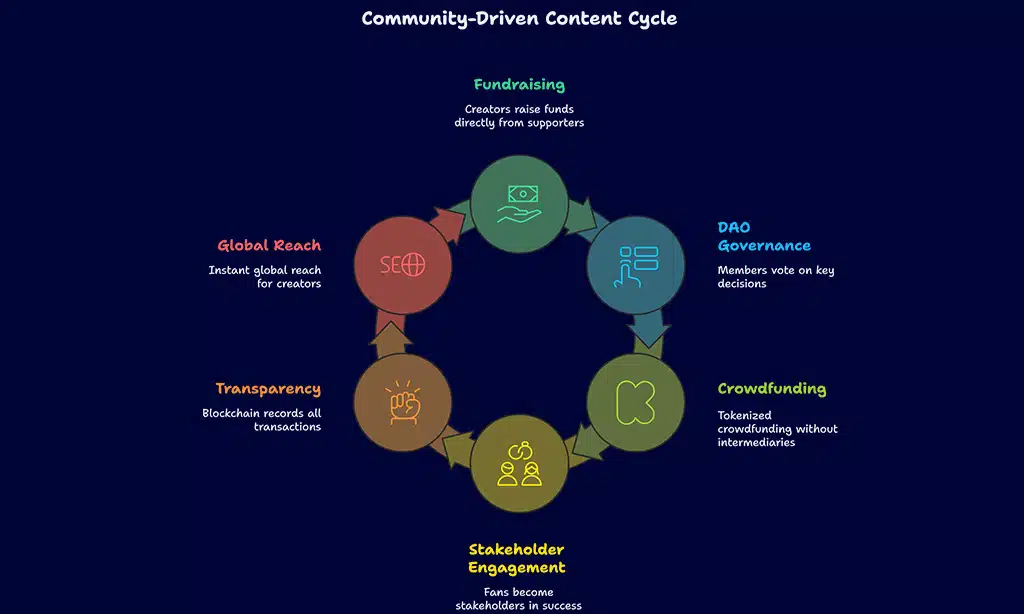
Community-driven models are gaining traction in Web3, allowing creators to raise funds directly from their supporters through decentralized crowdfunding platforms, social tokens, and DAOs (Decentralized Autonomous Organizations).
These models eliminate reliance on banks or centralized fundraising platforms, offering more autonomy.
DAOs and Community Governance
DAOs use blockchain-based governance, where members vote on key decisions, funding allocations, and content direction.
Examples:
- PleasrDAO – A collective that funds digital artists and acquires rare NFTs.
- Friends With Benefits (FWB) – A social DAO that curates exclusive content for token holders.
- Mirror DAO – A decentralized publishing platform where token holders vote on articles.
Crowdfunding with Cryptocurrency
Web3 enables tokenized crowdfunding, removing the need for intermediaries like Kickstarter and Patreon. Creators can issue social tokens or NFTs to raise funds directly from their community.
Advantages:
- Fans become stakeholders – Supporters have vested interests in a creator’s success.
- More transparency – Blockchain records all transactions publicly.
- Instant global reach – No geographical restrictions on funding.
4. Enhanced Content Security and Copyright Protection
One of the biggest challenges in the digital space is protecting intellectual property. Web3 leverages blockchain’s immutable nature to safeguard content, ensuring creators receive credit and compensation for their work.
How Web3 Enhances Content Security
- Timestamped Proof of Ownership – Creators can register their work on blockchain networks like Ethereum, ensuring indisputable proof of authorship.
- Smart Contract Licensing – Automated licensing models ensure fair use of content while compensating creators fairly.
- Decentralized Digital Rights Management (DRM) – Web3 platforms like Po.et and Verisart provide innovative ways to secure copyrights and prevent unauthorized usage.
5. New Revenue Models and Creator Economy Expansion
Web3 is revolutionizing monetization by decentralizing revenue streams, empowering creators with direct audience engagement, and reducing reliance on traditional intermediaries.
Through blockchain technology, creators can now leverage tokenized social economies, play-to-earn (P2E) models, and fractionalized asset ownership to build sustainable income sources.
Unlike traditional Web2 platforms, where monetization is controlled by centralized entities, Web3 enables creators to have greater autonomy over their earnings and interactions with their communities.
Emerging Trends
The rise of virtual worlds like Decentraland, The Sandbox, and Otherside presents an entirely new landscape for creators to monetize digital content and experiences. These metaverse platforms allow creators to:
- Sell virtual experiences, such as concerts, exhibitions, and meet-and-greets within the metaverse.
- Offer digital goods and collectibles, including skins, avatars, and branded digital merchandise.
- Lease or sell virtual real estate, enabling businesses and brands to establish their presence in digital environments.
- Monetize in-game assets through blockchain-based gaming economies, where players can trade or earn real-world value from digital items.
Social Tokens
Social tokens are blockchain-based assets that enable creators, influencers, and thought leaders to build direct relationships with their audiences while offering value-driven incentives.
These tokens function as digital currencies for creator ecosystems and provide multiple benefits:
- Exclusive Access – Fans holding a creator’s token can unlock premium content, early access to projects, or participation in private communities.
- Governance and Community Involvement – Token holders may gain voting rights on a creator’s future content or business decisions.
- Reward Mechanisms – Social tokens can be distributed as rewards for engagement, such as commenting, sharing, or contributing to community-driven projects.
- Decentralized Crowdfunding – Instead of relying on traditional crowdfunding platforms, creators can use token sales to fund projects and innovations while offering value in return.
Notable examples include Rally, BitClout, and Whale, which have pioneered social token platforms that empower content creators.
NFT Membership Models
Non-fungible tokens (NFTs) have expanded beyond art and collectibles into subscription-based membership models that provide continuous revenue streams for creators. These models include:
- Exclusive Content Access – NFT holders gain access to premium content such as articles, videos, music, and live streams.
- Virtual and In-Person Perks – Creators can offer VIP meet-ups, signed merchandise, or one-on-one coaching sessions to NFT holders.
- Dynamic and Evolving Memberships – Unlike traditional memberships, NFT-based subscriptions can evolve, increasing in value over time or unlocking new tiers of content.
- Resale Value and Secondary Markets – Members can resell their NFTs, creating a marketplace-driven membership economy where early adopters benefit from rising demand.
For instance, platforms like Unlock Protocol and Royal enable musicians, artists, and educators to create NFT-powered memberships, replacing traditional paywalls and offering long-term engagement incentives.
Takeaways
The shift from Web2 to Web3 is redefining the creator economy, offering unprecedented opportunities for direct monetization, enhanced ownership rights, and greater financial autonomy.
By eliminating intermediaries, ensuring fair compensation through smart contracts, and leveraging decentralized governance, Web3 empowers creators in ways that were previously impossible.
While the transition to Web3 is still in its early stages, the potential for growth and innovation is immense. As more creators embrace blockchain technology, decentralized platforms, and tokenized economies, the creator economy will continue to evolve, offering sustainable and equitable models for content creation and monetization.
Now is the time for creators to explore, adapt, and capitalize on the transformative power of Web3.