You pour hours into a great blog post, add beautiful images, and wait for the clicks to roll in. But your page stays lost in the crowd. Many people feel totally confused about why their site refuses to show up higher on Google or attract more visitors. You might be wondering right now: Meta Descriptions in SEO: Do They Impact Rankings In 2026? I know I had exactly the same question when search engines started changing their rules.
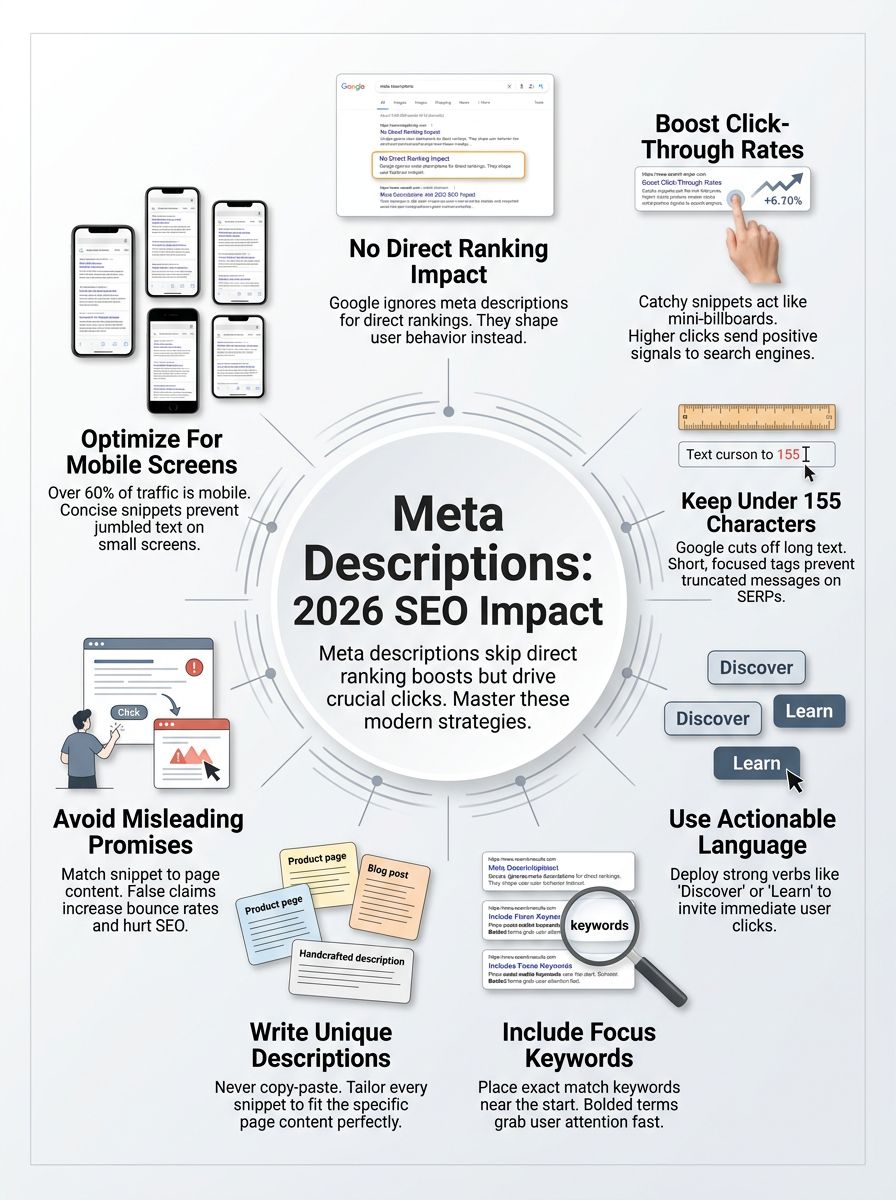
Search engines like Google admit these tags do not directly change your position. Still, the words you choose completely control who clicks your link and who scrolls right past it.
I am going to walk you through the exact steps I use to fix this problem. Grab a cup of coffee, and let’s go through it together.
What Are Meta Descriptions?
These short pieces of text sit in the HTML code under the `meta name=”description”` tags on each webpage. Search engines like Google use them as content snippets, showing a quick summary of your page in the search results. A good snippet helps people decide immediately to click your link.
Think of a meta description like a shop window. It should be clear, inviting, and hard to ignore.
This small blurb shapes user behavior and clickthrough rate CTR. For example, a 2024 Backlinko study found that pages with well-written tags saw an average CTR improvement of 31 percent compared to those without one.
Type “SEO tips” into Google. You will see two lines beneath each blue title, and that is the magic at work.
The Role of Meta Descriptions in SEO
These short lines act like mini-billboards for your content, sitting right under your page title on the SERP Search Engine Results Page. They catch someone’s eye in a split second.
Definition and Purpose
These tags give people a quick peek at what the page covers. Users can easily decide if the link matches what they need.
A 2026 report by Safari Digital noted that 25 percent of top-ranking pages do not even specify a description. This leaves a massive opportunity for your site to stand out in the US market.
A solid tag serves three main goals:
- It acts as a digital storefront window.
- It sets clear expectations for the reader.
- It builds initial trust before the click happens.
A good sample is searching for “pizza places near me.” A description like “Hot fresh pizza with fast delivery near you” draws eyes and clicks.
Display in Search Results
Search engines like Google might use your exact text, or they may pull a different snippet from your site if they think it fits the search better.
The best ones grab attention fast. They use clear language and main keywords to make users curious enough to click.
In 2026, mobile devices drive about 63 percent of all US web traffic according to MobiLoud data. This means your text needs to look perfect on small screens to boost your organic search traffic.
Do Meta Descriptions Impact Rankings in 2026?
People constantly ask if these snippets help pages rank higher, specifically wondering, Meta Descriptions: Do They Impact Rankings In 2026? The answer might surprise you.
Google’s Algorithm and Meta Descriptions
Google’s search algorithm does not use these tags as a direct ranking factor. This rule has been official since 2009. A 2026 Safari Digital study confirms Google rewrites these snippets almost 63 percent of the time.
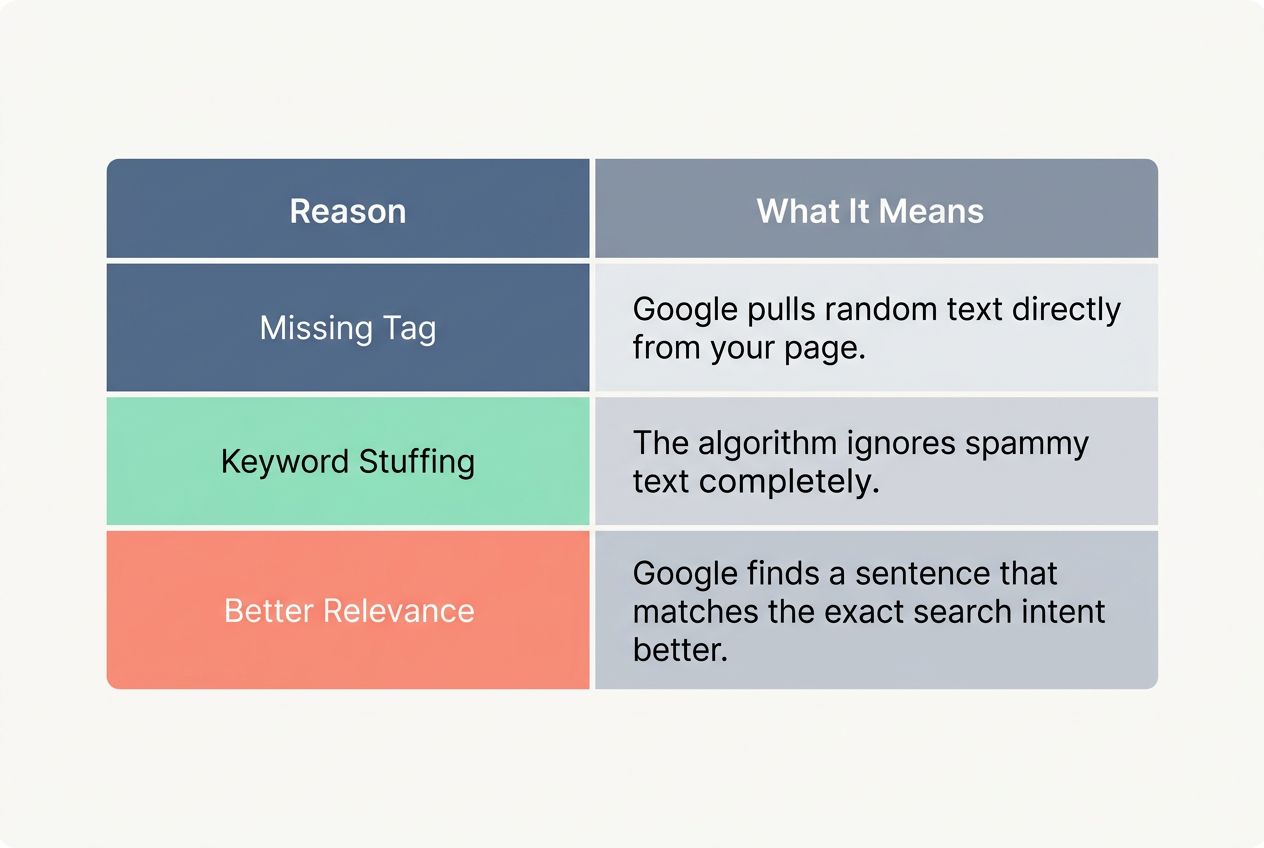
Here is how the algorithm handles your text:
| Reason | What It Means |
|---|---|
| Missing Tag | Google pulls random text directly from your page. |
| Keyword Stuffing | The algorithm ignores spammy text completely. |
| Better Relevance | Google finds a sentence that matches the exact search intent better. |
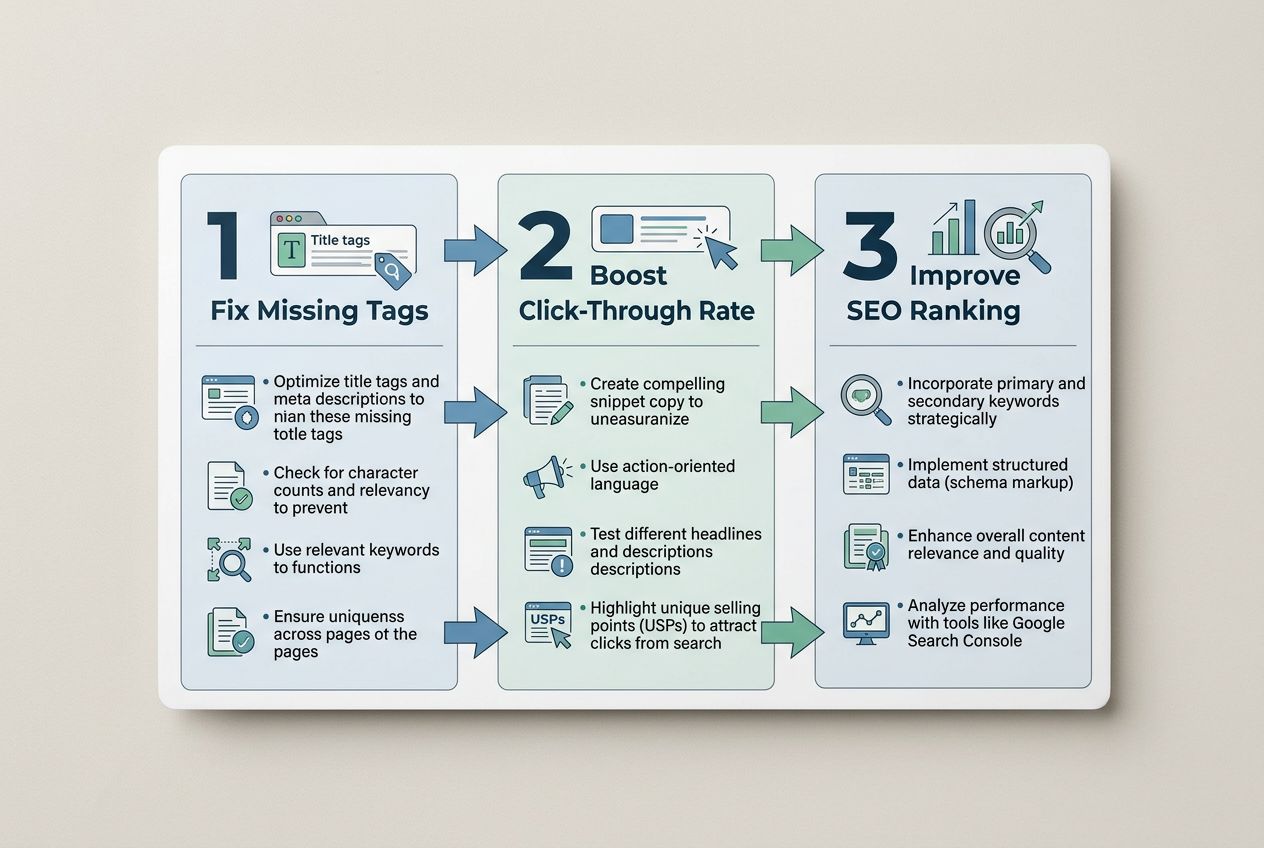
A well-written tag still plays an indirect role. If more people click on your site because of the inviting text, that improves engagement metrics.
The Role of Click-Through Rates (CTR)
Click-through rate steps into the spotlight here. This metric shows how many people spot your page and choose to visit it.
You can use the Google Search Console Performance report to find pages sitting at position five with a click rate under two percent. Rewriting snippets for these specific pages is the fastest way to get more visitors without building new links.
High engagement metrics hint that users find your text helpful. Good wording makes each listing stand out as a powerful conversion tool.
Indirect SEO Benefits
A solid tag tempts more people to click your link, but it also helps in other smart ways. More clicks often lead to an increase in website traffic, opening doors for metrics like dwell time. People who find exactly what they expect tend to stay much longer.
Accurate descriptions provide huge benefits:
- They filter out the wrong visitors immediately.
- They keep your bounce rate much lower.
- They send positive quality signals directly to Google.
A 2025 study showed mobile bounce rates hover around 60 percent. Clarity in your snippets keeps people around longer.
Characteristics of a High-Quality Meta Description
A strong snippet grabs attention, speaks the user’s language, and sparks real curiosity.
Keep it concise (up to 155 characters)
Short and sweet does the trick every time. Google cuts off anything over 155 characters, so long sentences lose their power fast.
Desktop limits sit around 150 to 160 characters. Mobile devices truncate your text at about 120 characters.
Always front-load your most important value proposition. Users spot exactly what they want right away, and your website traffic climbs as a result.
Use active voice and actionable language
Use verbs that tell users exactly what to do next. Active voice makes your writing feel alive and direct.
Action verbs get the best results:
- Discover new optimization techniques.
- Learn the basics of local ranking.
- Shop our latest 2026 collection.
Treat the end of your snippet like a mini call to action. Adding a phrase like “Get your free quote today” gives a clear next step.
Include a focus keyword
These snippets work best with a clear focus keyword. Search engines spot this keyword fast, and so do users scanning the results.
Search engines boldly highlight the exact keyword phrases users type in. This bolding acts as a visual magnet on the page.
It draws eyes straight to your link. Strong placement nudges your click rate higher, turning casual browsers into site visitors.
Ensure relevance to page content

After using your focus keyword, you must stay true to your main message. Search algorithms scan your tags for context clues.
You want to completely avoid classic bait-and-switch tactics. If you promise a 2026 US Salary Guide, you must deliver exactly that information.
A snippet that promises one thing but delivers another will ruin your dwell time and hurt your overall engagement metrics.
Search rankings depend on real user behavior. Clear matches between your text and your topic keep people happy.
Make each description unique
Sticking close to the page content is important, but each tag needs its own fingerprint. Search engines do not want to see recycled lines.
You can use a crawling tool like the Screaming Frog SEO Spider to find duplicate tags across your site. Every single page needs its own pitch.
Here is how to make them stand out:
- Highlight a specific product feature.
- Mention a local US city name.
- Focus on a unique customer pain point.
A fresh tag grabs attention in the sea of results. This sets up your website for better engagement over time.
Best Practices for Writing Meta Descriptions
Crafting sharp, lively snippets is easy once you know a few handy tricks.
Match descriptions to each page
Each page on your site holds its own story. Your tags should fit each one perfectly, much like a label fits a jar.
Product pages differ heavily from standard blog posts. A Shopify store needs to highlight fast shipping or heavy discounts.
A WordPress blog post should highlight the specific problem the article solves. Aim for clear signals that match user behavior.
Avoid duplicated or generic descriptions
Copying and pasting the same text across your site lowers your click rate. Google spots copy-paste jobs fast, and users skip right over dull text.
Compare generic writing to custom writing:
| Generic Approach | Custom Approach |
|---|---|
| Welcome to our plumbing site. | Get 24/7 emergency plumbing in Austin. No hidden fees. |
| Read our latest blog post. | Learn 5 quick tips to lower your US tax bill this year. |
Small details boost your metrics. Focus on strong snippets that match the true purpose of each page.
Include specifications or highlights where applicable
Share product specs, shipping times, or core features right in your snippet. Details like “Up to 20 percent off all winter jackets” attract clicks instantly.
You can pair your text with Schema markup to show rich snippets. This allows you to display star ratings and prices right in the search results.
A description mentioning “Rated 4.9 stars by US customers” builds instant trust. Searchers often scan for these standout details first before clicking.
Use calls-to-action to encourage engagement
Inviting readers to act sparks more interaction. These calls lift click rates and turn plain text into a powerful conversion tool.
Time-sensitive language forces immediate clicks. Try using these action phrases:
- Claim your limited time offer.
- Read the fully updated 2026 guide.
- Start your free trial today.
Google tracks user behavior constantly. Strong calls to action play right into these important ranking factors.
Tools and Techniques for Creating Meta Descriptions
You have plenty of help at your fingertips for crafting these snippets. Smart tools make the whole process much faster.
Using AI for Automated Descriptions
Artificial intelligence tools can draft text incredibly fast. They analyze each page, pick out the focus keyword, and write lines that fit Google’s character limits.
In 2026, generative AI tools like ChatGPT or Jasper can process thousands of pages in minutes. This saves massive amounts of time for busy teams. You can simply prompt the AI to write a 150-character summary including your target keyword. This instantly bypasses writer’s block.
Leveraging SEO Plugins (e.g., Yoast SEO)
Plugins like Yoast SEO make writing much easier for everyone. These tools highlight if your text is too long or missing a keyword.
Yoast SEO Premium recently released the Yoast AI Generate feature. It sits right inside your standard WordPress editor.
This powerful plugin feature offers several benefits:
- It analyzes your page content instantly.
- It provides five different creative options.
- It optimizes perfectly for Google character limits.
With each recent update, features now track engagement metrics right in your dashboard.
Programmatically Generating Descriptions for Large Sites
Big sites with thousands of pages need automated help to keep things fresh. Many brands use code or tools for this exact task.
Large e-commerce stores use Content Management Systems like Magento or WooCommerce. They set up dynamic variables to create unique snippets automatically.
A format like “Buy [Product Name] for just [Price]” ensures all 50,000 items have an accurate description without a single manual edit.
Common Mistakes to Avoid with Meta Descriptions
These tags can trip up even the sharpest web writers. Stick around for handy ways to steer clear of these common slip-ups.
Overloading with keywords
Packing a single line with too many keywords almost always backfires. The search engine algorithm spots keyword stuffing instantly.
If you cram “Chicago pizza, best Chicago pizza, cheap pizza Chicago” into one line, Google will simply ignore it and write its own snippet.
Mix things up and focus on user behavior instead of old tricks. Keep sentences clear, short, and totally natural.
Making descriptions misleading
Keyword stuffing frustrates users, but giving false promises pushes them away even faster. Search engines deeply dislike misleading text.
If a description says “free online lessons” but the page asks for payment right away, people will click back in seconds. High bounce rates tell search engines your page is of poor quality.
Honesty remains the best long-term strategy for Search Engine Optimization SEO. Always deliver exactly what you promise to keep visitors happy.
Ignoring mobile-friendliness
Google heavily favors content that looks good on any screen size. If your text gets jumbled on a phone, users will definitely skip your link.
With US mobile traffic hitting 63 percent, truncations happen all the time. Use free SERP preview tools to check your work before publishing.
Always verify these three things:
- Does the main keyword appear early?
- Is the call to action totally visible on small screens?
- Does the message still make sense if the end gets cut off?
Do Meta Descriptions Still Matter for Social Sharing?
These lines show up as content snippets when people share your page on sites like Facebook or X. A clear, catchy summary encourages more clicks from your social audience.
Social platforms prefer to use Open Graph tags or Twitter Cards. If you forget to set those up, Facebook or LinkedIn will automatically pull your standard meta description instead.
Here is how different platforms handle your links:
| Social Platform | How They Use Your Text |
|---|---|
| Pulls the standard description if the Open Graph tag is totally missing. | |
| Uses the text to populate professional link preview cards. | |
| X (Twitter) | Relies on it for standard summary cards when links are shared. |
Writing one solid tag ensures your content looks completely professional. This improves how people interact with your links, even outside of normal search rankings.
Final Words
You just learned the real answer to the big question: Meta Descriptions: Do They Impact Rankings In 2026? While search engines do not use these tags as a direct ranking factor, well-written ones still grab huge attention. Clear, short text helps folks find what they need fast. This naturally means more traffic and much better engagement for your site.
Writing effective summaries is an absolute breeze with modern plugins or AI tools. Have you checked your own pages lately to see how inviting those little blurbs really are? Give these tips a shot today. Watch how quick tweaks might bring more eyes to your content and set the perfect stage for higher conversions.
The right words at the right time work like pure magic. I still smile when I think about a client who saw their click rate double after rewriting just one single sentence!