Fruit trees are the backbone of any successful orchard, and selecting high-yield varieties is essential for maximizing productivity and profitability.
Whether you’re planting a commercial orchard or a backyard garden, choosing the right fruit trees ensures abundant harvests and consistent quality.
In this article, we explore 15 high-yield fruit trees ideal for American orchards, including tips on their care and growth requirements.
Best High-Yield Fruit Trees for American Orchards
Get the deep dive into the complete list of High-Yield Fruit Trees:
1. Apple Trees (Malus domestica)
Apples are a staple crop in American orchards, known for their adaptability and productivity. Popular high-yield varieties include Honeycrisp, Gala, and Fuji.
Key Features:
- Yield: 200-300 pounds per mature tree annually
- Climate: Grows best in USDA zones 4-8
- Harvest Season: Late summer to fall
Care Tips:
- Plant in well-drained soil with full sun.
- Prune annually to encourage healthy growth and airflow.
- Use pest-resistant rootstocks to minimize disease risks.
| Variety | Flavor Profile | Harvest Time |
| Honeycrisp | Sweet, tart | Late September |
| Gala | Mild, sweet | Mid-August |
| Fuji | Very sweet | Late October |
2. Peach Trees (Prunus persica)
Peach trees are prized for their juicy fruit and reliable yields. Varieties like Elberta and Redhaven thrive in many parts of the U.S.
Key Features:
- Yield: 100-150 pounds per mature tree annually
- Climate: USDA zones 5-9
- Harvest Season: Mid to late summer
Care Tips:
- Plant in sandy, well-drained soil.
- Protect blossoms from late spring frosts to ensure fruit set.
- Thin fruits to 6-8 inches apart to enhance size and flavor.
| Variety | Flavor Profile | Harvest Time |
| Elberta | Sweet, firm | Mid-August |
| Redhaven | Sweet, juicy | Late July |
| Reliance | Sweet, tangy | Early August |
3. Cherry Trees (Prunus avium and Prunus cerasus)
Cherry trees, both sweet and sour varieties, are excellent for fresh eating and processing. High-yield varieties include Bing (sweet) and Montmorency (sour).
Key Features:
- Yield: 30-50 pounds per mature tree annually
- Climate: USDA zones 4-9
- Harvest Season: Early to mid-summer
Care Tips:
- Sweet cherries need a pollinator variety nearby, while sour cherries are self-fertile.
- Provide deep watering during dry periods to prevent fruit splitting.
- Net trees to protect fruit from birds.
| Variety | Type | Flavor Profile | Harvest Time |
| Bing | Sweet | Rich, sweet | Late June |
| Montmorency | Sour | Tart, tangy | Early July |
| Rainier | Sweet | Sweet, creamy | Late June |
4. Pear Trees (Pyrus communis)
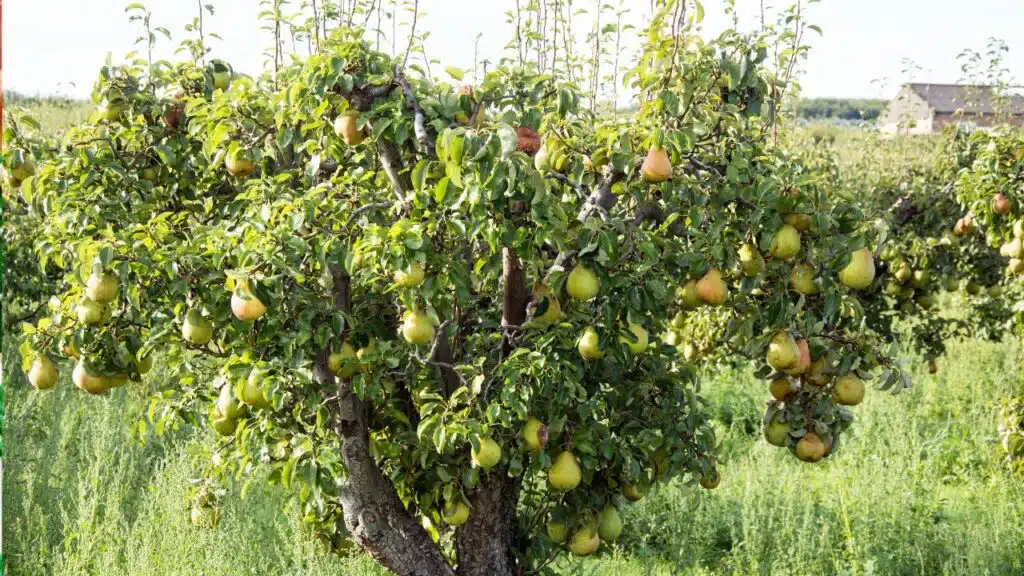
Pear trees are known for their long lifespan and generous yields. High-yield varieties like Bartlett and Bosc are popular choices.
Key Features:
- Yield: 150-300 pounds per mature tree annually
- Climate: USDA zones 4-9
- Harvest Season: Late summer to early fall
Care Tips:
- Plant in loamy soil with good drainage.
- Prune to an open center to increase sunlight penetration.
- Use mulch to retain moisture and suppress weeds.
| Variety | Flavor Profile | Harvest Time |
| Bartlett | Sweet, juicy | Late August |
| Bosc | Sweet, spicy | Mid-September |
| Anjou | Mild, sweet | Late October |
5. Plum Trees (Prunus domestica and Prunus salicina)
Plum trees produce abundant fruit and are excellent for fresh eating or drying. Popular high-yield varieties include Stanley and Santa Rosa.
Key Features:
- Yield: 50-100 pounds per mature tree annually
- Climate: USDA zones 4-9
- Harvest Season: Late summer to early fall
Care Tips:
- Thin fruit clusters to prevent overloading branches.
- Prune after harvest to maintain tree shape and health.
- Choose disease-resistant rootstocks to reduce maintenance.
| Variety | Flavor Profile | Harvest Time |
| Stanley | Sweet, mild | Early September |
| Santa Rosa | Tart, sweet | Late July |
| Methley | Juicy, sweet | Early August |
6. Fig Trees (Ficus carica)
Fig trees are a low-maintenance choice for high yields. Varieties like Black Mission and Brown Turkey are popular for their productivity and flavor.
Key Features:
- Yield: 20-60 pounds per mature tree annually
- Climate: USDA zones 7-10
- Harvest Season: Late summer to fall
Care Tips:
- Plant in sunny locations with well-drained soil.
- Protect from frost in colder climates.
- Water deeply during dry spells to maintain fruit production.
| Variety | Flavor Profile | Harvest Time |
| Black Mission | Sweet, rich | Late August |
| Brown Turkey | Mild, sweet | Early September |
| Kadota | Honey-like | Late August |
7. Orange Trees (Citrus sinensis)
Orange trees are highly productive and ideal for warmer climates. Varieties like Valencia and Navel are popular for their flavor and yield.
Key Features:
- Yield: 200-400 pounds per mature tree annually
- Climate: USDA zones 9-11
- Harvest Season: Winter to spring
Care Tips:
- Plant in well-drained, slightly acidic soil.
- Ensure consistent watering during the growing season.
- Use a balanced fertilizer to promote healthy growth.
| Variety | Flavor Profile | Harvest Time |
| Valencia | Sweet, juicy | Late spring |
| Navel | Sweet, seedless | Winter |
| Hamlin | Mild, sweet | Early winter |
8. Lemon Trees (Citrus limon)
Lemon trees are prolific producers, valued for their versatility in cooking and beverages. Popular varieties include Eureka and Lisbon.
Key Features:
- Yield: 100-200 pounds per mature tree annually
- Climate: USDA zones 9-11
- Harvest Season: Year-round (varies by variety)
Care Tips:
- Plant in full sun and well-drained soil.
- Protect from frost in colder regions.
- Prune lightly to maintain shape and encourage fruiting.
| Variety | Flavor Profile | Harvest Time |
| Eureka | Tart, juicy | Year-round |
| Lisbon | Tart, aromatic | Winter |
| Meyer | Mild, slightly sweet | Year-round |
9. Pomegranate Trees (Punica granatum)
Pomegranate trees are drought-tolerant and highly productive, thriving in warm climates.
Key Features:
- Yield: 50-100 pounds per mature tree annually
- Climate: USDA zones 8-10
- Harvest Season: Fall
Care Tips:
- Plant in sandy, well-drained soil.
- Prune lightly to shape and remove deadwood.
- Ensure deep watering during fruiting.
| Variety | Flavor Profile | Harvest Time |
| Wonderful | Sweet, tangy | Late fall |
| Angel Red | Sweet, soft seeds | Early fall |
| Parfianka | Balanced, juicy | Late fall |
10. Avocado Trees (Persea americana)
Avocado trees are prized for their creamy, nutrient-rich fruits. Popular varieties include Hass and Fuerte.
Key Features:
- Yield: 150-200 pounds per mature tree annually
- Climate: USDA zones 9-11
- Harvest Season: Year-round (varies by variety)
Care Tips:
- Plant in well-drained soil with good air circulation.
- Water deeply but infrequently to prevent root rot.
- Protect from frost and strong winds in cooler areas.
| Variety | Flavor Profile | Harvest Time |
| Hass | Rich, buttery | Spring-summer |
| Fuerte | Smooth, nutty | Winter |
| Bacon | Mild, creamy | Late fall |
11. Banana Trees (Musa spp.)
Banana trees are fast-growing and highly productive in tropical and subtropical climates.
Key Features:
- Yield: 50-100 pounds per mature plant annually
- Climate: USDA zones 9-11
- Harvest Season: Late summer to early fall
Care Tips:
- Plant in rich, well-draining soil with full sun.
- Keep soil consistently moist but avoid waterlogging.
- Apply organic mulch to retain moisture and regulate temperature.
| Variety | Flavor Profile | Harvest Time |
| Cavendish | Sweet, creamy | Late summer |
| Lady Finger | Sweet, small | Early fall |
| Blue Java | Sweet, vanilla-like | Late summer |
12. Mango Trees (Mangifera indica)
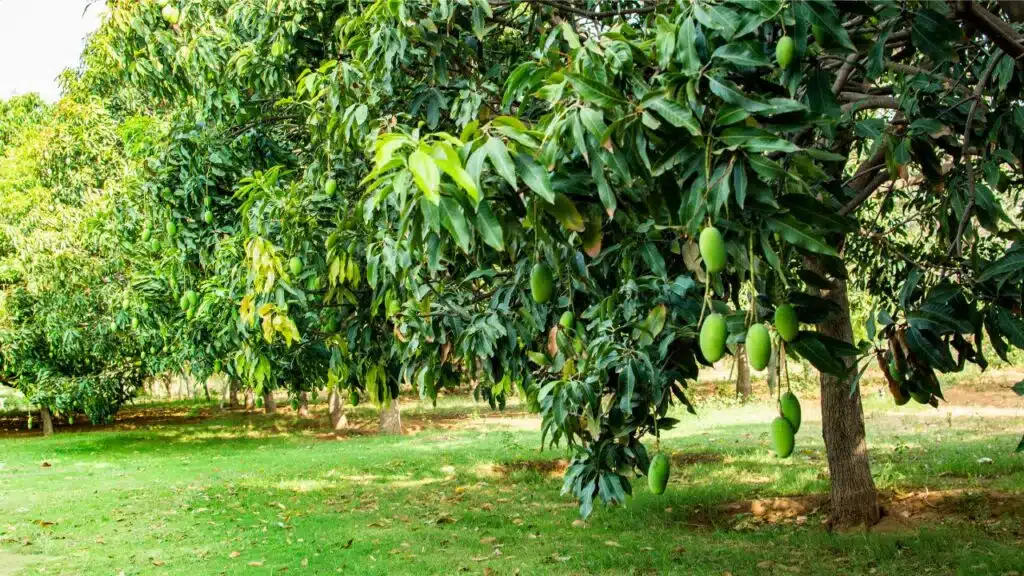
Mango trees are a tropical favorite, producing juicy, flavorful fruits. Varieties like Tommy Atkins and Keitt thrive in warm climates.
Key Features:
- Yield: 100-300 pounds per mature tree annually
- Climate: USDA zones 9-11
- Harvest Season: Summer
Care Tips:
- Plant in full sun with sandy, well-drained soil.
- Water regularly during flowering and fruiting.
- Prune to maintain size and promote airflow.
| Variety | Flavor Profile | Harvest Time |
| Tommy Atkins | Sweet, fibrous | Mid-summer |
| Keitt | Sweet, tangy | Late summer |
| Haden | Sweet, aromatic | Early summer |
13. Nectarine Trees (Prunus persica var. nucipersica)
Nectarine trees are similar to peaches but offer smooth skin and bold flavors. High-yield varieties include Fantasia and Sunred.
Key Features:
- Yield: 100-150 pounds per mature tree annually
- Climate: USDA zones 5-9
- Harvest Season: Mid to late summer
Care Tips:
- Plant in sandy, well-drained soil with full sun.
- Thin fruits to prevent overcrowding and improve size.
- Protect from late frosts during blooming.
| Variety | Flavor Profile | Harvest Time |
| Fantasia | Sweet, tangy | Late July |
| Sunred | Juicy, sweet | Mid-August |
| Arctic Rose | Sweet, aromatic | Early August |
14. Papaya Trees (Carica papaya)
Papaya trees are fast-growing and yield an abundance of tropical fruits. Popular varieties include Maradol and Red Lady.
Key Features:
- Yield: 50-120 pounds per mature tree annually
- Climate: USDA zones 9-11
- Harvest Season: Year-round (depending on climate)
Care Tips:
- Plant in well-drained soil with high organic content.
- Ensure full sun and consistent moisture.
- Avoid planting in frost-prone areas.
| Variety | Flavor Profile | Harvest Time |
| Maradol | Sweet, firm | Year-round |
| Red Lady | Sweet, aromatic | Year-round |
| Hawaiian | Mild, sweet | Year-round |
15. Grapefruit Trees (Citrus paradisi)
Grapefruit trees produce large, juicy fruits that are a favorite for fresh eating and juicing. Popular varieties include Ruby Red and Marsh.
Key Features:
- Yield: 100-250 pounds per mature tree annually
- Climate: USDA zones 9-11
- Harvest Season: Winter to early spring
Care Tips:
- Plant in well-drained soil with full sun exposure.
- Water deeply but infrequently to establish strong roots.
- Fertilize regularly with a citrus-specific fertilizer.
| Variety | Flavor Profile | Harvest Time |
| Ruby Red | Sweet, tangy | Early spring |
| Marsh | Mild, sweet | Late winter |
| Oro Blanco | Sweet, low acid | Early spring |
Final Words
Selecting high-yield fruit trees is a key step in ensuring the success of your orchard.
From apples and cherries to tropical favorites like papaya and mango, the diversity of options allows growers to maximize productivity while catering to varied climates and tastes.
Proper care and maintenance—such as pruning, watering, and fertilizing—will further enhance fruit quality and yield.
Whether you’re a commercial grower or a backyard enthusiast, these 15 high-yield fruit trees provide an excellent foundation for a fruitful orchard.
By choosing the right varieties and nurturing them carefully, you can enjoy bountiful harvests for years to come. Happy planting!