Imagine a world where your country lags behind, stuck with outdated systems while others zoom ahead on clean, efficient paths. You worry about jobs vanishing, costs skyrocketing from wild weather, and a future that feels shaky. Many folks face this fear daily, wondering if their nation will thrive or just survive in a changing economy. It’s like watching a race where some teams train hard, and others sit on the bench.
Green Infrastructure Investment stands as the game-changer here. One key fact shows that nations pouring money into it now create loads of jobs and slash long-term expenses. This blog breaks down why these investments build stronger economies, with real examples from top countries.
You’ll see clear steps to grasp the wins for jobs, nature, and daily life. Stick around.
What is Green Infrastructure?
Green infrastructure blends natural systems with urban planning to create sustainable design in cities. Think of it as nature’s toolkit for handling big challenges like stormwater management and climate adaptation.
Cities use it to build green spaces that boost biodiversity and provide ecosystem services. Low-impact development plays a key role here, turning concrete jungles into thriving spots.
You see, it mimics how the earth works, soaking up rain and filtering pollutants like a giant sponge. This approach builds environmental resilience, making communities stronger against floods and heat waves. People love it because it feels like giving back to the planet, one park or wetland at a time.
Picture a bustling street where rain doesn’t flood the sidewalks but seeps into smart pavements instead. Green infrastructure weaves natural systems into everyday life, supporting urban planning that values ecosystem services.
It enhances biodiversity through simple setups like rain gardens, which manage stormwater with ease. Climate adaptation becomes second nature this way, as these features create cooler, greener neighborhoods.
Sustainable design shines in how it promotes low-impact development, cutting costs and pollution over time. Environmental resilience grows from these efforts, turning potential disasters into manageable events.
Green infrastructure is not just about building with nature; it’s about letting nature build with us. – Anonymous urban planner
Key Characteristics of Green Infrastructure
Green infrastructure blends nature with city life, like a clever puzzle that fits right in. Picture it soaking up rain or cooling down hot streets, sparking curiosity about how these features really work.
Benefits of Rain Gardens and Bioswales
Rain gardens and bioswales handle stormwater like pros, cutting down on floods and erosion in busy cities. They boost urban resilience, with better water quality and healthier ecosystems all around.
Imagine these features act as nature’s sponges, soaking up rain and keeping things steady. Cities use them for stormwater management, a key part of sustainable design. They even push for energy independence through smart water handling.
Talk about a win-win, right? These spots deliver ecosystem services that make urban ecology thrive. Folks love how rain gardens and bioswales create homes for birds and bugs, sparking biodiversity enhancement in the neighborhood. They cool off hot city spots, easing the urban heat island effect for nicer local weather.
Property values climb when these natural landscaping gems show up, and they spruce up the whole area, too. Cost savings pop up in water management and upkeep, saving bucks over time.
Flood mitigation gets a big lift here, along with climate resilience that stands strong. Water quality improvement shines through, making communities feel more alive and connected.
Functions of Green Roofs and Walls
Green roofs and walls transform buildings into living parts of urban ecology. They soak up rainwater, handling stormwater management with ease. Plants on these structures provide insulation, keeping buildings cooler in summer and warmer in winter.
You get better energy efficiency, which cuts down on bills. Air quality improves as they filter out pollutants. Plus, they fight the heat island effect in cities, making hot spots more bearable.
Imagine your rooftop as a mini forest, boosting biodiversity and creating habitats for birds and insects. Sustainable architecture like this turns concrete jungles into greener spaces. Carbon sequestration happens naturally as plants pull in CO2.
Green roofs are like lungs for the city, breathing life into our urban spaces. – Anonymous urban planner
These features show how green roofs and walls support a healthier planet. Let’s move on to the advantages of permeable pavements.
Advantages of Permeable Pavements
Green roofs and walls cool buildings from above, and permeable pavements handle water challenges right at street level. These surfaces let rainwater soak into the ground instead of flooding streets.
Builders use ecofriendly materials in sustainable design to boost water infiltration and soil permeability. Imagine this, folks, like a sponge that drinks up storm runoff, cutting down on urban drainage woes.
They fight the urban heat island effect too, keeping cities cooler during hot spells. In landscape architecture, permeable pavements blend with green building practices for better stormwater management.
This setup reduces environmental impact, and hey, it even saves money on flood repairs over time. Cities adopt them to manage heavy rains with ease.
Roles of Urban Forests and Wetlands
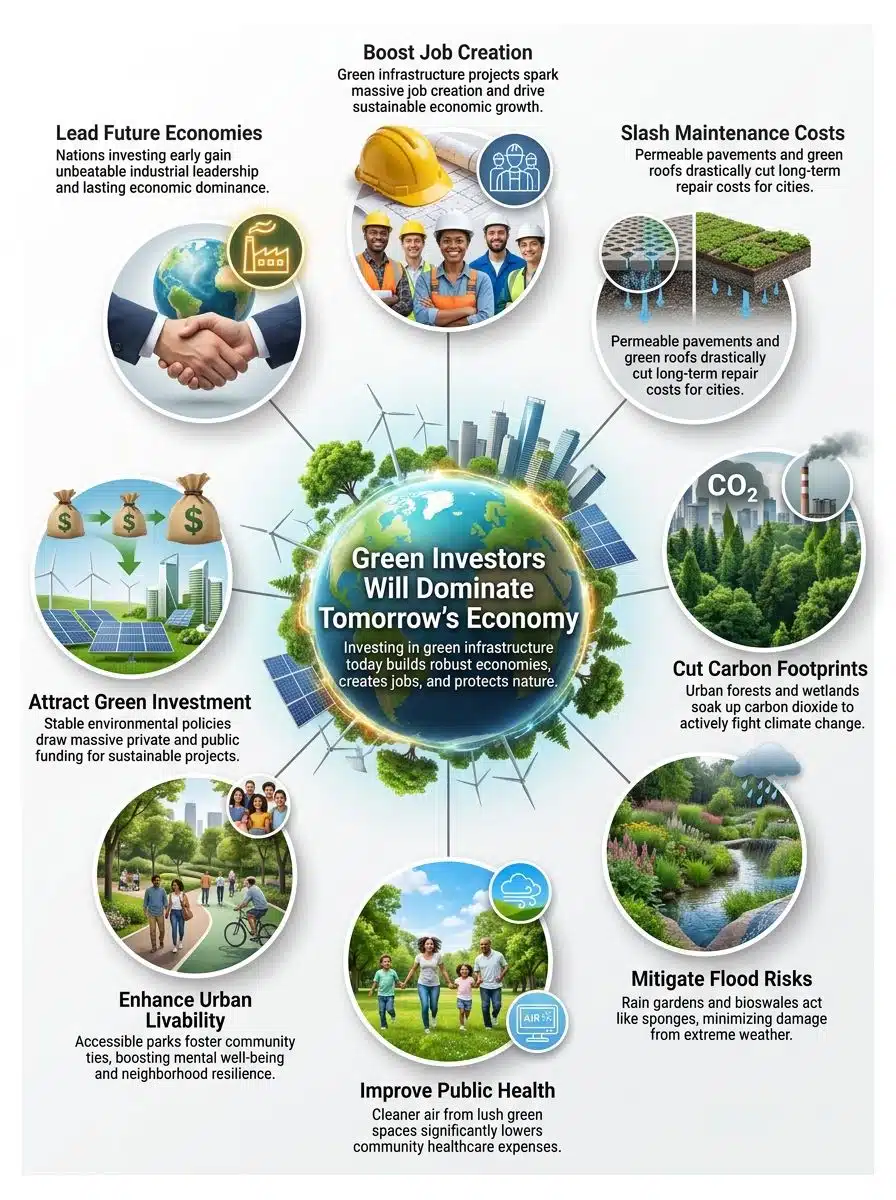
Urban forests enhance biodiversity and improve air quality, folks. They act as vital green spaces in urban planning. Picture a city park cooling down a hot summer day; urban forests reduce heat islands and boost energy efficiency in cities.
Both urban forests and wetlands contribute to climate regulation and carbon sequestration, which means they capture carbon and support climate resilience. Green infrastructure, including urban forests and wetlands, supports recreational spaces and boosts mental well-being.
Investment in urban forests and wetlands can lead to economic benefits through ecosystem services, like cleaner air for everyone.
Wetlands provide natural flood control and improve water quality, acting as nature’s sponges during heavy rains. They serve as critical habitats, supporting wildlife and promoting ecological balance in ecosystems.
These areas foster sustainability and environmental health, much like a backyard oasis for birds and bugs. Urban forests and wetlands together build stronger communities with their flood management and habitat roles. Now, let’s look at the economic advantages of green infrastructure investments.
Economic Advantages of Green Infrastructure Investments
Countries that pour cash into green setups spark job booms, turning idle hands into busy builders of a brighter future. These moves slash costs over time, like dodging a leaky roof before the storm hits, pulling in investors who smell the sweet scent of steady gains.
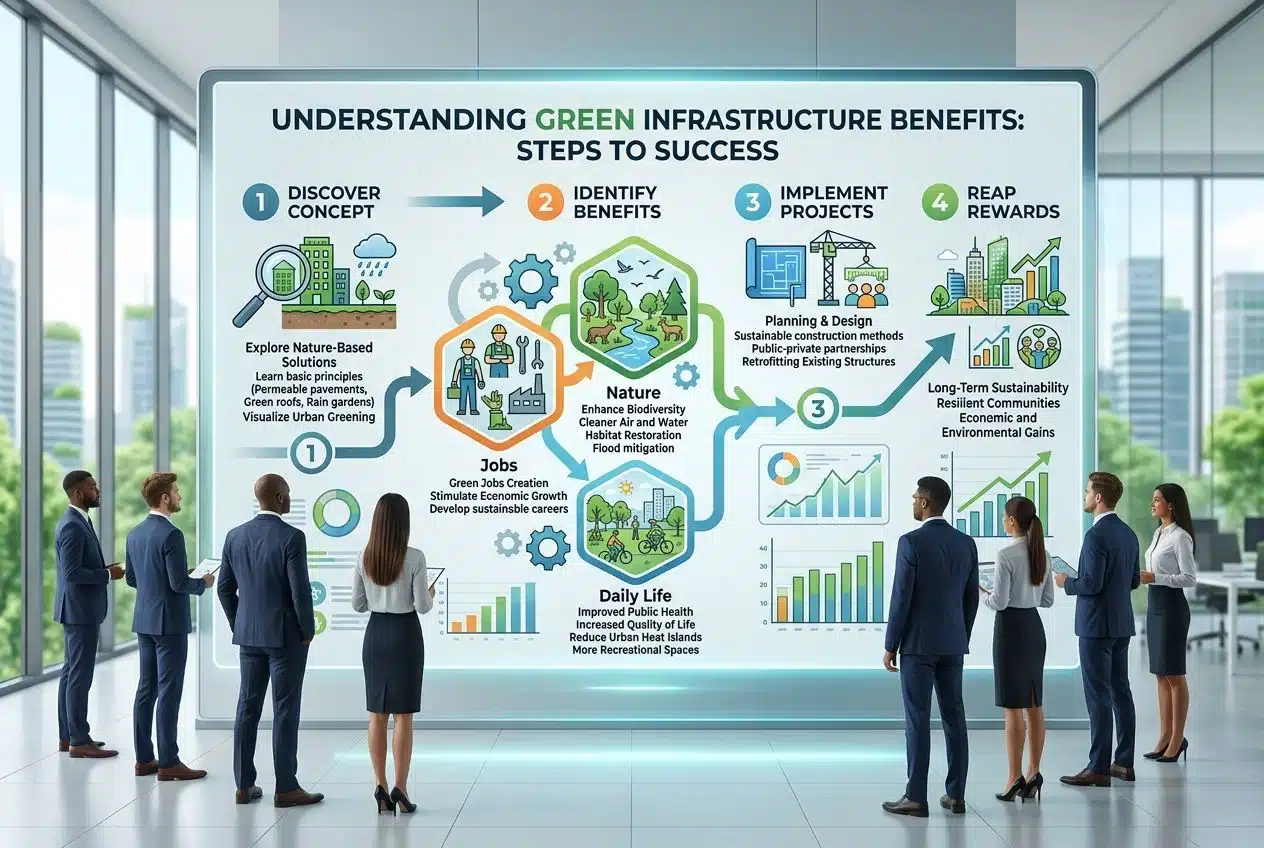
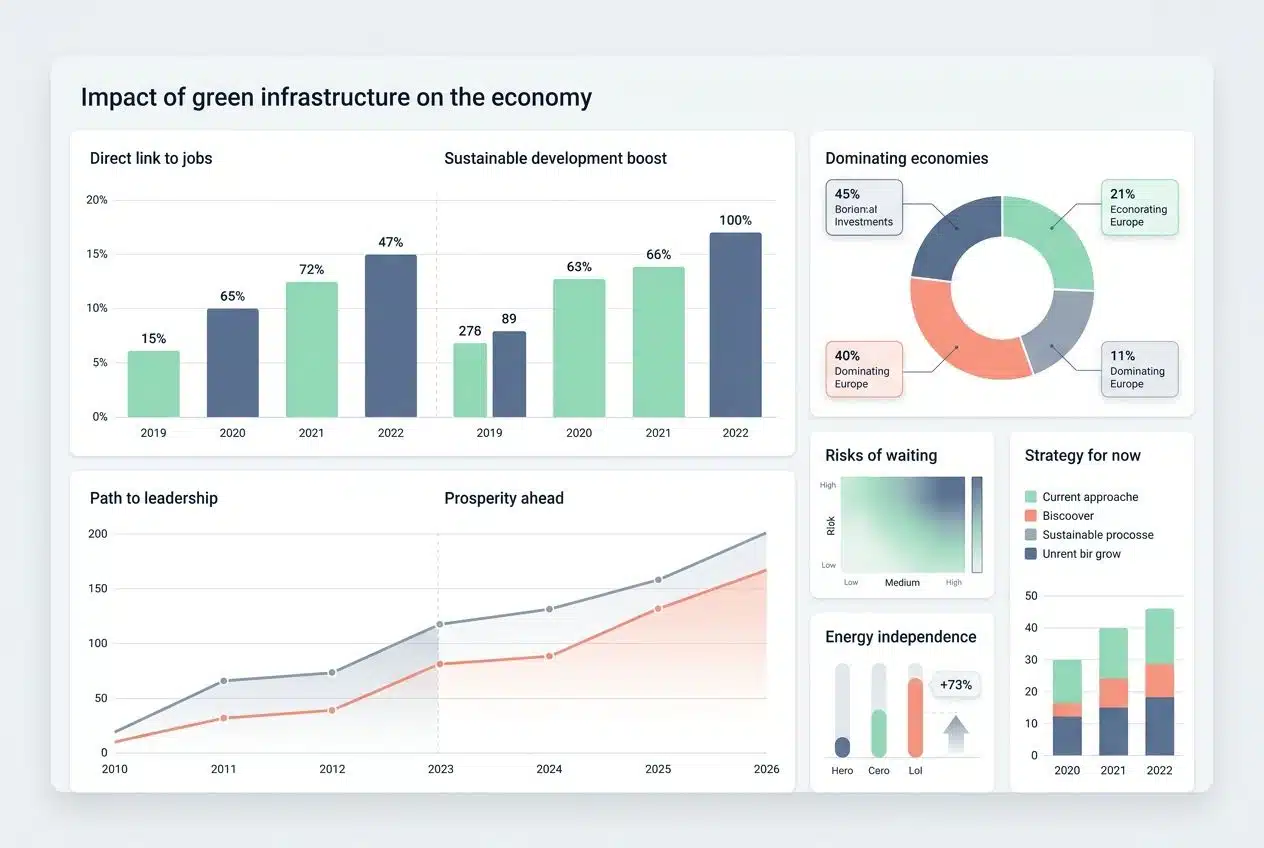
Job creation and economic growth
Investing in green infrastructure sparks real change, and let’s talk about how it drives job creation and economic growth, folks.
| Key Point | Details |
|---|---|
| Direct link to jobs | Economic growth connects directly to job creation through green infrastructure projects, putting people to work on things that matter. |
| Sustainable development boost | People see how investing in green infrastructure supports sustainable economic development, like a solid foundation for a house that lasts. |
| Path to leadership | Nations that invest in green infrastructure will achieve industrial leadership, standing tall like the captain of a winning team. |
| Prosperity ahead | Long-term prosperity stands out as a big benefit of green infrastructure investments, rewarding those who plan smart. |
| Dominating economies | Those nations prioritizing green infrastructure position themselves to dominate future economies, grabbing the reins early. |
| Risks of waiting | Hesitation in green infrastructure investment can lead to competitive disadvantages, like missing the bus while others speed ahead. |
| Energy independence | Green infrastructure contributes to energy independence for nations, freeing them up like cutting the cord on old habits. |
| Strategy for now | Green infrastructure investment serves as a key economic strategy for the 21st century, the smart play in a fast game. |
Now, picture the money you save over time, as we explore long-term cost savings for governments and businesses.
Long-term cost savings for governments and businesses
Green infrastructure pays off big time for governments and businesses over the long haul, folks.
| Aspect | How It Saves Money |
|---|---|
| Lower Maintenance Costs | You know that old saying, ” A stitch in time saves nine? Green setups like permeable pavements cut down on pricey repairs from flooding. They soak up water naturally, so cities skip those massive drainage overhauls. Businesses save too, with less downtime from water damage. Picture your local shop staying open during heavy rains, no sweat. |
| Energy Bill Reductions | Green roofs act like a cozy blanket for buildings. They keep things cooler in summer, warmer in winter. Governments slash utility costs for public structures. Your office might see the same perk, dropping those sky-high AC bills. It’s like nature’s free thermostat, right? |
| Fewer Health Expenses | Urban forests clean the air, cutting pollution-related illnesses. Cities spend less on healthcare crises. Businesses face fewer sick days from staff. Imagine breathing easier in your neighborhood, and your wallet thanks you for it. |
| Resilient Against Disasters | Bioswales handle storms like champs, reducing flood cleanup tabs. Governments avoid billion-dollar recovery hits. Your company dodges property losses. Think of it as an insurance policy that grows on trees. |
| Boosted Property Values | Green spaces make areas more appealing, raising real estate prices. Tax revenues climb for local governments. Businesses draw more customers to vibrant spots. Hey, who wouldn’t pick a lively, green spot over a concrete jungle? |
Attracting private and public investments
Those long-term cost savings from green infrastructure don’t just stop at trimming budgets; they open doors to fresh cash flows that can supercharge economies. Nations that prioritize green infrastructure enhance their appeal to investors in sustainable development.
Investment in green infrastructure encourages energy independence, which draws even more capital from eager sources. Countries focusing on green infrastructure are likely to attract a higher volume of investments, securing future economic dominance in renewable energy sectors. Think of it like planting seeds in fertile soil; you get a bountiful harvest that keeps on giving.
Green infrastructure investment is essential for attracting both private and public investments in infrastructure development. Long-term economic growth potential associated with green infrastructure draws public and private investment through public-private partnerships.
Delaying investments in green infrastructure may deter potential investors due to perceived risks in environmental sustainability. Green infrastructure serves as a strategic economic driver, appealing to investment from various sectors focused on climate resilience. Investors spot the value in economic growth tied to green technology, so they jump in with capital investments.
Environmental Benefits of Green Infrastructure
Imagine cities breathing easier as green spaces soak up pollution like a sponge. Dive deeper to see how these smart setups shield us from wild storms and boost wildlife, sparking a healthier planet for all.
Reducing carbon footprints
Green infrastructure cuts down carbon footprints in smart ways. Think of cities swapping concrete for green spaces; these spots soak up carbon dioxide like sponges. Urban forests and wetlands pull harmful gases from the air, helping fight climate change.
This boosts sustainability and protects our ecosystem. Plus, it leads to carbon neutrality over time. Countries invest in renewable energy through green roofs and permeable pavements. These tools reduce pollution and enhance biodiversity. Urban planning with green elements creates healthier environments. Environmental conservation gets a big lift, making cities more resilient to extreme weather.
Enhancing biodiversity and natural habitats
Lower carbon footprints pave the way for a richer life in our surroundings. Enhancing biodiversity stands out as a major environmental benefit of green infrastructure. Cities add green spaces, and suddenly, birds sing louder, bees buzz more.
Think of urban greening like throwing a party for wildlife; everyone shows up. Natural habitats improve through strategic green infrastructure investments. People plant wildlife corridors, and animals roam free again.
Biodiversity conservation thrives this way. Nature-based solutions restore ecosystems, you know, like fixing up an old neighborhood. Habitat preservation keeps things balanced. Ecosystem services flow better, providing clean air and water for all.
Sustainable development ties it all together, making cities alive with possibility. Environmental sustainability grows from these efforts, turning concrete jungles into thriving spots.
Mitigating the impacts of extreme weather events
Green infrastructure fights back against wild storms and floods. It soaks up rainwater like a sponge, cutting down on damage from heavy downpours. Cities use ecofriendly solutions, such as permeable pavements, to handle flood management better.
This approach boosts urban resilience, keeping communities safe. Green infrastructure investment is crucial for mitigating extreme weather impacts. Picture a neighborhood that stays dry during a big rain, thanks to smart planning.
Such investments promote energy independence, too. They rely on renewable resources, like solar panels on green roofs. Folks feel more secure, knowing their homes won’t flood easily.
Invest in this now, and watch sustainable development take root. Green infrastructure is essential for sustainable economic growth and resilience. It adapts to climate change, protecting natural capital.
Biodiversity enhancement happens as wetlands thrive, supporting wildlife. Carbon footprint reduction follows, with trees pulling in CO2. Environmental sustainability grows stronger, one project at a time.
Imagine turning a concrete jungle into a thriving oasis that withstands heat waves. Communities gain from this climate adaptation, building a tougher future.
Social and Community Benefits
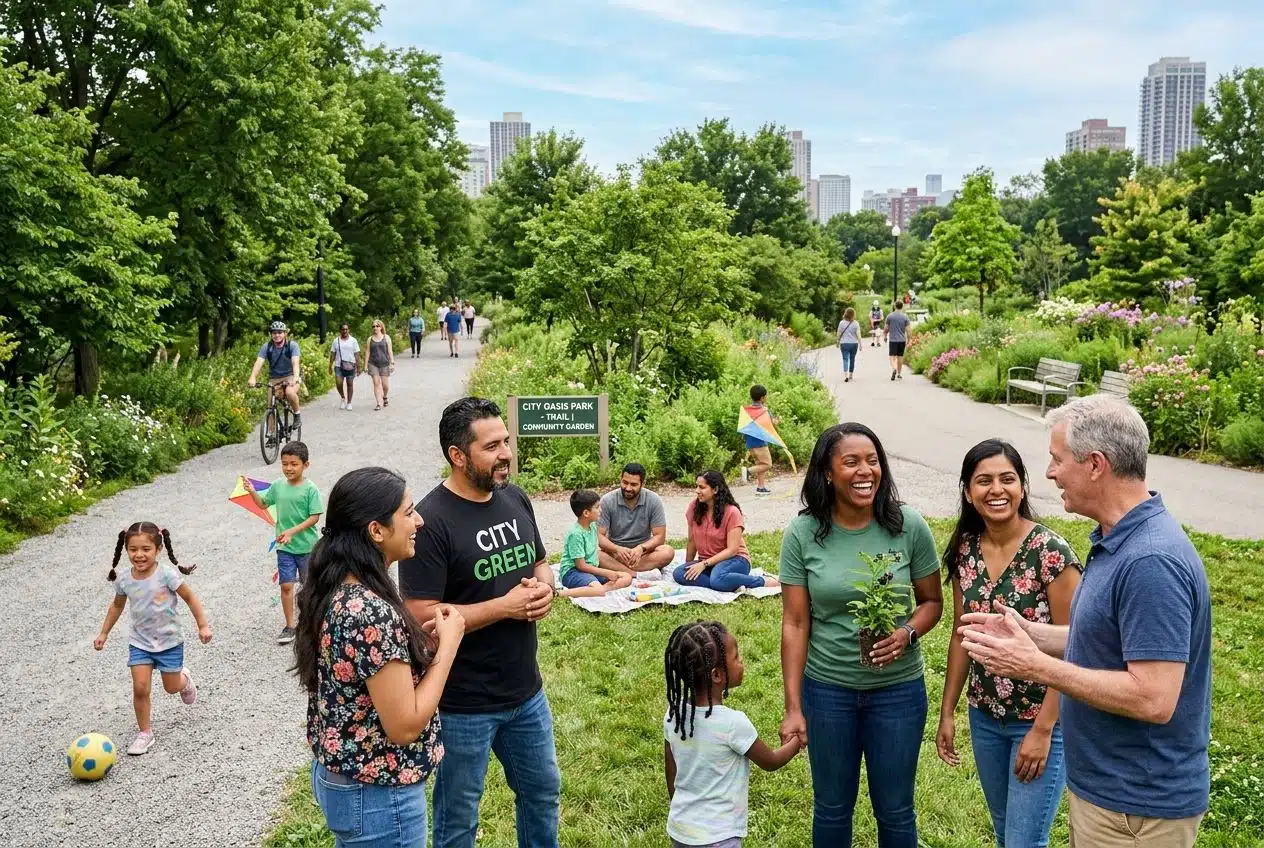
Green infrastructure boosts public health, offering fresh air and spots for folks to stretch their legs and unwind. It opens up more parks and trails, so families can gather and kids can play without a care.
Cities grow livelier, tougher against storms, like a sturdy tree standing tall in the wind. Who wouldn’t want that kind of neighborhood glow-up? Stick around for those inspiring case studies ahead.
Improving public health and well-being
Green infrastructure boosts public health initiatives, and it lifts community well-being in big ways. Think of it like a breath of fresh air, literally, cutting down on pollution that makes folks sick.
Sustainable urban development through these projects promotes better living conditions, with cleaner air and water that keep people healthier. Investment in green infrastructure reduces healthcare costs by improving environmental quality, saving money on doctor visits and hospital stays. You feel that difference when you walk through a lush park, right? It eases stress and sparks joy in daily life.
This setup creates jobs and stimulates economic growth in local communities, putting folks to work on green spaces that double as wellbeing initiatives. Social equity shines here, as everyone gets access to these spots, no matter their background.
Community health improves with more spots for exercise and relaxation, fostering a sense of togetherness. Picture families picnicking in urban forests; that’s the magic at play. Environmental sustainability ties in, making cities tougher against health threats from bad weather.
Increasing access to recreational spaces
Beyond the boost to public health and well-being, cities that prioritize green infrastructure open doors to more recreational spaces, fostering deeper community ties. Public parks and green areas spark social interaction, you know, like families picnicking or friends chatting on benches.
These spots enhance social cohesion and community well-being, as folks gather for events or casual meetups. Urban planning that includes them promotes physical activity, too, whether it’s jogging paths or playgrounds buzzing with energy.
Access to these green spaces lifts the general public’s health and quality of life, turning neighborhoods into vibrant hubs. Think of them as nature’s playgrounds, where environmental sustainability meets neighborhood development.
Community engagement thrives here, with people planting gardens or joining clean-up days. Wellbeing soars as residents unwind in peaceful settings, away from city hustle.
Enhancing urban livability and resilience
Green spaces turn cities into breathable havens, you know, like a cool oasis in a concrete jungle. Urban livability gets a big boost from green infrastructure initiatives, making daily life feel fresh and inviting.
Imagine strolling through parks that double as flood barriers; they shield neighborhoods during heavy rains. Sustainable design weaves in resilience planning, so communities bounce back fast from storms.
Public health improves, too, with cleaner air cutting down on sick days. Kids play safely in these spots, fostering social cohesion among families. Environmental equity shines here, giving every block access to nature’s perks.
Quality of life jumps up as folks connect more in vibrant urban ecosystems. Community engagement sparks real change, turning residents into stewards of their own backyards. Sustainable urban development strategies bring community benefits that last, like stronger ties between neighbors.
Picture a block party under shady trees; it builds bonds while adapting to climate shifts. Green roofs add color and calm, easing the heat in summer scorches. Folks feel empowered, chatting about ways to enhance their slice of the city.
Climate adaptation becomes a group effort, with everyone pitching in for tougher, happier places. Urban ecosystems thrive, supporting wildlife right alongside people.
Case Studies: Countries Leading in Green Infrastructure
Some nations charge ahead with smart green moves that pay off big time. Peek at how Denmark handles water like a pro, Singapore turns cities into lush spots, and Germany powers up with clean energy – these stories spark ideas for your own backyard.
Denmark’s water management systems
Denmark leads the way in sustainable infrastructure with its smart water management systems. Picture a country that turns heavy rains into a resource, not a problem. They build networks of canals and reservoirs that capture and store water for dry spells.
This approach boosts water conservation and cuts down on waste. Cities like Copenhagen use green technology to filter stormwater through natural plants and soils. Folks there enjoy cleaner rivers and less flooding as a result.
Engineers in Denmark focus on environmental management to protect ecosystems. They design urban planning that includes wastewater treatment plants powered by renewable sources. These systems enhance climate resilience by handling extreme weather with ease.
Resource efficiency shines through in how they reuse treated water for parks and farms. Imagine walking through a city where every drop counts toward a greener future.
Singapore’s green urban planning
Singapore leads the pack in green urban planning. This city-state builds sustainability right into its core. Think of it as a garden city on steroids, blending urban ecology with smart cities.
Leaders there push green technology hard. They focus on renewable energy to gain energy independence. That move boosts economic resilience big time.
Proactive investments in infrastructure development set Singapore up for future economic dominance. Imagine: hesitation in climate adaptation puts them at a competitive disadvantage, like missing the bus in a race.
Their environmental policy links long-term prosperity to green growth. Singapore’s approach offers a solid case study for other nations. It drives urban renewal and cements industrial leadership in the 21st century.
Germany’s renewable energy initiatives
Shifting gears from Singapore’s lush urban oases, let’s talk about how Germany powers ahead with its renewable energy initiatives, blending clean energy into the heart of its economy.
Germany leads the pack in renewable energy initiatives, folks. This nation highlights its role as a leader in sustainability and green technology. It prioritizes green infrastructure investment right in its economic strategy.
Germany’s push for renewable resources drives energy independence, you see. The focus on these ecofriendly infrastructure projects aims straight at securing long-term prosperity. Countries like Germany, with their strong environmental policy, gear up for industrial innovation and economic growth through this energy transition.
They tackle climate action head-on, turning wind and solar into everyday power players. Hesitation in investing in green initiatives could leave Germany facing a competitive disadvantage, no doubt. Yet, its commitment to green infrastructure positions the country for future economic dominance.
Nations like this will claim industrial leadership in the coming years, riding the wave of clean energy. Think of it as planting seeds today for a harvest of stability tomorrow, with every turbine spinning tales of progress.
Germany’s story shows how renewable resources fuel not just lights, but entire economies, keeping things bright and resilient.
What is The Role of Green Infrastructure in Future Economies
Green infrastructure acts like a secret weapon for nations aiming to thrive in tomorrow’s world, boosting economies through smart policies that spark investments and secure financing for big projects.
Picture your city turning into a resilient powerhouse, where these setups promise steady growth and shield against climate curveballs, making you wonder what specific strategies could supercharge your own community’s future.
Importance of policy certainty in driving investments
Policy certainty acts as the bedrock for investments in green infrastructure. Investors need a stable environmental policy to commit funds without fear. Think of it like planting a tree; you want assurance it won’t get uprooted tomorrow.
Countries with clear regulatory frameworks attract capital allocation toward sustainability and green technology. This drives economic growth and builds climate resilience. Hesitation in these investments leaves nations at a competitive disadvantage, folks.
Stable rules encourage bold moves in renewable energy and infrastructure development. Picture a business owner eyeing a solar farm project, but shaky policies make them pause. Investment security fosters long-term bets on green tech.
Nations that prioritize this certainty lead in future economies. They turn environmental challenges into opportunities for prosperity.
Leveraging sustainable finance for large-scale projects
Countries pour money into green infrastructure through sustainable finance, and it pays off big time. Think of it like planting seeds for a bountiful harvest, you know? Sustainable finance fuels large-scale projects that boost renewable energy and the clean energy transition.
It drives economic growth and environmental sustainability. Nations grab this tool for energy independence, dodging the pitfalls of old fossil fuels. They build climate resilience with ecofriendly investments, modernizing infrastructure for the long haul.
Hesitate on these moves, and you risk falling behind in the race. Countries that prioritize green infrastructure snag industrial leadership, plain and simple. Long-term prosperity is tied right to this commitment, folks.
Imagine Germany powering ahead with its renewable energy initiatives, setting the stage for tomorrow’s economy. Green technologies and resource efficiency become your best friends here. Sustainable development isn’t just smart; it’s essential for dodging competitive disadvantages.
Ensuring Long-term Economic and Environmental Stability
Green infrastructure investment stands as a crucial economic strategy for achieving long-term stability, folks. Nations that delay investment in green infrastructure risk severe competitive disadvantages, like falling behind in a race they can’t afford to lose.
Think of it as planting seeds today for a bountiful harvest tomorrow, where smart investments in green infrastructure contribute to sustained economic prosperity. Leadership in industrial sectors becomes attainable through green infrastructure investments, paving the way for economic growth and environmental resilience.
Energy independence emerges as a significant benefit of green infrastructure initiatives, freeing countries from volatile fossil fuel markets. Green infrastructure proves essential for both environmental sustainability and economic advancement, balancing ecological needs with financial gains.
Imagine a city thriving on renewable energy, where urban planning integrates green technology to foster resource management and climate change adaptation.
Future economic success will favor countries that embrace sustainable and resilient infrastructure, no doubt about it. These nations build ecological balance through sustainable development, turning potential crises into opportunities for innovation.
Green infrastructure boosts environmental resilience, helping communities adapt to climate change with smart resource management. You see, it’s like having a sturdy umbrella during a storm; investments in green technology shield economies from shocks.
Leaders who prioritize infrastructure investment create paths to prosperity, blending economic growth with lasting stability. As we wrap up this thought, let’s head into some final words on why green infrastructure matters now more than ever.
Final Words
Countries that jump into green infrastructure now grab jobs, slash costs, and build tough economies that weather storms. These steps prove simple and smart, like planting trees to cool cities without breaking the bank.
What if your nation led the charge, ready to thrive in a cleaner world? Such moves spark big wins in health, nature, and cash flow for all. Check out reports from Denmark or Singapore for more ideas, and push your leaders to act fast.