
Running a digital marketing agency or selling online courses and ebooks as a solopreneur often makes pricing feel like a guessing game. Setting rates too low hurts profitability, while charging too much can drive clients away. This common challenge affects many entrepreneurs in the creator economy, making it difficult to find the right balance for digital service pricing.
Value-based pricing remains one of the most effective approaches for digital products and services, as it focuses on customer-perceived value rather than just costs. This guide explores essential steps, including market research, competitive analysis, and selecting the right pricing strategy such as tiered pricing or bundled offers.
It also explains how to improve profit margins and increase conversion rates using platforms like Kajabi or Shopify.
Discover how to master digital service pricing and achieve consistent growth.
Analyzing Market Dynamics for Digital Services
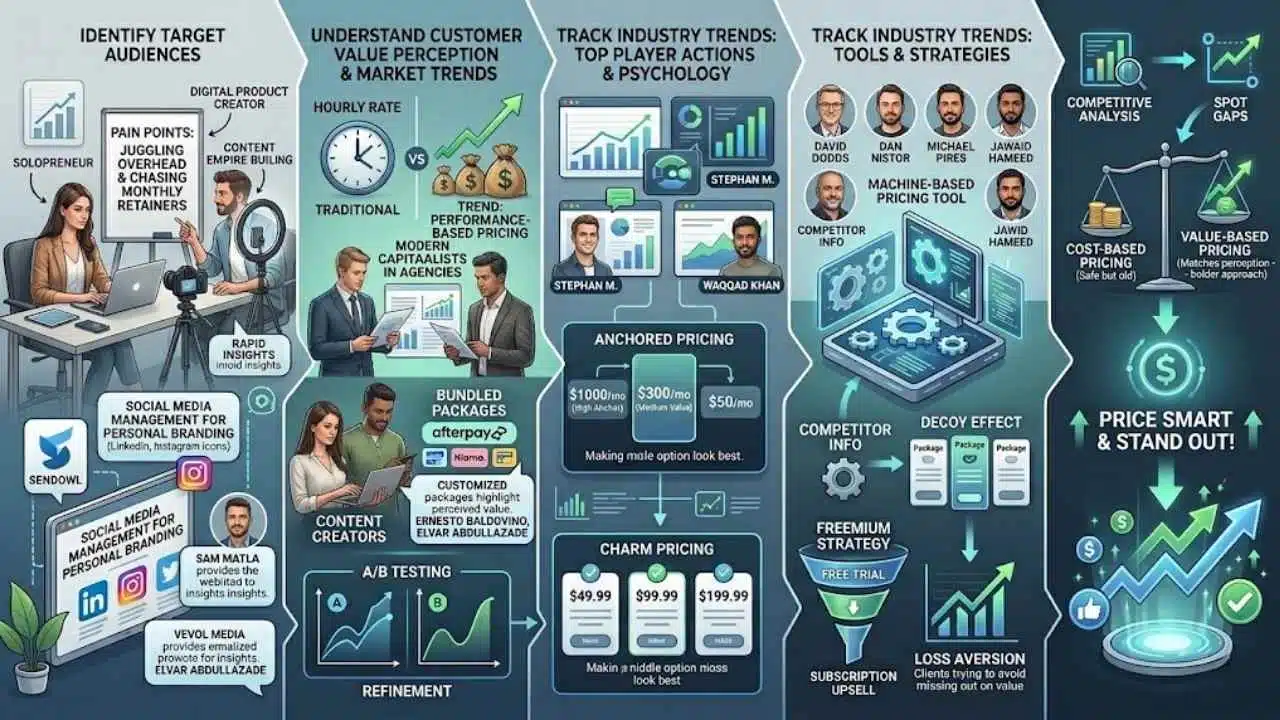
You know, jumping into pricing without sizing up the market is like sailing without a map, you might end up lost in a sea of competitors. Let’s chat about spotting who really needs your digital services, like social media management for solopreneurs, and keeping an eye on hot trends, so you can price smart and stand out.
Identify Target Audiences
Start by figuring out who needs your digital services the most. Think about solopreneurs running their own shows, or digital product creators building content creation empires. These folks often seek social media management help to boost their personal brand on platforms like LinkedIn.
Pinpoint their pain points, like juggling overhead expenses while chasing monthly retainers. Use tools such as SendOwl for insights, or tap into advice from experts like Sam Matla and Vevol Media.
This step sets the stage for your value proposition, making sure you speak directly to their needs.
Understanding customer value perception is crucial for implementing effective pricing strategies for digital offerings. – Important Fact 10
Market trends shift fast in the digital world, so track what your ideal clients value. For instance, modern capitalists in digital marketing agencies might prioritize performance-based pricing over hourly rates.
Spot groups like content creators who love bundling options with payment plans from Afterpay or Klarna. Ernesto Baldovino and Elvar Abdullazade share stories of customizing packages to these audiences, highlighting perceived value.
Explore their environment with A/B testing to refine your approach, always keeping lead management in mind.
Track Industry Trends
Stay alert to shifts in the digital services world. You spot trends by watching what top players do with their pricing models. Think of experts like Stephan M. or Waqqad Khan, who share insights on sales pages about pricing psychology.
They point out how anchored pricing strategy sets a high bar first, making other options look like steals. Chandni and Parshant Hadala often discuss charm pricing in their posts, you know, ending prices with .99 to boost appeal.
Keep an eye on these tactics; they reveal market moves.
Use machine-based pricing tools to automate your hunt for data. These helpers gather competitor info fast, saving you time. David Dodds and Dan Nistor recommend them for spotting decoy effects in packages.
Michael Pires and Jawaid Hameed talk about freemium strategies that draw in users with free trials, then upsell subscriptions. Track how these pros handle loss aversion, where clients fear missing out on value.
Competitive pricing analysis shows gaps you can fill, like with value-based pricing that matches customer perceptions. Cost-based pricing might seem safe, but trends favor bolder approaches.
Calculating Costs for Digital Services
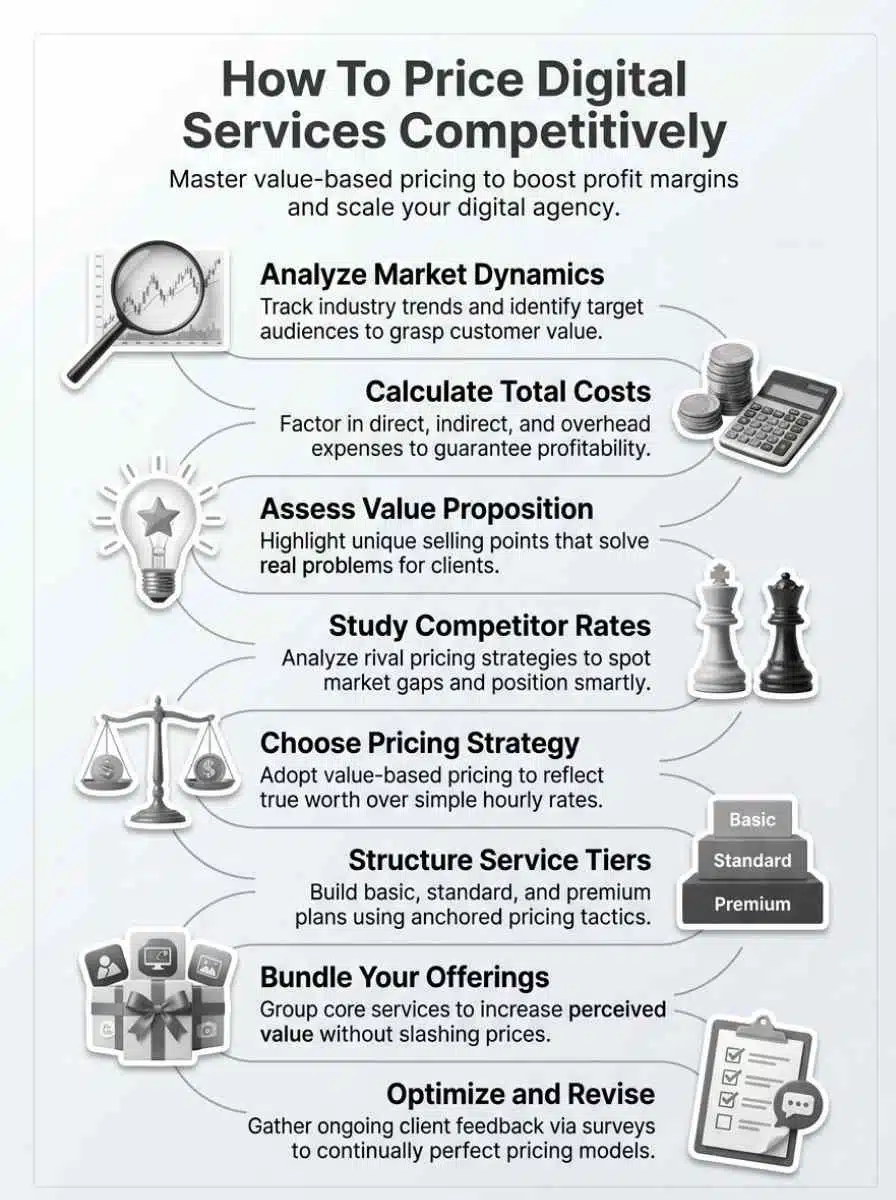
Figuring out your costs feels like piecing together a puzzle, right, where every expense counts toward your bottom line. Start by adding up direct costs like time spent on client work, then factor in indirect ones such as marketing fees and office rent, all while eyeing software tools like QuickBooks to track everything smoothly.
Account for Direct and Indirect Costs
Start by listing your direct costs, like the time you spend on client work or fees for stock images. These hit your wallet right away. Indirect costs sneak in too, such as rent for your home office or that monthly subscription to Adobe Creative Cloud.
Add them up carefully, folks, because overlooking them eats into profits. Think of it like baking a cake; you count the flour and eggs, but forget the electricity for the oven, and your recipe flops.
Value-based pricing, the gold standard for digital services, factors in these cost changes alongside customer value to set smart rates. Machine-based pricing tools automate this process, pulling in competitor data for a clear picture.
Competitive pricing analysis helps you spot where your costs stack up against rivals. Use it to avoid underpricing your digital marketing agency services. Create different pricing tiers to reflect your value proposition, and price higher than competitors when your offerings shine brighter.
Anchoring comes into play here; show a premium package first as a reference point, making lower tiers look like steals. Understanding customer value perception guides you, turning costs into a foundation for profits.
Imagine a client thrilled with your bundled offerings, that’s the win. Freemium strategy might tempt with free trials, but always cover those hidden costs to stay afloat.
Consider Tools, Softwar and Overhead
Let’s factor in those sneaky costs from tools, software, and overhead that can eat into your profits.
| Cost Element | Key Considerations | Practical Tips |
|---|---|---|
| Tools | Count every item, like graphic design kits or project trackers, as they add up fast in digital work. | Pick affordable options, say basic apps over fancy ones, to keep expenses low while you price services. |
| Software | Subscriptions for things such as editing programs or cloud storage count as ongoing hits to your budget. | Use machine-based pricing tools to automate competitor data collection, which saves time and spots smart price points. |
| Overhead | These include rent, utilities, or even internet bills that support your digital setup day to day. | Factor them into value-based pricing, the gold standard, so costs and customer value shape your rates right. |
| Direct Costs | Link straight to services, like freelance help or stock images for client projects. | Track them tight to avoid underpricing, especially in competitive analysis for digital marketing agency services. |
| Indirect Costs | Think marketing or admin time, which sneak in and affect your bottom line without you noticing. | Adjust for changes in cost structure when using value-based methods, keeping perceptions of customer value in mind. |
Assessing Value Proposition of Your Digital Services
Think of your value proposition as the secret sauce that sets your freelance graphic design apart from the crowd, you know, that special twist like using Adobe Illustrator to craft custom logos that wow clients.
Share stories from past projects where your SEO consulting turned a small blog into a traffic magnet, proving how your skills deliver real wins like boosted search rankings and more leads.
Showcase Unique Selling Points
Spotlight what sets your digital services apart, like a secret sauce that makes clients pick you over the crowd. You offer custom web designs that boost sales by 30 percent, right? Flaunt that edge.
Value-based pricing shines here as the gold standard; it weighs customer value and cost shifts to set prices that match your standout features. Picture a client grinning because your service saves them hours each week.
That kind of win builds loyalty.
Create tiered plans to highlight those perks, with a top package anchoring the options by showing up first as the premium choice. Price your offerings higher than rivals to echo their true worth, folks.
Grasp how customers see that value; it drives smart strategies. Use machine-based tools to scan competitor prices, then tweak yours to stand out. Hey, imagine bundling extras like ongoing support; it turns a simple sale into a no-brainer deal.
Explain Benefits to Clients
Clients love knowing what they get for their money, so let’s break down the perks of your digital services. Imagine, you’re not just selling hours or code; you’re delivering real wins that boost their business.
Value-based pricing shines here as the gold standard, factoring in customer value and cost shifts to set fair rates. This approach helps you price digital products higher than rivals, mirroring their strong value proposition.
Think about it like a custom-fit suit – it feels right and performs better.
You grasp customer value perception to nail effective pricing strategies for digital offerings. Offer tiered plans, like basic, pro, and premium levels, to match different needs. Bundled packages add extra appeal, combining services for more bang per buck.
Machine-based pricing tools can scan competitor data, spotting ways to highlight your benefits. Clients see the difference when you explain how your work saves time, cuts costs, or drives growth – it’s like handing them a roadmap to success.
Competitive Analysis of Digital Service Pricing
Peek at what your rivals charge for web design or app development, and you’ll spot chances to undercut them with smarter rates. Imagine turning their fixed fees into your edge, like offering flexible bundles that draw clients right to your door.
Study Competitor Pricing Strategies
You know, studying competitor pricing strategies feels like spying on the neighbors to see how they mow their lawns, but it pays off big time for your digital services.
| Key Steps | Details and Tips |
|---|---|
| Run competitive pricing analysis | Competitive pricing analysis forms a key part of setting prices for digital services. Dig into what rivals charge. Spot patterns in their rates. This helps you position your offerings smarter. |
| Use machine-based pricing tools | Machine-based pricing tools automate collecting and analyzing competitor pricing data. Think of them as your secret agents. They save time, and spot trends fast. Tools like Pricefx or Competera fit right in here. |
| Explore value-based pricing | Value-based pricing stands as the gold standard for digital products and services. It factors in cost structure changes and customer value. Price higher than competitors to match your value proposition. Clients see the worth, and pay up. |
| Try anchored pricing strategy | Anchored pricing strategy shows a high-priced package first. It acts as a reference for cheaper options. Picture dropping a big number, like an anchor, to make others look like steals. This boosts perceived value. |
| Build different pricing options | Creating different pricing options or tiers works well for digital product pricing. Develop tiered pricing plans. Bundle offerings to suit various needs. This draws in more clients, from budget folks to big spenders. |
| Grasp customer value perception | Understanding customer value perception matters a lot for effective pricing strategies in digital offerings. Talk to clients, like in a casual chat over coffee. Learn what they value most. Adjust prices to reflect that insight. |
| Tailor for digital marketing agencies | Digital marketing agency services need specific pricing strategies. Match them to your agency’s offerings and market spot. One agency I know priced social media management higher by highlighting quick ROI. Competitors followed suit, but they led the pack. |
Spot Market Opportunities
Spot market opportunities in your competitive analysis. Look closely at what rivals charge for similar digital services. Competitive pricing analysis plays a key role here, helping you set prices that stand out.
Say a competitor skimps on extras, like custom reports in digital marketing; you spot the gap and bundle them in your package. Tools powered by machines automate this hunt, gathering data on prices without the hassle.
They scan the web, crunch numbers, and highlight spots where your value shines brighter.
Customer value perception guides you too. Think of it like finding treasure in a crowded beach, where others miss the gold. Digital marketing agencies tailor strategies to fit their spot in the market, so watch how clients react to prices.
If folks crave faster results but pay premium for slow ones elsewhere, jump in with a quicker option at a smart rate. Machine-based pricing tools make this easy, pulling insights on trends and gaps.
You build packages that feel like a perfect fit, drawing clients your way.
Selecting a Pricing Strategy for Digital Services
Picking the right pricing strategy feels like choosing the perfect outfit for a big date, you want it to fit just right and impress. Think about hourly rates for those quick tasks, or switch to project-based fees when jobs get bigger, and don’t forget value-based pricing that charges based on the real worth you deliver to clients, like a custom web design that boosts their sales.
Compare Hourly vs. Project-Based Rates
You face choices in pricing your digital services, like hourly rates or project-based ones, and picking the right fit can boost your earnings big time.
| Aspect | Hourly Rates | Project-Based Rates |
|---|---|---|
| Core Idea | Charge by the hour for time spent on tasks. This suits flexible work, such as ongoing tweaks in digital marketing agency services. | Set a fixed price for the whole job. Clients love this for clear budgets, and it ties into value-based pricing, the gold standard for digital products and services. |
| Pros | Gives steady income if jobs drag on. You track every minute, so no surprises in pay. Think of it as a safety net, catching all your effort. | Encourages efficiency, letting you earn more per project. It highlights your value proposition, often priced higher than competitors to reflect true worth. |
| Cons | Clients might haggle over hours, feeling like they’re paying for air. Scope creep can bite you without extra fees. | Risks underestimating time, eating into profits. Changes in cost structure or customer value need quick tweaks, as in value-based pricing. |
| When to Use | Go for this in uncertain projects, where trends shift fast. Competitive pricing analysis helps set fair hourly figures, using machine-based pricing tools to automate data grabs. | Pick it for defined scopes, like bundled offerings in tiered pricing plans. Anchored pricing strategy shines here, show a high package first as a reference for cheaper ones. |
| Real Talk Example | Imagine billing $50 an hour for web tweaks. A client calls mid-job, adds tasks, and your paycheck grows. But hey, they might grumble about the clock ticking. | Picture quoting $5,000 for a full site build. You finish early, pocket the full amount, and the client sees huge value. That’s understanding customer value perception in action. |
| Tailoring Tip | Adjust based on market positioning. For digital offerings, mix in direct costs like tools and software. | Implement this with different pricing options or tiers. It creates market opportunities, especially when spotting gaps via competitor strategies. |
Implement Value-Based Pricing
Value-based pricing stands as the gold standard for digital products and services. Focus on what clients truly value. This method accounts for shifts in cost structure and customer value.
Grasp how customers perceive your offerings. That perception drives effective strategies. Picture a digital marketing agency. They tailor prices to match client benefits. Charge more than competitors to highlight your value proposition.
Use anchored pricing. Present a high-priced package first. It sets a reference for cheaper options. Clients see the deal in lower tiers. Create different pricing options or tiers. This boosts appeal.
Machine-based pricing tools automate competitor data collection. They help spot value gaps. Digital products often deserve higher prices. Reflect their strong value. A client saves time with your service.
Price based on that savings. Talk to clients about their needs. Adjust prices from feedback. Value-based pricing needs a systematic, step-by-step approach. Track industry changes. Stay competitive.
Your services solve real problems. Price them to show that. Clients appreciate the fit.
Optimize and Revise Pricing Tactics
You know, tweaking your prices feels like fine-tuning a guitar, it keeps everything in harmony with what clients really think. Grab those opinions through quick polls on platforms like SurveyMonkey, then swap in project rates for hourly ones if the data screams for change, and watch your business groove better.
Collect Client Feedback
Gather client feedback to fine-tune your digital service prices. Clients often share honest thoughts on what they value most, like speedy delivery or standout results. Send out quick surveys after projects wrap up.
Ask about their take on your rates versus the benefits they got. This step uncovers if your value-based pricing hits the mark, the gold standard for digital offerings. It accounts for shifts in customer value and costs, as fact five points out.
Picture a client saying, “Hey, I’d pay more for that extra feature,” turning insights into action.
Use tools like SurveyMonkey or Google Forms to automate feedback collection. These make it easy to spot patterns in how clients perceive your value, key for effective strategies per fact ten.
Chat with them over coffee or calls for deeper stories. One agency owner learned from feedback that tiered plans boosted sales, aligning with fact three. Spot gaps where your prices shine brighter than competitors, echoing fact seven.
Keep it light, maybe joke, “Feedback’s like free advice from your biggest fans.” This keeps your pricing competitive and client-focused.
Evaluate and Improve Pricing Structure
You collect client feedback to spot what’s working in your pricing, and what needs a tweak. Clients might say your tiers feel just right, or they want more value for the buck. Act on that input fast.
Look at how value-based pricing fits, since it weighs cost shifts and what customers truly value. Yeah, it’s the gold standard for digital services, helping you price higher than rivals to match your strong points.
Machine-based tools pull in competitor data automatically, making analysis a breeze. Think of it like a treasure hunt, where spotting gaps leads to smarter tweaks.
Picture a digital marketing agency revamping its setup after feedback shows bundles sell best. They use anchored pricing, dropping a high-end option first to make others look like steals.
This boosts sales, no doubt. Keep testing those tiers, as different options draw in varied crowds. Customer value perception guides every change, keeping things fresh and on point.
Stay sharp, adjust often, and watch your revenue climb.
Structuring Your Digital Service Packages
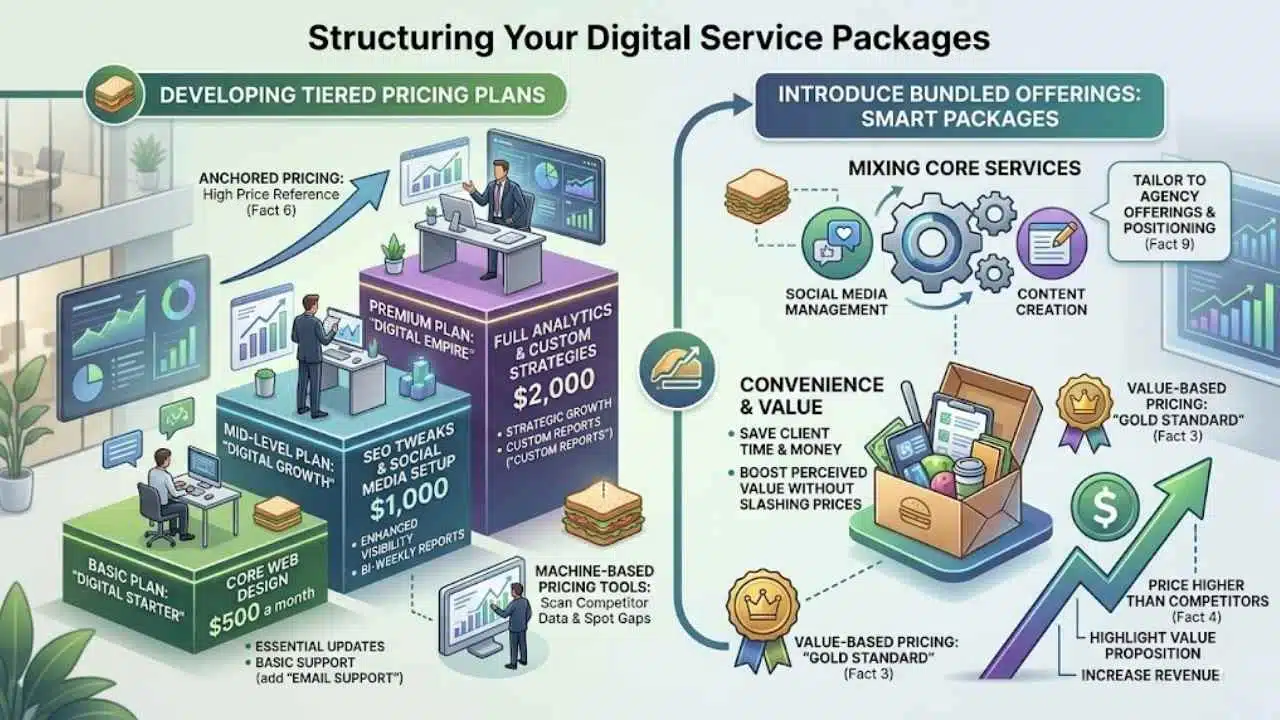
Picture your digital services as a build-your-own sandwich bar, where clients pick what fits their appetite and budget. Create basic, standard, and premium tiers with bundled extras like email support or custom reports to draw in more buyers and ramp up your earnings—curious for the full scoop?
Develop Tiered Pricing Plans
You want to stand out in the digital services game, so build tiered pricing plans that fit different client needs. Start with a basic tier for simple tasks, like a starter package at $500 a month for core web design. Then, add a mid-level option with extras, such as SEO tweaks and social media setup for $1,000. Top it off with a premium tier that includes full analytics and custom strategies for $2,000. This setup uses anchored pricing, where you show the highest package first as a reference point, making lower ones seem like steals. Clients love choices, and this mirrors value-based pricing, the gold standard for digital products.
Picture a client eyeing your tiers, they pick what matches their budget and goals. Use machine-based pricing tools to scan competitor data and spot gaps. For a digital marketing agency, tailor these tiers to your market spot, pricing higher than rivals to highlight your value. Think of it as a menu at your favorite diner, options keep everyone happy without overwhelming them. Gather feedback to tweak, but keep pushing that perceived value high.
Introduce Bundled Offerings
Bundled offerings group your digital services into smart packages that save clients time and money. Think of them like a combo meal at your favorite drive-thru, where you get more bang for your buck.
You create these bundles by mixing core services, say, social media management with content creation for a digital marketing agency. This approach tailors strategies to the agency’s offerings and market positioning, as fact nine points out.
Clients love the convenience, and you boost perceived value without slashing prices.
Tie bundles to value-based pricing, the gold standard for digital products and services. Factor in customer value perception, crucial for effective strategies, per fact ten. Offer tiers, an effective move from fact three, with a high-priced package first to anchor the rest, like fact six describes.
Price these higher than competitors to highlight your value proposition, as fact four suggests. Clients see the real benefits, and your revenue climbs.
Final Thoughts
You’ve learned to analyze market trends, calculate your costs, and assess your value to price digital services right. These steps make pricing simple and quick to apply in your business.
Smart pricing boosts your profits and helps you stand out in a crowded field. Check out pricing tools like Price Intelligently for more help on competitor analysis. Go ahead, tweak your rates today, and watch your digital agency thrive like never before.
FAQs
1. How do I start pricing my digital services to stay competitive?
Hey, think of it like setting the right bait for fish in a crowded pond, you want to attract clients without underselling yourself. First, check what others charge for similar work, then add your special twist based on value. That way, you hit the sweet spot.
2. What role does market research play in pricing digital services?
Market research is your secret weapon, like a detective scoping out the scene before making a move. It helps you spot trends and competitor prices so you can adjust yours smartly.
3. Should I use value-based pricing for my digital offerings?
Absolutely, value-based pricing is like charging for the golden egg, not just the goose. Focus on what benefits clients get, and set fees that match that worth; it often beats hourly rates hands down.
4. How can I avoid common pitfalls when pricing competitively?
Watch out for the trap of copying prices blindly, it’s like following a map to a dead end. Instead, factor in your costs and client feedback, tweak as you go, and remember, a little humor in negotiations can lighten the load and seal the deal.