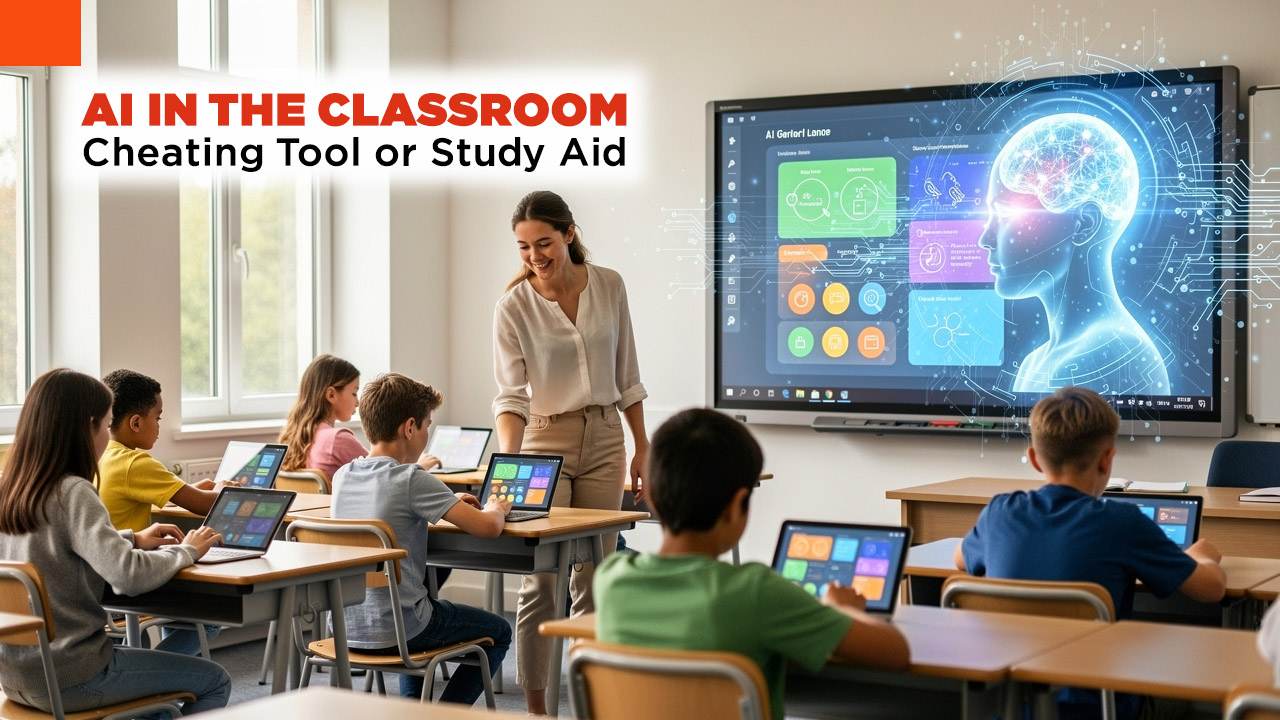
Have you noticed how quickly things are changing at school these days? Many teachers and students feel conflicted about artificial intelligence. It can make schoolwork easier and faster—sometimes a bit too easy. Students often wonder whether using AI for homework counts as cheating or simply a smarter way to study.
Parents and teachers are also questioning whether this new technology is improving learning or making it worse. One surprising fact stands out: more than half of teens now use AI chatbots to help with their schoolwork.
This guide breaks down how AI tools are transforming schools today. It explores the big question: AI in the Classroom: Cheating Tool or Study Aid? The discussion looks at where these tools support learning, where they create problems, and what students, teachers, and parents need to watch for.
So, grab a cup of coffee and follow along as the topic unfolds.
The Rise of AI In The Classroom: Cheating Tool Or Study Aid?
Classrooms buzz with digital tools that help students learn, solve problems, and ask questions in new ways. The landscape changed fast, especially following the April 2025 White House Executive Order that pushed for stronger K-12 AI literacy across the United States. Teachers and kids alike find these tools popping up everywhere. This shifts how learners tackle their work each day.
Overview of AI adoption in classrooms
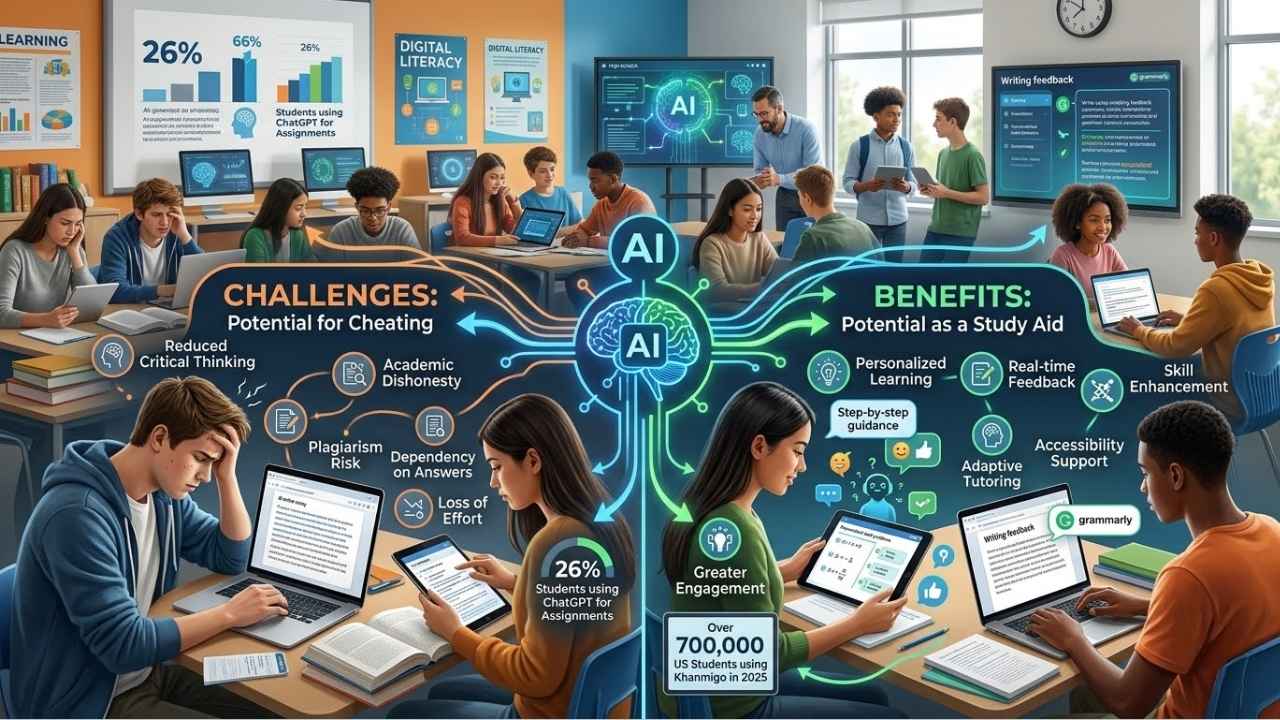
AI tools have started to pop up in many classrooms across the US. A recent 2026 Nerdynav tracking report shows that 26% of US middle and high school students actively use ChatGPT for their assignments.
One in ten teens say they complete most or all their schoolwork with help from these digital assistants. These numbers reflect a massive shift in how technology shapes education today.
Generative AI offers real-time support and feedback to students. Teachers and schools see artificial intelligence as a key educational technology for learning enhancement and classroom innovation.
For example, tools like Duolingo Max and Khan Academy’s Khanmigo are now integrated directly into US district partnerships. In fact, Khanmigo reached over 770,000 US students in 2025 alone.
“The adoption of AI tutoring tools is the biggest one-year jump I have seen in education technology.” – Kristen DiCerbo, Chief Learning Officer at Khan Academy
Common AI tools used by students
Students in classrooms now use many AI learning tools. More than half of US teens rely on them for schoolwork in some way.
To give you a clear picture of what kids are actually using, here is a quick breakdown based on 2025 Feedough data:
| AI Tool | Primary Use Case | Student Preference Rate |
|---|---|---|
| ChatGPT | Brainstorming, drafting essays, summarizing reading | 66% of students prefer it |
| Grammarly | Real-time grammar editing and writing clarity | 25% use it as their primary assistant |
| Khanmigo | Step-by-step math help and interactive tutoring | Explosive growth to over 700,000 US K-12 users |
Here are a few other popular options you might see:
- Homework assistance apps such as Socratic by Google answer math equations and explain science concepts using step-by-step guides.
- AI-powered language translators like DeepL help with foreign language homework so students can check translations fast.
- Study aids such as Quizlet leverage artificial intelligence to make flashcards that adapt to each learner’s weaknesses.
- Voice assistants like Siri and Alexa look up facts or set reminders for homework deadlines.
These educational technology options changed how students approach study time. Experts say the use keeps rising each semester. Teens show no sign of slowing down their AI adoption.
How Students Use AI in the Classroom
Kids often turn to AI for quick answers. Sometimes it feels like having a clever friend sitting next to you in class. A neat trick I have seen students use is treating the AI as a planning partner to outline a tough project before they even start writing. Some use it to make hard homework feel like a walk in the park. Others push the limits just to see how much they can get away with.
As a study aid for personalized learning
AI chatbots and learning tools help students shape their own study paths. With real-time feedback, a student can ask questions and see clear explanations in seconds. Teens often use these classroom study aids to get better at subjects that challenge them.
A 2025 McKinsey report indicates that personalized AI learning can improve student outcomes by up to 30%. Tools like Khanmigo adjust in real time to a learner’s strengths and weaknesses. It helps them learn two to three new skills a week.
Generative AI opens the door for deeper student engagement by offering quick quizzes and easy-to-follow examples. It gives hints when someone gets stuck on an assignment.
Many teachers notice how students who use such technology feel more confident finding answers on their own. This supports ethical, independent learning choices.
As a shortcut for assignments and tests
Some students use artificial intelligence as a shortcut for homework or tests. These digital helpers can write essays or suggest answers on quizzes at lightning speed.
Here are a few quick facts about how this plays out in schools right now:
- About one in ten teens finish most of their schoolwork with AI tools.
- Late 2025 research from Stanford University found that the overall cheating rate has not spiked, but students are shifting from copying peers to using AI.
- A recent survey showed that 26% of K-12 teachers have caught a student cheating with ChatGPT.
Teachers worry that this trend could hurt academic integrity. For some kids, it becomes easy to rely on chatbots instead of practicing critical thinking.
The Debate: Cheating Tool or Study Aid?
Some say using AI for homework is like bringing a calculator to a spelling bee. Others argue it opens doors and helps students learn smarter. The numbers lean toward the positive side. Recent AIPRM data shows that 51% of teachers believe AI will have a positive impact on education, compared to just 21% who hold negative views.
Arguments for AI as a learning tool
Artificial intelligence is quickly becoming a common classroom tool. Students and teachers are using it in fresh ways every day.
- AI chatbots help students finish their schoolwork and creative writing tasks by offering hints in real time.
- Teachers using AI for lesson planning report major time savings, especially for drafting emails and supporting diverse learners, according to a 2025 Michigan Virtual pilot study.
- Digital learning with AI brings more resources to all students, closing gaps faster by meeting students exactly where they are.
- Many students find it easier to get answers about tricky topics through AI than waiting for a teacher’s response in a busy classroom.
- Real-time data from these tools show patterns in how students learn, helping teachers make better choices on lesson plans.
Concerns about AI enabling academic dishonesty
Some teachers and parents worry about students using AI to cheat in school. These concerns grow as more teens use chatbots for their homework.
- Many students use generative AI tools for schoolwork. Some copy answers from these tools without understanding the material.
- Teachers notice a change in how cheating happens. A 2025 survey showed 64% of teachers say AI-powered essay generators are the most common cheating method they observe.
- There is a growing cheatbot problem where students use AI to solve complex calculus or translate foreign languages instantly, bypassing the learning process entirely.
- Some schools struggle to spot AI-generated work. In some university tests, up to 94% of AI-written text went completely undetected by basic grading software.
The Role of Educators in Managing AI Usage
Teachers wear many hats, and they are now adding AI coach to the mix. They guide students through digital mazes, helping them use smart tools wisely and fairly.
This is happening at the highest levels of administration. For instance, the Los Angeles Unified School District mandated specific Digital Citizenship in the Age of AI instruction for the 2025-2026 school year.
Promoting ethical AI usage
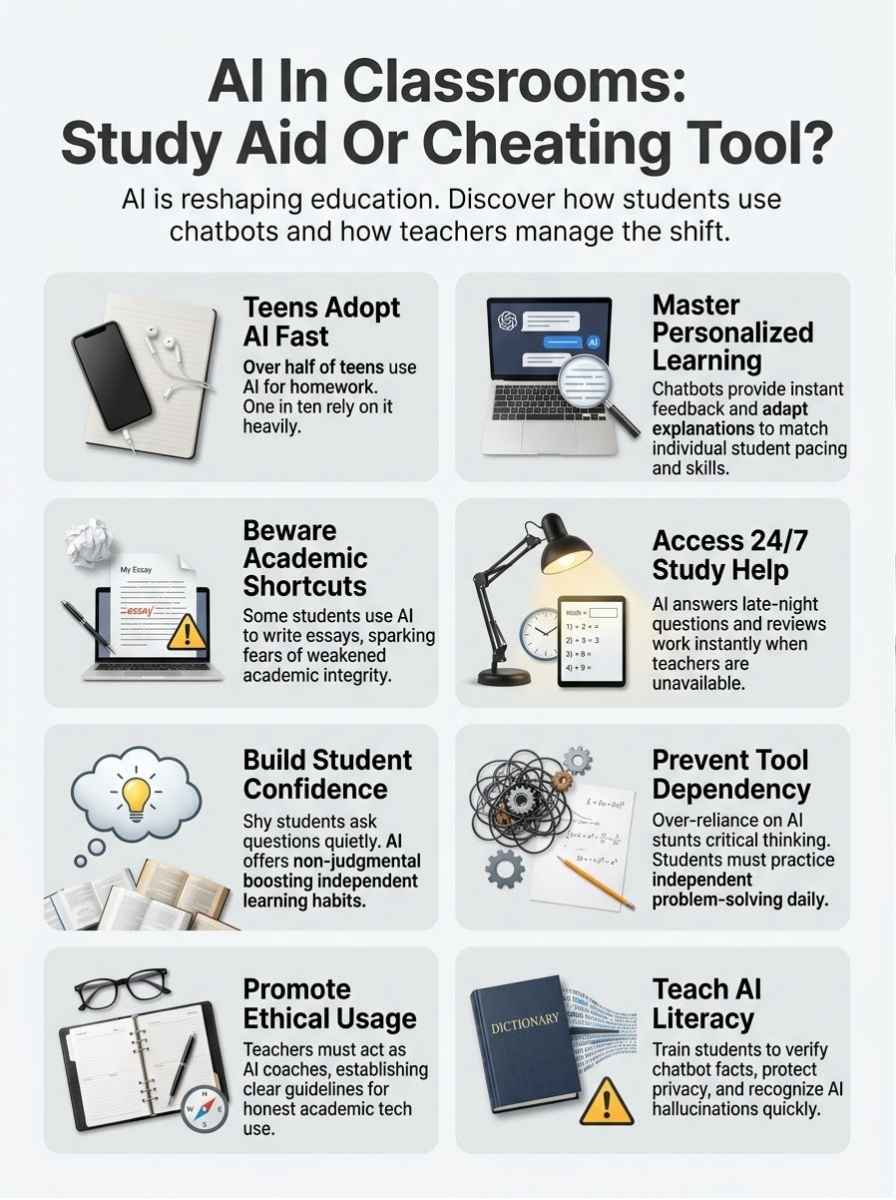
AI should help students learn, rather than just finish work for them. Using AI chatbots to get quick answers might seem easy, but it can lead to poor learning habits.
Surprisingly, 46% of students admit they have used AI for schoolwork without their teacher’s approval.
Clear guidelines make a big difference. The Center for Reinventing Public Education suggests that district AI policies must clearly define what constitutes simple brainstorming versus actual plagiarism.
Teaching students about academic integrity builds good habits early on. Schools can promote ethical use by showing examples where technology supports learning. They must also have open conversations about data privacy, so kids know why they should never share personal information with a chatbot.
Teachers face a new challenge as students use generative AI tools for schoolwork. Some students use these digital learning programs for honest support, while others try to find shortcuts.
“We are making cheating the harder option by shifting to in-class writing assessments or oral presentations.”
Many elite schools are moving away from basic AI detection software because it often fails or flags innocent students. Setting fair policies and having regular conversations remind everyone that doing your own work still matters.
Advanced assessment tools are just one click away, but honesty is a daily practice.
Benefits of AI as a Classroom Study Aid
Students get instant help right at their fingertips. Teachers spot learning gaps faster, making every lesson count even more.
Improved access to resources and feedback
AI gives quick help for schoolwork. A staggering 88% of students now use generative AI tools for assessments, up from 53% just a year ago.
These learning aids work like smart helpers, answering questions day and night. If you need facts for a science project at 9 p.m., you can ask an AI chatbot and get answers fast.
- Students can type in essays or math problems and see what went right or wrong in seconds.
- Feedback is no longer slow or silent.
- Teachers rely on AI to spot errors that may slip past tired eyes late at night.
- Tools like Gradescope help educators automate the grading process, which means students get their feedback much faster.
Enhanced learning personalization
AI tools can adjust to each student’s pace and style. A chatbot can spot where a teenager gets stuck in math, then explain tough ideas using simple words.
Over half of US teens now use AI chatbots for help with their schoolwork. This acts like a 24/7 personalized tutor.
Even students who struggle or feel shy asking questions out loud can get support quietly on their phones or laptops. They do not have to raise their hands in a crowded room.
Generative AI does not just repeat facts. It asks follow-up questions or gives feedback right as a student types an answer. Students finish assignments at different speeds, but artificial intelligence keeps track and shifts its approach without getting tired.
Challenges of AI Usage in Education
Relying on AI too much can stunt growth, much like training wheels that never come off. Some students may miss the chance to build strong thinking skills if they use these tools for every single task.
“When a tool can mimic understanding, students can unwittingly submit competence without building it.”
The risk of dependency on AI tools
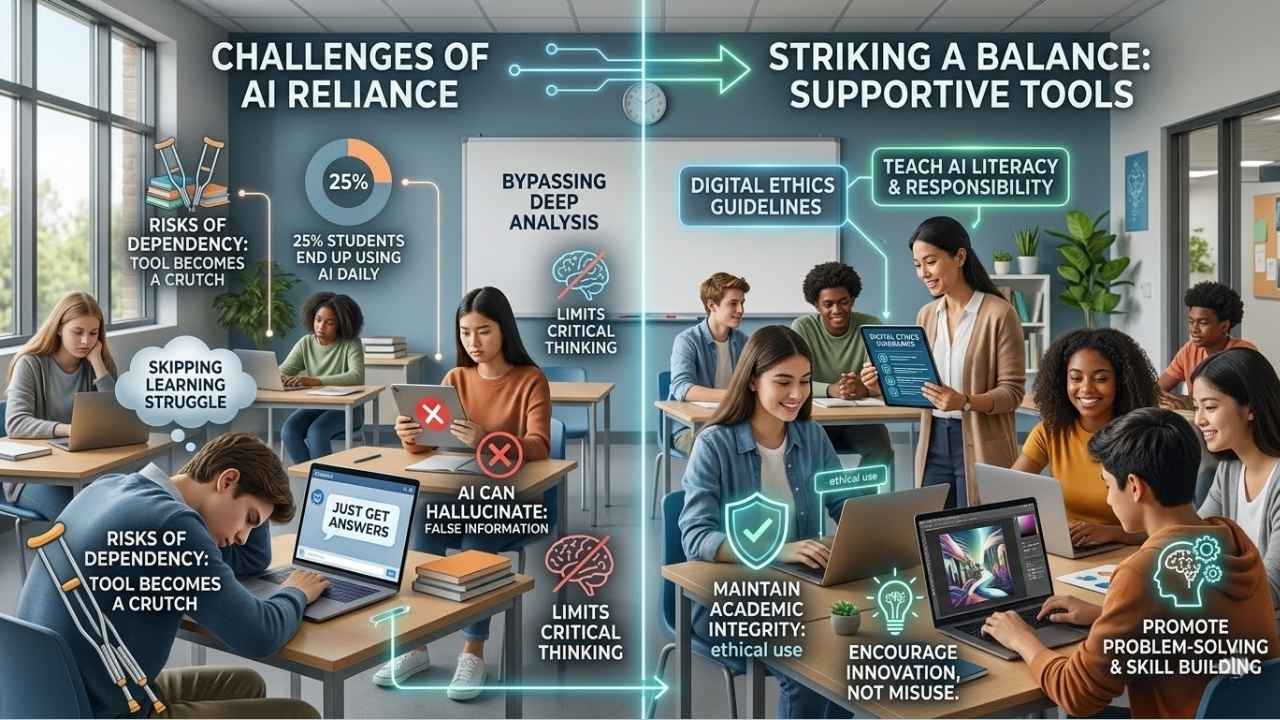
Many students turn to artificial intelligence for homework help or quick answers. Data shows that about 39% of students start using generative AI just out of curiosity, but a full 25% end up using it daily for academic work.
This easy access tempts some to let the tools do all the thinking. If students skip the struggle of learning, they submit a false competence without actually building the skill.
Artificial intelligence offers fast feedback, but students may miss learning how to solve problems on their own.
If used too often, a helpful classroom tool quickly becomes a crutch instead of an aid for real learning progress.
Limitations of AI in fostering critical thinking
AI tools hand out quick answers, which makes it tempting for students to skip thinking things through. Instead of working out tough problems, some might just copy what the chatbot says.
Here are the main drawbacks to critical thinking:
- Generative AI can offer homework assistance at lightning speed, but it does not teach students how to debate answers.
- AI can hallucinate, presenting completely false information as hard facts.
- Using AI to bypass reading, like asking a bot to summarize a novel, kills deep analytical skills.
Critical thinking grows best through practice, mistakes, and personal discovery. It does not grow from instant tech replies.
Striking a Balance: AI as a Supportive Tool
Teaching kids how to use AI in class is like showing them how to ride a bike. You put safety first, but you also let them have some fun.
With the right skills and guidance, students can use these tools for more than just shortcuts.
Teaching AI literacy and responsibility
Students reach for Artificial Intelligence faster than you can say pop quiz. Teaching smart and ethical use in the classroom matters now more than ever.
- Schools need to teach AI literacy so students know how AI tools work and where they can trip up.
- Teachers must explain that copying answers from a chatbot is not honest learning.
- Class discussions about digital learning ethics keep academic integrity at the center of classroom innovation.
- Students should learn to double-check AI-generated information because chatbots sometimes mix facts with mistakes.
- Good teachers encourage asking questions and thinking for yourself rather than letting technology do all the heavy lifting.
Encouraging innovation over misuse
Innovation can spark growth and joy in any classroom. Promoting creative uses of artificial intelligence helps students learn and stay engaged.
- Teachers can reward efforts that push boundaries, like using AI to code a simple game or generate art for a presentation.
- Educators show fun ways to explore digital learning tools for homework assistance, like using AI chatbots to explain hard topics.
- Direct examples help teens see that AI can be more than a shortcut for assignments, shaping technology into a trusted study aid.
- Assignments sometimes ask learners to try out new artificial intelligence tools and then reflect on what worked well or what fell flat.
- Lessons highlight stories from experts about how generative AI leads to greater student engagement through interactive learning experiences.
Final Thoughts
AI tools in the classroom often spark strong opinions, yet they offer real opportunities to improve learning and support student growth. Teachers and students can use these tools easily, turning difficult homework tasks into more manageable challenges. Lessons can even start to feel like a conversation with a helpful guide.
A key question remains: how can fairness and support be balanced when technology becomes part of schoolwork? When used responsibly, AI can increase student engagement while still keeping honesty at the center of learning. The debate around AI in the Classroom: Cheating Tool or Study Aid? will likely continue as technology evolves.
Looking for more tips or simple guides on digital learning? Exploring online resources from local libraries or trusted education blogs can help identify tools and strategies that work best. Taking small steps today may lead to smarter success tomorrow. Many students are already finding that combining traditional study methods with modern technology can significantly improve their learning habits.