


Are you planning to buy an RDP server online?
While it may seem like a convenient option, there are several factors that you need to consider before making a purchase.
With the increasing number of online sellers, it can be challenging to identify the right one that meets your requirements.
From security concerns to performance requirements, buying an RDP server is not a decision to be taken lightly.
In this article, we will discuss 8 essential things that you need to watch out for while buying an RDP server online.
Whether you’re an IT professional or just starting your tech journey, these insights can save you time, money, and headaches.
Curious to learn more? Read on!
What Is An RDP Server?
An RDP Server is a powerful computing machine that has been configured for remote access using the Windows Remote Desktop Protocol (RDP).
Think of it as a computer that’s ready and waiting to let you control it from anywhere and any device via the Internet.
The RDP Server sends everything you see on its screen to your device and receives your commands, like mouse clicks and keyboard strokes, from your device.
Using this server, you can remotely access files, run applications, and work as if you were sitting in front of the server computer itself.
It offers a convenient way to work or access resources from a distance.
Note: An RDP Server is often called “RDP” on the Internet. It’s just another way of referring to the same thing.
What Are The Things To Watch Out For While Buying An RDP Server Online?
1. Overselling: Many RDP providers, in order to earn more profit, oversell their RDP servers. They add more than 40-50 users per server in shared slots, assuming that not all of them will be online at the same time.
The problem arises when many users come online simultaneously during peak periods, causing the server to crash or reboot. This can lead to data loss and cause significant disruption to your work.
Frequent reboots can also corrupt your app installations, causing even more problems.
To avoid these issues, it’s essential to check the total number of users per server before making a purchase.
If this information is unavailable on the provider’s website, you can contact their support team and ask directly.
A good rule of thumb is to avoid providers with more than 30 users per server, especially if the server configuration is low.
For optimum performance, it’s best to choose providers who offer shared RDPs with no more than 15 users per server.
2. Lousy Refund Policy: Some RDP providers have refund policies that are either not very good or come with lots of tricky conditions that can make getting a refund a real hassle.
Here is one such example:
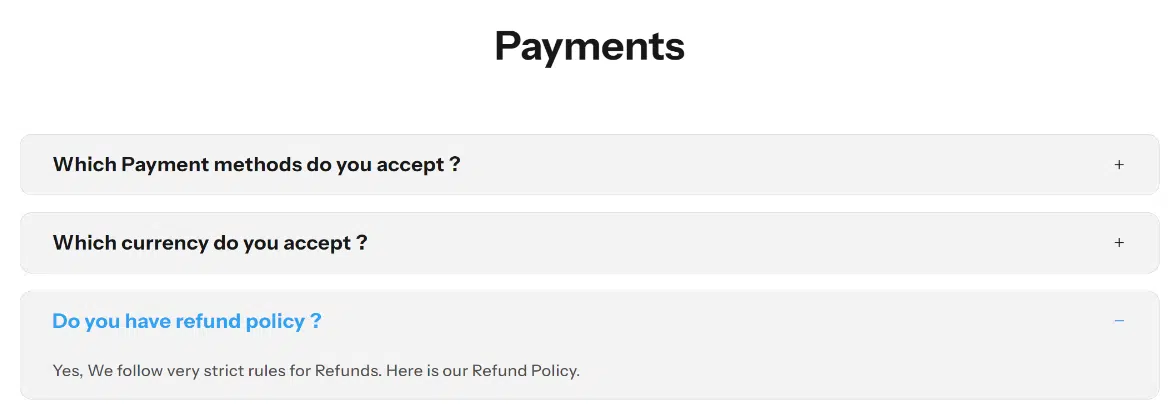
In the image above, you’ll notice the provider uses the term “strict rules” and doesn’t even provide a clickable link to learn more about their refund policy. When you come across something like this, it’s a warning sign. It suggests that getting a refund might not be straightforward.
There are also some providers who offer refunds, but their conditions can be really broad and vague, making it tough for you to actually get your money back.
Here is one such example:
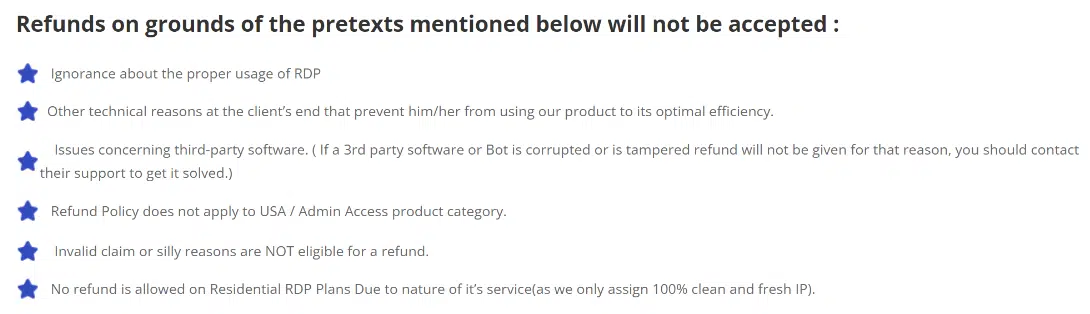
With providers like the one in the image, requesting a refund might result in a denial. They might claim that you’ve broken their vague terms of service, leaving you stuck and frustrated.
To avoid this hassle, go with RDP providers with a “no questions asked” refund policy. This way, you can test their services without risk, and if you’re unsatisfied, you can easily get a refund.
3. Poor Security: When it comes to choosing an RDP provider, security is a crucial aspect to consider.
New providers may not be fully aware of the security challenges they could face, and as a result, they might not secure their servers properly.
This can lead to serious issues like your server getting hacked or compromised.
Hackers often take advantage of such vulnerabilities and use the compromised servers for illegal activities like DDoS attacks, ransomware, and dating scams.
Worst of all, if you’re associated with such a server, you might end up under investigation by local law enforcement.
To stay on the safe side, it’s highly recommended to choose experienced RDP providers who have proven themselves over time.
Aim for providers with at least 5 years of experience in the industry.
You can use a whois tool (https://www.whois.com/whois/) to determine the domain age of an RDP provider, which will give you a rough idea of their total experience in the industry.
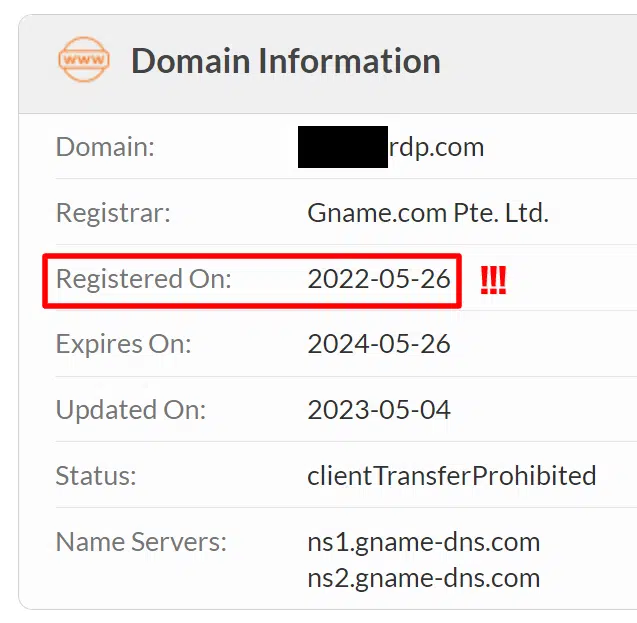
Another trick is to check the order number generated in your invoice. The higher the value, the greater the provider’s experience.
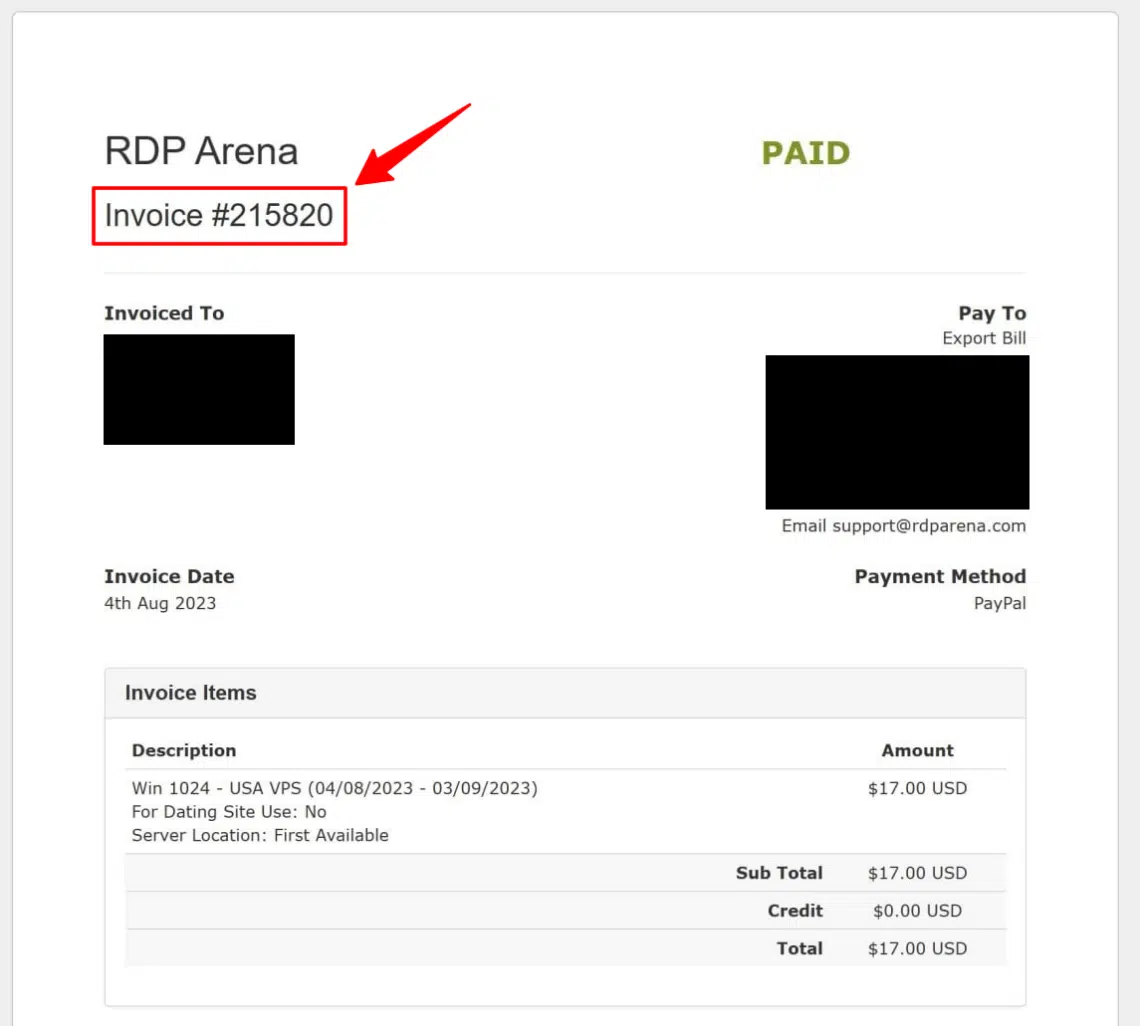
Do note that this might not be an accurate indicator in all cases. Still, it will give you a rough idea of the number of orders processed by your RDP provider.
By following these steps and opting for an experienced provider, you can safeguard yourself from potential security risks and have a safer remote desktop experience.
4. Bad Customer Support: When you visit RDP server websites, you’ll often see them boasting about 24×7 customer support. But, in some cases, it’s more of a marketing gimmick than a guarantee.
Providers who employ such marketing tactics can often make you wait for hours or even days when you try reaching them via live chat or support tickets.
The reason behind this is that these providers try to cut costs by hiring only a few support staff, and they struggle to handle the load of customer queries.
This can be frustrating, especially if you have urgent issues that need to be resolved.
Another issue is the lack of qualified support. Some providers outsource their support teams to save money.
Unfortunately, these outsourced support staff are often unprofessional and have little to no knowledge of the technical aspects of an RDP. This leads to prolonged and unresolved support ticket queues.
To avoid these headaches, it’s better to test an RDP provider’s responsiveness and support quality before making a purchase.
Just reach out to them via support or live chat and ask a few technical questions.
If you find that they answer late or provide unclear responses, it might be better to look for another RDP provider with an experienced support team.
5. Blacklisted IP Addresses: Some RDP providers aren’t as vigilant as they should be in discouraging users from wrongful activities.
Unfortunately, this can attract unethical customers who misuse the service for illegal activities like hacking, DDoS attacks, fraud, spamming, etc.
This is especially common with RDP providers who only accept virtual currency payments, which cyber criminals prefer.
Such illegal activities can lead to the RDP IP getting flagged as Spam, which can create a hindrance in your regular activities since your access to specific websites might get blocked.
For example, if you’re a drop shipper and you’ve purchased an RDP to manage your business across different platforms, your account might get blocked just because a previous user misused the RDP on one of those platforms.
To avoid such issues, it’s a good idea to check your potential RDP Server’s IP address on blacklist databases like:
a) https://www.dnsbl.info/
b) https://www.spamcop.net/
c) https://www.barracudacentral.org/
This way, you can make an informed decision and protect your online activities.
If the RDP provider doesn’t want to share the IP address before you purchase, look for ones that offer a money-back guarantee or a free trial. This way, you can test the IP yourself and see if it’s safe to use.
6. Scams: RDPs have gained a lot of popularity over the years, but unfortunately, this has attracted many scammers to the industry.
These scammers create websites that may seem legitimate at first glance and use them to trick unsuspecting people.
One common trait of these scammers is that they accept payments through irreversible payment methods, e.g., virtual currencies.
This means that if you fall victim to their scam, it’s impossible to get your money back.
To protect yourself from such scams, here are a few smart steps you can take:
a) Check the provider’s Google or Bing business listing to see if they have a legitimate presence. This can be a good indicator of their authenticity.
b) Look for reviews and feedback from other users. Check their social media pages to see what people are saying about their services. Positive reviews from real customers are a good sign.
c) Use a whois tool (https://www.whois.com/whois/) to check the domain expiry of their website. If the domain is about to expire soon, it might be a red flag.
Remember, it’s crucial to avoid providers who lack any business listings, reviews, or social media presence, or have near-expiry domains.
7. Hidden Conditions: Beware of RDP providers who offer their services at unbelievably low rates. They often have hidden conditions that you may need to comply with.
This is because they usually oversell their servers, and to maintain stable performance, they have no other option but to impose multiple conditions on the user.
Here is one such example:
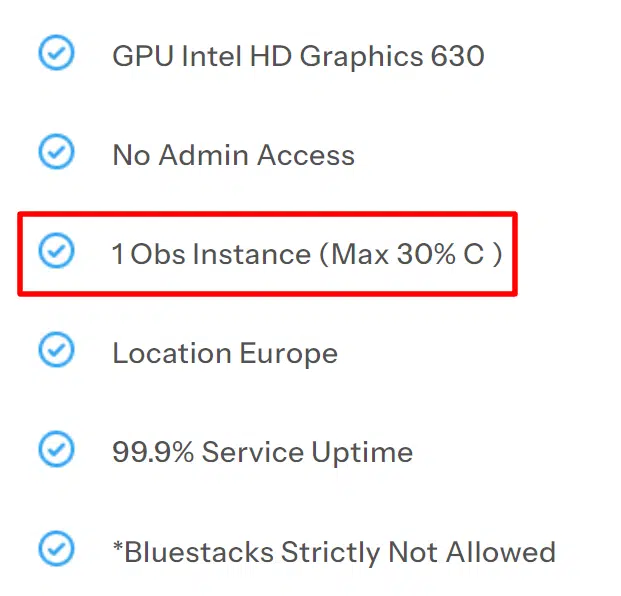
In this case, the provider is offering a streaming RDP, but they have limited their users to only 30% of CPU usage at one particular time, which severely impacts the user’s productivity.
They’ve also worded the condition vaguely, making it difficult to understand.
To make matters worse, this condition is buried amongst many other features, which makes it easy to overlook.
This is why it’s vital to read the entire feature list thoroughly to understand any limitations or conditions.
Sometimes, these restrictions are hidden deep within the Terms of Service, which often go unnoticed by users.
Later when a user, unaware of the conditions, tries to get a refund, the provider declines it by citing a violation of their terms.
To avoid such pitfalls, go through your RDP provider’s policy pages to get a clear understanding of what to expect.
This way, you can make an informed decision and have a more satisfying RDP experience.
8. Drip Pricing: Competition in the RDP market is fierce, and some providers are using a strategy called “drip pricing” to stay in the game.
This tactic involves displaying a low initial price, but during checkout, they sneak in extra charges like processing fees and payment gateway costs.
Take a look at this example:
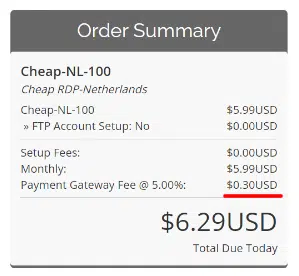
As a result, many customers end up paying upto 20% more than they expected after checkout if they’re not careful.
To safeguard yourself from these hidden charges, it’s essential to check the final pricing at checkout before making any payment.
If you notice any discrepancies or surprise fees, it’s a signal to look for other providers who offer transparent pricing.
You deserve to know exactly what you’re paying for, and a little extra vigilance can help you get just that.
Where Can I Buy An RDP Server?
There are several portals on the Internet from where you can buy an RDP Server. The options are limitless.
And if you have read the abovementioned points, you can easily make an informed decision.
One provider you might want to check out is RDP Arena (rdparena.com). With over 10 years in the business and more than 50,000 satisfied customers, they’ve made quite a name for themselves.
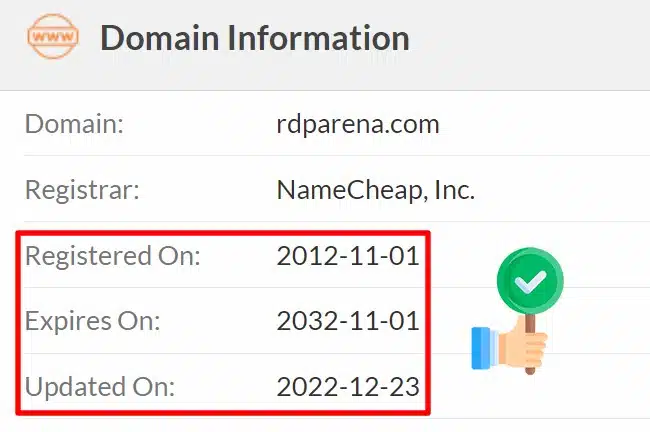
The best thing about RDP Arena is that they prioritize your security by not permitting signups from VPNs and proxies. Plus, they implement strict KYC verification to filter out users with unethical intentions, ensuring your RDP Server remains free from malicious activities.
They also offer a 72-hour no-questions-asked money-back guarantee that helps you evaluate if the RDP Server is fit for your needs, without any risk.
And here’s some exciting news: RDP Arena is currently offering a limited-time 20% discount on all RDP Slots.
So, if you’re looking to buy rdp, that’s not only reliable but also affordable; you wouldn’t want to miss out on this offer.
Just visit rdparena.com and use the code “20off” at checkout to take advantage of the discount.





















